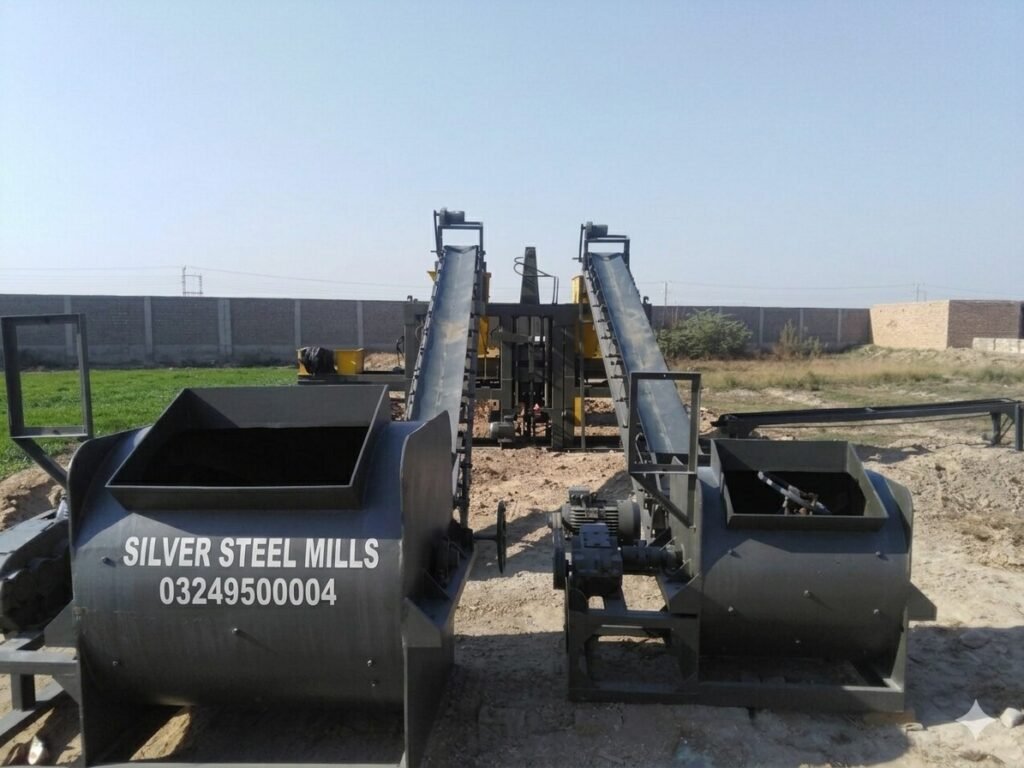

Executive Summary: The Structural Shift in Pakistan’s Construction Sector
Pakistan’s structural engineering and construction landscape is undergoing a permanent, technology-driven paradigm shift. Across major metropolitan hubs like Lahore, Karachi, Islamabad, and rapidly developing industrial corridors under the China-Pakistan Economic Corridor (CPEC), traditional hand-laid red clay bricks are being systematically phased out. Modern infrastructure projects demand high dimensional precision, faster construction speeds, and strict compliance with global environmental regulations.
Stepping directly into this market is the concrete block making machine. By replacing traditional clay masonry with high-strength, machine-pressed hollow blocks, solid structural bricks, and interlocking pavement pavers, modern manufacturers are capturing unprecedented market share.
+-----------------------------------------------------------------------------+
|               STRUCTURAL EVOLUTION IN PAKISTANI MASONRY                     |
+-----------------------------------------------------------------------------+
|                                                                             |
|  [TRADITIONAL CLAY BRICK KILN]  ======>  [AUTOMATIC CONCRETE BLOCK PLANT]   |
|  - High Topsoil Destruction              - 100% Recyclable Slag/Aggregates   |
|  - High Variances (10-15mm)              - Laser-True Tolerances (+/- 1mm)   |
|  - Low Compressive (600-800 PSI)         - Structural High Strength (2500+ PSI)|
|  - Seasonal Smog Shutdowns               - Continuous 24/7 Year-Round Output |
|                                                                             |
+-----------------------------------------------------------------------------+
For real estate developers, private construction contractors, and industrial startup investors, setting up a modern, automated concrete block and paver plant represents an exceptionally secure, high-yield business model. However, long-term commercial profitability depends entirely on understanding how machinery configuration dictates final product quality. To secure institutional contracts from public authorities or premium private developers (such as DHA, Bahria Town, or corporate industrial parks), a factory must consistently manufacture blocks that meet rigid load-bearing thresholds while optimizing aggregate and cement consumption.
This exhaustive, 4,500-word technical blueprint provides a comprehensive guide to entering this multi-million rupee sector in 2026. We detail current equipment prices for a block making machine in Pakistan, evaluate distinct automation tiers, analyze concrete mix design matrices, explore integrated twin-shaft concrete batching plants, and map out a pre-engineered structural steel factory shed deployment strategy for maximum return on investment (ROI).
2. Deciphering the Core Problem: The Financial and Structural Cost of Under-Engineered Machinery
The entry of low-tier, uncertified local machinery fabricators into the Pakistani market has created a serious pitfall for unsuspecting investors. Attracted by dirt-cheap prices from roadside workshops, many new block plant operators end up purchasing under-engineered, lightweight machinery lines. This choice invariably leads to severe, ongoing structural and financial failures:
The Phenomenon of Micro-Fissures and Low Compressive Strength
Load-bearing hollow blocks must withstand structural forces ranging from $1,200text{ PSI}$ to over $2,500+text{ PSI}$, while heavy-duty industrial interlocking pavers must regularly exceed $5,000text{ to } 7,000+text{ PSI}$. Achieving these strengths requires two synchronized factors: intense hydraulic compression tonnage combined with high-frequency harmonic table vibration.
Cheap, poorly built machines lack the necessary weight and heavy-duty structural steel frames to handle high hydraulic forces. They typically rely on basic mechanical eccentric weights that distribute vibration unevenly across the mold cavity. This lack of precision leaves micro-voids and air pockets deep within the concrete matrix, resulting in soft, brittle blocks that crumble or fail field inspections by project consultants.
Catastrophic Mold Wear and Dimensional Variances
In the masonry block market, precision is everything. If a machine’s mold core and tamper head guide pillars flex by even a fraction of a millimeter under pressure, the resulting blocks will suffer from uneven height and wall thickness.
Masons on site will quickly reject these blocks because they require excessive, expensive cement-sand mortar to level out walls during construction. Furthermore, standard low-carbon steel molds produced by uncertified workshops can warp within less than 50,000 production cycles. This forces the operator into frequent, costly mold replacements that erase their initial equipment cost savings.
Excessive Cement Compensation (The Silent Margin Killer)
When a block machine cannot deliver adequate compaction force, operators are forced to increase the proportion of expensive Ordinary Portland Cement (OPC) in their mix design to compensate for the weak physical structure. This baseline chemical correction drives up the direct manufacturing cost per block by several rupees. Over a standard annual production run of millions of blocks, this unnecessary cement expense can easily bankrupt a small-scale facility.
3. Technology Breakdown: Navigating Machine Configurations & Automation Tiers
Selecting the right equipment configuration dictates your plant’s daily production volume, long-term reliability, and overall labor expenses. Modern brick and block plants generally fall into three distinct mechanical classes:
1. Manual Egg-Laying Type Block Machines
Egg-laying (or mobile) block machines operate by depositing molded concrete blocks directly onto a flat concrete floor slab, then moving forward on wheels to repeat the process. They completely eliminate the need for production pallets.
- Target Audience: Hyper-local rural startup investors, low-budget small-scale builders, or remote infrastructure projects with limited logistical access.
- Operational Limitations: These systems require a large, smooth concrete floor area to lay out the blocks. They feature high manual labor requirements, lower structural compaction density, and are limited to basic, non-colored hollow and solid building blocks.
2. Stationary Semi-Automatic Hydraulic Block & Paver Production Lines
Stationary hydraulic lines utilize a centralized mechanical hydraulic pack to compress concrete mixes inside a stationary mold frame, ejecting the finished blocks onto wooden, PVC, or composite material pallets. These pallets are then moved to curing yards using manual trolleys or small forklifts.
- Target Audience: Established regional aggregate suppliers, commercial block yards, and medium-scale construction firms.
- Key Engineering Features: These systems feature an automated belt conveyor system to feed raw materials from a pan mixer into the machine’s primary storage hopper. They utilize manual lever-actuated hydraulic valves to control the mold-clamping and ram-ejection cylinders, striking an ideal balance between affordable capital costs and highly consistent cycle times.
3. Fully Automatic PLC-Controlled Multi-Component Production Lines
These advanced systems represent the pinnacle of modern concrete masonry manufacturing. Every stage of production—from aggregate batching, moisture measurement, and core vibration adjustments to pallet stacking—is controlled by an integrated Programmable Logic Controller (PLC) interface.
- Target Audience: Elite tier-1 construction contractors, CPEC infrastructure consortiums, public housing authorities, and large-scale industrial manufacturing groups.
- Key Engineering Features: These systems utilize fully synchronized dual eccentric vibration tables that deliver high-frequency compaction forces under extreme hydraulic pressures ($15 text{ to } 22+text{ MPa}$). They include multi-stage automatic pallet stackers and specialized dual-hopper configurations, enabling the high-speed production of premium multi-colored interlocking paving stones alongside high-density structural blocks.
4. Current Market Analysis: Concrete Block Machine Prices in Pakistan (2026 Matrix)
Machinery pricing varies based on total structural steel mass, the rated hydraulic compression tonnage, the degree of electronics automation, and the output volume per 8-hour shift.
The comprehensive matrix below delivers an accurate breakdown of current market capital layouts for certified interlocking paver, brick, and hollow block factories across Pakistan in 2026:
Comprehensive Block Making Machinery Pricing Matrix
| Equipment Model & Configuration | Control Automation Tier | Shift Production Output (Standard 4x8x12 Hollow Blocks) | Rated Primary Hydraulic Compression Force | Estimated Capital Price Range (PKR) |
| Mechanical Egg-Laying/Mobile Unit | Manual Mechanical | $800 – 1,200 text{ Blocks}$ | N/A (Mechanical Vibro Only) | PKR 180,000 – 450,000 |
| Small Stationary Line Setup (SSM-15 Class) | Semi-Automatic Hydraulic | $3,500 – 5,000 text{ Blocks}$ | $40 – 60 text{ Tons}$ | PKR 950,000 – 1,800,000 |
| Standard Mid-Scale Line (SSM-18 / SSM-24) | Semi-Automatic Hydraulic | $5,500 – 8,000 text{ Blocks}$ | $80 – 120 text{ Tons}$ | PKR 2,200,000 – 3,800,000 |
| Industrial PLC Automation Line (SSM-35 Class) | Fully Automatic PLC | $10,000 – 14,000 text{ Blocks}$ | $150 – 200 text{ Tons}$ | PKR 4,500,000 – 7,500,000 |
| Premium Mega-Plant Hub Line (SSM-50 / GSM-35) | Fully Integrated PLC Line | $20,000 – 40,000+ text{ Blocks}$ | $250 – 350+ text{ Tons}$ | PKR 9,500,000 – 25,000,000+ |
5. Industrial Sourcing Insights: Navigating the New vs. Used Equipment Market
When deciding between purchasing a brand-new factory-warranted machinery line or acquiring an affordable pre-owned system, investors must weigh several key technical considerations:
Navigating the Used Machinery Market (OLX & Local Liquidations)
When searching for a used block making machine price in Pakistan or exploring equipment options on platforms like OLX Pakistan, you can often find mid-scale semi-automatic systems priced between PKR 650,000 and PKR 2,000,000. While these lower entry costs can be attractive, avoiding unexpected repair expenses requires having an expert technician thoroughly inspect several critical components before purchasing:
- Hydraulic Cylinder Chroming Condition: Check for visible scoring, vertical scratches, or micro-pitting along the main compression rams. Damaged rams can quickly tear through high-pressure seals, resulting in fluid leaks and drop-offs in compaction force.
- Vibrator Eccentric Bearing Tolerance: Run the machine empty to check for harsh, metallic noises from the main vibration table shafts. Excessively worn bearings prevent uniform compaction forces from reaching across the mold cavity, leaving you with weak, low-density blocks.
- Mold Plate Thickness and Wear Profile: Use a digital caliper to verify the wall thickness of the included molds. Avoid cheap molds fabricated from soft, non-heat-treated mild steel plates. High-quality molds should be manufactured using advanced CNC machining and case-hardening techniques to ensure tight dimensional tolerances ($+1text{mm}$ or less) and long-term wear resistance.
The Clear Advantages of New Certified Systems
Purchasing a new system from an established industrial manufacturer (such as Silver Steel Mills) offers clear long-term advantages:
- Advanced CNC Heat-Treated Molds: New molds feature high-durability steel alloys that maintain exact product dimensions through hundreds of thousands of intense hydraulic pressing cycles.
- Comprehensive Local Engineering Support: New machinery includes expert on-site structural installation, professional commissioning, and hands-on operational training for your factory crew.
- Rapid Spare Parts Availability: You gain direct access to a local inventory of critical spare parts, including hydraulic control valves, custom-engineered molds, and electrical sensors. This support minimizes unexpected factory downtime and ensures high operational availability year-round.
6. Technical Engineering: Optimizing Concrete Mix Formulations for Pakistan’s Aggregates
Achieving strong, load-bearing concrete blocks while maintaining healthy profit margins requires a precise raw material mix design. Concrete masonry blocks produced via high-tonnage hydraulic presses utilize a low-moisture, semi-dry concrete mix (often called zero-slump concrete). This mix requires a careful balance of coarse aggregates, fine sand fillers, and cement binders.
+-----------------------------------------------------------------------------+
|                 SEMI-DRY CONCRETE MATERIAL MATRIX BY WEIGHT                 |
+-----------------------------------------------------------------------------+
|                                                                             |
|      [COARSE AGGREGATE]        [FINE FILLER SAND]         [OPC BINDER]       |
|          45% - 50%                 35% - 40%                8% - 12%         |
|      (Sargodha/Margalla        (Clean River Sand:       (Grade 42.5 OPC     |
|      Crushed Screenings)        Chenab or Ravi)         Hydration Engine)    |
|                                                                             |
+-----------------------------------------------------------------------------+
1. The Fine Aggregate Component
- Sourcing Profile: Clean river sand sourced from the Chenab or Ravi basins.
- Technical Role: Fine sand acts as a structural filler that packs into the small spaces between larger stones, increasing density and creating smooth, crisp outer walls on your finished blocks. Always make sure your sand is properly washed to remove clay particles or organic silt, which can weaken cement bonding and lower structural strength.
2. The Coarse Aggregate Component
- Sourcing Profile: Crushed limestone screenings and bypass materials ($3text{mm}$ to $8text{mm}$ sizing) sourced from regional quarries like Sargodha, Margalla, or Nooriabad.
- Technical Role: These coarse stones form the physical skeleton of your block, providing the high shear resistance and compressive strength needed to support structural loads.
3. The Cement Binder Matrix
- Specification: Standard Grade 42.5 Ordinary Portland Cement (OPC).
- Mix Proportion Target: Maintain a strict ratio of $1 : 2 : 4$ or $1 : 3 : 5$ based on your specific machine type and target strength goals. Keep your water-to-cement ratio tightly controlled between $0.30$ and $0.34$. A properly mixed semi-dry concrete batch should hold its shape when squeezed in your hand without releasing excess water, ensuring your fresh blocks can be cleanly demolded onto production pallets without slumping or cracking.
7. Downstream System Integration: The Critical Need for Automated Concrete Batching Plants
To achieve true cost efficiency and high-volume production output, a high-speed automatic block machine must be paired with an appropriately sized downstream concrete batching plant. Relying on old-fashioned, manual shovel-loading to supply raw materials into your block machine’s feed hopper creates a severe operational bottleneck that can reduce your output capacity by up to 40%.
The Core Technology: Twin-Shaft Compulsory Mixers
Standard, low-cost vertical pan mixers struggle to blend heavy aggregates, fine sand, and low-moisture cement water uniformly. This can result in localized cement pockets and inconsistent material batches.
To overcome this, modern commercial block production lines utilize advanced twin-shaft compulsory concrete mixers. These systems feature dual horizontal shafts spinning in opposite directions with overlapping mixing paddles. This intense mechanical action creates a uniform concrete blend in under 60 seconds, ensuring every block produced has identical material density and structural strength.
  [AGGREGATE BIN A: COARSE CRUSH]        [AGGREGATE BIN B: FINE SAND]
                                                      /
                  ---> [LOAD-CELL WEIGHING BELTS] ---/
                                  |
                                  v
                       [TWIN-SHAFT FORCE MIXER] <--- [AUTOMATED WATER DOSER]
                                  |
                                  v
                      [CLEAN CONCRETE MIX OUT]
Mini, Mobile, and Stationary Batching Options
Depending on your project’s mobility needs and factory production scale, you can choose from three main batching plant configurations:
1. Mini Mobile Concrete Batching Plants
- Production Volume Range: $20 text{ to } 35 text{ m}^3 / text{ hour}$.
- Best Suited For: Mid-scale regional block factories, temporary onsite infrastructure projects, and small-scale paver yards. These compact units can be easily towed by standard trucks and require minimal foundation preparation.
2. Fully Stationary Concrete Batching Systems
- Production Volume Range: $60 text{ to } 120+ text{ m}^3 / text{ hour}$.
- Best Suited For: High-output mega-scale production plants supplying large housing schemes, highway networks, or regional commercial hubs. These permanent installations feature heavy-duty structural steel support frames, multi-bin electronic aggregate aggregate batchers, and automated pneumatic cement weighing systems.
3. Advanced Digital Controls & Precision Batching
Premium batching plants (such as those engineered by Silver Steel Mills) come equipped with advanced PLC control panels and high-accuracy electronic load cells. These automated systems weigh aggregate ingredients to within a $pm1%$ tolerance, allowing you to maintain strict quality control, minimize cement waste, and log valuable real-time production data for long-term business analysis.
8. Facility Infrastructure Engineering: Factory Layout Design and Pre-Engineered Steel Sheds
A highly efficient, profitable block making plant requires a well-planned structural layout. Housing a modern hydraulic production line inside a poorly configured, temporary masonry building exposed to dust and weather can cause rapid electrical failures and premature machinery wear.
The industry standard for premium concrete factories is an integrated Pre-Engineered Steel Building (PEB) shed design. This approach provides an expansive, clear-span workspace that optimizes the flow of raw materials and finished products.
+-----------------------------------------------------------------------------+
|                      PEB INDUSTRIAL FACTORY FLOOR LAYOUT                    |
+-----------------------------------------------------------------------------+
|                                                                             |
|  [AGGREGATE YARD] ==> [BATCHING PLANT] ==> [BLOCK MACHINE] ==> [STACKER]    |
|  Outdoor Storage       Twin-Shaft Mixer     Hydraulic Press     Pallet Line |
|                                                                             |
|  ==================== CLEAR SPAN PEB STEEL FRAME ========================   |
|                                                                             |
|                                            [FORKLIFT ACCESS CORRIDOR]       |
|                                            Moves Pallets to Curing Stacks   |
|                                                                             |
+-----------------------------------------------------------------------------+
Crucial Engineering Elements for Factory Floor Layouts
- Clear-Span Architecture: By utilizing heavy-duty, high-tensile steel frames fabricated in specialized manufacturing facilities, PEB industrial sheds completely eliminate the need for internal structural support pillars. This wide, unobstructed floor space allows heavy forklifts, wheel loaders, and multi-axle material delivery trucks to navigate your production floor safely and efficiently.
- Integrated Overhead Crane Support Runway Tracks: For high-volume automated plants, PEB structural steel frames can be engineered with heavy-duty crane runway brackets. These built-in supports allow you to easily install overhead gantry cranes, making it simple to swap out heavy block molds or safely lift heavy hydraulic components during routine factory maintenance.
- Resilience Against Pakistan’s Harsh Environmental Conditions: Industrial manufacturing areas across Pakistan regularly experience extreme weather, from high summer heat waves to intense monsoon rainfall cycles. Premium PEB structures feature advanced anti-corrosion paint coatings, heavy-duty galvanized structural steel purlins, and insulated double-layer roof profiling panels. This robust construction protects sensitive PLC control components, maintains stable hydraulic oil temperatures, and provides a safe, comfortable working environment for your factory technicians year-round.
9. Comprehensive Cost Architecture: Analyzing Production Costs and Factory Profitability
To demonstrate the clear economic potential of entering this manufacturing sector, here is a detailed operational cost and revenue analysis for a medium-scale automated factory operating in the current Pakistani construction market:
Unit Cost Analysis Matrix (Standard 4x8x12 Load-Bearing Hollow Block)
| Operational Cost Component | Raw Material Sourcing & Processing Parameters | Unit Production Cost (PKR) |
| Ordinary Portland Cement Content | Grade 42.5 OPC Bag Allocation Requirements | PKR 18.50 |
| Crushed Limestone Aggregate Screens | High-Strength Sargodha Quarry Screenings | PKR 9.00 |
| Washed Fine River Sand Fillers | Clean Local Chenab or Ravi Basin Sand | PKR 4.50 |
| Direct Production Plant Labor | Dispersed Shift Wages for Machine Operators | PKR 3.00 |
| Electrical Power & Utility Fuel | Three-Phase Grid Power + Forklift Fuel | PKR 2.00 |
| Pallet Wear & Mold Maintenance Reserve | Tooling Depreciation Asset Cost Allowance | PKR 1.00 |
| Total Net Production Cost | Ex-Factory Material Production Cost Per Block | PKR 38.00 / Block |
Net Wholesale Returns and Factory Profit Margin Realization
- Average Wholesale Value (Per Standard Block): PKR 58.00 – 68.00.
- Net Profit Margin per Single Concrete Block: PKR 20.00 – 30.00.
- Daily Profit Potential (At a Standard 6,000 Block Output Scale): $approx text{PKR } 120,000 – 180,000 text{ per day}$.
As shown by these performance metrics, the concrete block and paver manufacturing industry offers exceptional, reliable earning potential for smart industrial investors. Partnering with a vertically integrated manufacturer like Silver Steel Mills—which fabricates both high-performance machinery lines and custom pre-engineered steel factory sheds under strict international quality control processes—allows you to streamline your setup timeline, minimize initial capital risks, and achieve an exceptionally fast return on your investment.
10. Operational Guidelines: Avoiding Common Pitfalls in Block Plant Management
Running a highly profitable concrete block and paver factory requires strict adherence to proper production and maintenance procedures. Neglecting these core rules can lead to expensive component breakdowns, high material waste, and inconsistent product quality:
1. Inconsistent Moisture Control in the Mixer
Because sand and crushed limestone screens can absorb varying amounts of water depending on storage and weather conditions, relying on visual checks to judge your mix consistency often results in errors. If a concrete batch is too wet, fresh blocks will slump or lose their shape when stripped from the mold. If the mix is too dry, the concrete will fail to bond properly, leaving you with weak, crumbly blocks. Installing automated moisture sensors in your twin-shaft mixer ensures your concrete retains the exact consistency needed for clean molding and high structural density.
2. Neglecting Proper Water Curing Cycles
Unlike traditional clay bricks that gain strength through heat inside a coal-fired kiln, concrete blocks rely on a chemical reaction called hydration to harden. Skipping or shortening proper water-curing cycles during the first 7 to 10 days of production will permanently weaken your blocks. Ensure your curing yard is equipped with fine mist spray nozzles to keep stacked blocks continuously moist, allowing the concrete to reach its full structural design strength.
3. Inadequate Cleaning of Molds and Tamper Heads
At the end of every production shift, operators must thoroughly clean the machine’s mold cavities and tamper head assemblies using high-pressure air and water. Allowing abrasive semi-dry concrete paste to build up and harden on these surfaces will scratch the steel plates, distort block dimensions, and accelerate mold wear.
11. Preventative Maintenance Blueprints for Long Equipment Service Life
To minimize unexpected factory downtime and extend the operational life of your block plant machinery, implement these disciplined maintenance routines:
Daily Post-Shift Maintenance
- Clean all residual concrete paste from the inside of the mold cavities, feed drawers, and tamper plates.
- Visually check all high-pressure hydraulic lines, hoses, and cylinder connections for signs of fluid leaks.
- Wipe down the main hardened-steel guide pillars to remove abrasive sand dust, and apply a light coat of protective lubricant.
Weekly Lubrication & Mechanical Tuning
- Apply high-grade, heat-resistant industrial grease to all moving mechanical pivots, bearing housings, and eccentric shaft links on the vibration table.
- Check the tension on all electric conveyor belts and motor drive chains, adjusting them as needed to prevent slippage.
- Inspect the electrical proximity switches and limit sensors along the main pallet conveyor tracks, cleaning away dust to ensure accurate signal transmission.
Monthly Hydraulic & System Inspections
- Monitor your hydraulic fluid operating temperatures to ensure they stay safely below $55^circtext{C}$. Overheated hydraulic oil thins out, which can score valve blocks and degrade system seals.
- Replace your main hydraulic oil filter elements every month to protect high-pressure pumps from micro-particle contamination.
- Check the structural bolts securing your high-frequency vibration motors and main machine frame to the concrete foundation slab, tightening any loose hardware to prevent unwanted frame fatigue.
12. Strategic Implementation Action Plan for Industrial Investors
Investing in a modern hydraulic block and paver production plant is a highly effective way to capitalize on Pakistan’s growing infrastructure needs. However, building a sustainable, long-term business requires moving away from simply minimizing your upfront machinery acquisition costs and focusing instead on maximizing your plant’s overall operational efficiency and product quality.
Begin by conducting a rigorous analysis of aggregate material availability and transport logistics in your target region. Next, secure an industrial site with an adequate three-phase power grid connection, and choose an experienced machinery manufacturer that provides dependable local engineering support and utilizes advanced, CNC-machined steel tooling. By integrating high-pressure hydraulic block machinery with automated twin-shaft batching plants and a clear-span PEB factory layout, your business can consistently deliver premium building materials that outcompete low-quality local suppliers and earn excellent returns for years to come.
FAQ Section
Q1: What is the total estimated capital required to establish a commercial semi-automatic block and paver factory in Pakistan?
Setting up a complete, commercial-grade semi-automatic block factory typically requires a total capital investment of PKR 4,500,000 to PKR 8,500,000. This budget covers a high-performance hydraulic press machine (such as the SSM-24 class), an automated raw material feed conveyor system, a heavy-duty twin-shaft concrete mixer, a custom set of heat-treated steel molds, an initial inventory of production pallets, and essential site preparation, including concrete foundation slabs.
Q2: Why are twin-shaft compulsory mixers preferred over traditional vertical pan mixers for block manufacturing?
Traditional vertical pan mixers often struggle to blend low-moisture, semi-dry concrete mixes uniformly, which can result in uneven cement distribution and weak spots in your finished blocks. Advanced twin-shaft compulsory mixers utilize dual horizontal shafts spinning in opposite directions with overlapping paddles. This aggressive mechanical action creates a perfectly uniform material blend in under 60 seconds, ensuring every block produced has consistent density and high compressive strength.
Q3: What are the standard dimensional sizes and compressive strengths required for load-bearing hollow blocks?
The standard commercial size for a hollow concrete block in Pakistan is 4″x8″x12″, 5″x8″x12″, 6″x8″x12″, or 8″x8″x12″. For non-load-bearing boundary walls or interior partitions, a compressive strength of $800 text{ to } 1,000text{ PSI}$ is perfectly adequate. However, for structural, load-bearing walls in multi-story buildings, project consultants regularly require a minimum compressive strength of $1,200 text{ to } 2,500+text{ PSI}$.
Q4: How long do machine-pressed concrete blocks need to be cured before they can be safely delivered to a project site?
Once concrete blocks are pressed and ejected, they must remain undisturbed on their production pallets for 24 hours to allow the cement matrix to set. After this initial period, the blocks can be safely removed from the pallets and stacked in your curing yard. There, they should be water-cured using a fine mist spray for a minimum of 7 to 14 days to ensure proper chemical hardening. For optimal durability and to prevent cracking, allow the blocks to dry and reach their full design strength over a standard 28-day window before delivering them to heavy construction sites.
Q5: Can a single hydraulic block machine manufacture different products like interlocking tuff tiles or highway kerbstones?
Yes, modern hydraulic block plants are highly versatile industrial platforms. By simply swapping out the main mold and tamper head assembly inside the press housing—a changeover process that an experienced maintenance team can complete in under an hour—you can use the same machine to produce hollow blocks, solid bricks, interlocking pavement tuff tiles, or standard highway kerbstones.
Suggested Internal Link Opportunities
- Contextual Anchor 1: Link the phrase “tuff tile making machine prices in pakistan” to your dedicated industrial buyer’s guide covering interlocking paver plant setups, dual-hopper face mix systems, and production profitability matrices.
- Contextual Anchor 2: Link references to “fly ash brick machine prices in pakistan” to your technical guide explaining eco-friendly pozzolanic mix formulations, industrial byproduct sourcing, and kiln conversion models.
Suggested Image Ideas
- Image 1 (Industrial Blueprint): A comprehensive, high-resolution 3D layout illustration showing a fully automated concrete block manufacturing plant contained within a clear-span Pre-Engineered Steel Building (PEB) shed. The graphic should clearly trace the automated material flow path from the multi-bin aggregate batching scales and twin-shaft compulsory mixer to the main hydraulic press and pallet stacking line.
- Image 2 (Product Inspection Close-up): A sharp, professional close-up photo showing a certified quality control engineer using digital calipers to verify the laser-straight dimensional accuracy of a fresh, high-density hollow concrete block as it exits a hydraulic production line, highlighting the crisp edges and uniform surface density.