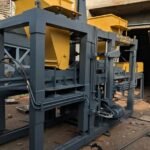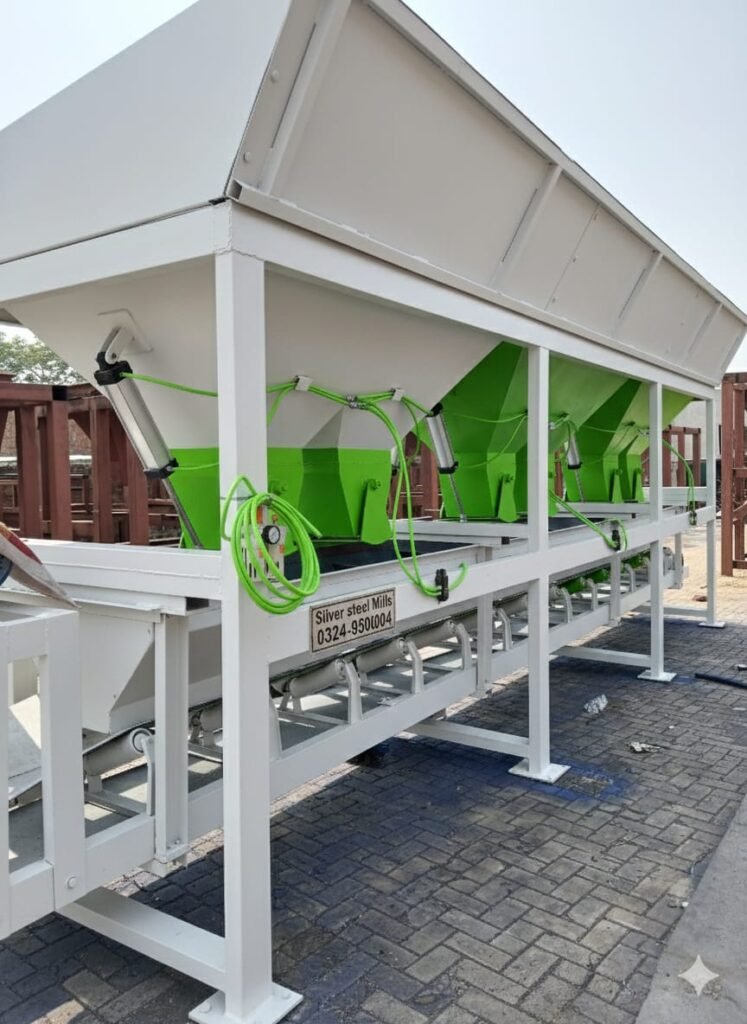

Pakistan’s brick manufacturing sector is undergoing its most radical transformation in a century. For decades, traditional Bull’s Trench Kilns (BTKs) dominated the countryside, churning out toxic black smoke and consuming massive amounts of fertile agricultural topsoil. In 2026, severe seasonal smog crises across Punjab and strict environmental regulations enforced by the Environmental Protection Department (EPD) are driving traditional coal-fired brick kilns out of business.
In their place, fly ash bricks have emerged as the premier green building alternative. Utilizing fly ash—an abundant, mineral-rich industrial byproduct sourced from coal-fired power infrastructure like the Sahiwal, Port Qasim, and Thar energy hubs—these eco-friendly bricks completely eliminate the need for soil excavation or fuel burning.
+--------------------------------------------------------------------------+
|                     ENVIRONMENTAL AND STRUCTURAL PARADIGM                |
+--------------------------------------------------------------------------+
|                                                                          |
|  [TRADITIONAL CLAY BRICKS]       vs       [MODERN FLY ASH BRICKS]        |
|  - High Topsoil Destruction               - 100% Industrial Waste Recycle|
|  - Compressive: 30-35 kg/cm²              - Compressive: 75-100 kg/cm²   |
|  - Site Breakage: >10%                    - Site Breakage: <2%           |
|  - Irregular Dimensional Creep            - Exact Laser-True Profiles    |
|                                                                          |
+--------------------------------------------------------------------------+
For real estate developers, commercial contractors, and industrial startups, investing in a hydraulic fly ash brick making machine is no longer just an eco-friendly option—it is a highly profitable, future-proof industrial business model.
2. The Core Problem: Overcoming Irregular Bricks and Structural Cracking
In the highly competitive residential construction sectors of urban hubs like Lahore, Islamabad, and Karachi, structural masonry demands precision. Traditional clay bricks suffer from high dimensional variation due to uneven shrinkage inside old-style kilns, which leads to several major drawbacks:
Excessive Mortar and Plaster Waste
Because traditional red clay bricks are often warped or unevenly sized, masons must apply thick layers of expensive cement-sand mortar to level out walls during construction. Fly ash bricks, by contrast, are pressed inside solid steel molds, producing uniform, laser-straight edges that reduce mortar use by up to 30% and lower final plastering costs.
High Site Breakage Rates
Due to internal micro-fissures formed during open-air kiln firing, traditional red bricks suffer from transport and handling breakage rates exceeding 10%. Fly ash bricks achieve structural density through mechanical compaction and controlled hydration curing, cutting site breakage down to under 2%.
Moisture Efflorescence (Shora)
Traditional clay bricks often contain high amounts of natural salts. When exposed to rain or groundwater, these salts leach out to the surface, causing white, powdery stains (shora) that ruin expensive interior paint and weaken plaster walls. Fly ash bricks use stable industrial byproducts and cement binders, making them highly resistant to salt damage and moisture penetration.
3. Technology Matrix: Selecting Your Fly Ash Brick Production System
The design of your fly ash brick plant directly dictates your daily output capacity, operational labor overhead, and the uniformity of your finished product.
       [RAW MATERIAL BATCHING] ---> [TWIN-SHAFT FORCE MIXER]
                                              |
                                              v
[HYDRAULIC PRESS CORE] <------------ [BELT FEEDER MATRIX]
  - Dual Vibration
  - High Tonnage Press
                                              |
                                              v
[FINISHED PALLET LINES] ------------> [CURING YARD MATURATION]
1. Semi-Automatic Hydraulic Fly Ash Brick Systems
These entry-level industrial setups utilize manual lever-operated hydraulic valves to control the main press cylinder, while relying on automated electric belt conveyors to feed the raw materials from the mixer into the machine’s hopper.
- Target Audience: Small-to-medium enterprises (SMEs), rural kiln owners transitioning to green tech, and localized commercial suppliers.
- Key Advantage: Offers low initial setup costs, mechanical reliability, and a straightforward design that is easy for local operators to maintain without advanced programming knowledge.
2. Fully Automatic PLC Fly Ash Brick Plants
These high-capacity production lines are managed by a central Programmable Logic Controller (PLC) with an integrated touchscreen display. They feature automated raw material batching scales, synchronized pallet feed lines, and automatic stackers.
- Target Audience: Corporate construction firms, public housing authorities, and industrial investors targeting high-volume institutional supply contracts.
- Key Advantage: Maximizes output, maintains strict quality control with precise cycle times, and significantly reduces reliance on manual factory labor.
4. Market Cost Analysis: Fly Ash Brick Machine Price in Pakistan (2026 Matrix)
Machinery investment costs are determined by the maximum hydraulic compression force (measured in tons), production cycle speeds, and the overall capacity of the aggregate batching systems.
The comprehensive matrix below outlines the current 2026 estimated capital expenditures required for certified fly ash brick plants across Pakistan:
Comprehensive Plant Equipment and Capital Expenditure Matrix
| Plant Class & Configuration Model | Automation Control Level | Daily Production Volume (8-Hour Shift) | Rated Hydraulic Compaction Force | Estimated Price Range (PKR) |
| Small-Scale Field Unit Line | Manual / Semi-Auto | $1,000 – 1,500 text{ Bricks}$ | $40 – 60 text{ Tons}$ | PKR 950,000 – 1,800,000 |
| Standard Commercial Startup Line | Semi-Automatic | $2,000 – 3,500 text{ Bricks}$ | $80 – 100 text{ Tons}$ | PKR 2,500,000 – 3,800,000 |
| Medium Industrial Production Hub | Fully Automatic (PLC) | $4,500 – 7,000 text{ Bricks}$ | $120 – 160 text{ Tons}$ | PKR 4,500,000 – 6,500,000 |
| High-Output Infrastructure Plant | Fully Automatic (PLC) | $8,500 – 12,000 text{ Bricks}$ | $200 – 250 text{ Tons}$ | PKR 8,500,000 – 14,000,000 |
| Massive Mega-Project Industrial Line | Fully Integrated Line | $15,000 – 25,000+ text{ Bricks}$ | $300 – 400+ text{ Tons}$ | PKR 18,000,000 – 30,000,000+ |
💡 Strategic Guide: Evaluating Secondary Market Machinery
If you are searching for a used fly ash brick machine price in pakistan or browsing equipment options on platforms like olx pakistan, you can often find decent, mid-scale semi-automatic systems priced between PKR 1,500,000 and PKR 2,800,000. To safeguard your investment, ensure a qualified hydraulic technician verifies these three critical points before closing the deal:
- Main Ram Hard-Chrome Plating: Check for deep vertical scratches or scoring along the main hydraulic ram, which can damage seals and cause pressure drops.
- Mixer Blade Wear Profile: Inspect the inner lining and paddles of the primary compulsory pan mixer; worn blades leave dense aggregate pockets unmixed, resulting in structurally weak bricks.
- Maneuverability of Valve Blocks: Ensure the manual or solenoid control valves actuate smoothly without internal fluid bypassing or overheating the system during continuous operation.
5. Technical Formulation: Engineering High-Strength Fly Ash Mix Designs
Unlike traditional clay firing, fly ash bricks gain their high structural strength through a chemical reaction called pozzolanic hydration. The fly ash reacts with calcium hydroxide in the presence of water to form a dense, stone-like matrix.
Precise Material Matrix Formulation
A standard high-performance fly ash brick formulation requires the following balanced mix design:
- Fly Ash (Class F or Class C Base): $55% – 60%$ of the total dry weight. This fine material fills the micro-voids in the aggregate mix.
- Crushed Limestone Screenings or Sand: $25% – 30%$ of the total mix. This serves as the structural skeleton, providing high shear resistance and bulk density.
- Ordinary Portland Cement (Grade 42.5): $8% – 12%$ of the total mix. This acts as the primary hydraulic binder to trigger rapid initial strength gains.
- Gypsum Additive (Industrial Hydrite): $3% – 5%$ of the total mix. This regulates setting times and helps accelerate long-term structural hardening.
       +-------------------------------------------------------+
       |         FLY ASH BRICK FORMULATION MATRIX BY WEIGHT    |
       +-------------------------------------------------------+
                                   |
         +-------------------------+-------------------------+
         |                         |                         |
         v                         v                         v
  [FLY ASH: 55%-60%]       [CRUSHED SCREENINGS: 25%-30%]  [OPC BINDER & GYPSUM: 12%-15%]
  - High Silica Reactivity - Coarse Aggregate Skeleton    - Initial Hydration Matrix
  - Micro-Void Filler      - Sharp Sand Mechanical Lock   - Setting Rate Accelerators
Keep the water-to-binder ratio strictly between $0.28$ and $0.32$. The final mix should feel like damp sand—moist enough to hold its shape when squeezed in your hand, but dry enough to prevent slump or deformation when stripped from the machine molds onto the pallets.
6. Case Study: Green Conversion of a Kiln Site in Kasur District
To see how this works in practice, let’s look at a traditional brick kiln operator in the Kasur region who converted their facility to a modern, zero-emission block and brick manufacturing plant.
The Challenge
Faced with regular government-mandated winter shutdowns due to intense regional smog, the operator’s traditional clay kiln was losing profitability. They needed a sustainable, year-round manufacturing alternative that could leverage their existing land and local labor force.
The Solution Strategy
The operator replaced their old firing trench with a mid-scale, fully automated fly ash brick machine line featuring an integrated chain conveyor system and a twin-shaft compulsory mixer.
+--------------------------------------------------------------------------+
|                       KASUR CONVERSION MATERIAL SUPPLY LOGISTICS         |
+--------------------------------------------------------------------------+
|                                                                          |
|  [Sahiwal Power Plant Hub] --------> Bulk Fly Ash Supply Trucking        |
|                                                                         |
|                                                      ---> [Kasur Plant Hub]
|                                                      /---> [Curing Yard]
|  [Local River Aggregate Sources] --> Sand & Slag Supplies                 |
|                                                                          |
+--------------------------------------------------------------------------+
They sourced bulk fly ash directly from regional power generation plants and blended it with fine sand from local river basins.
Realized Project Metrics
Operating a single 8-hour shift with a crew of 5 workers, the factory now produces 6,000 highly uniform fly ash bricks daily. These machine-pressed bricks regularly exceed a compressive strength of $1,200 text{ PSI}$ ($85 text{ kg/cm}^2$), making them a preferred choice for private housing developments and government infrastructure projects across the Lahore division.
By eliminating coal fuel overheads and topsoil costs, the plant achieved full capital payback on its machinery investment within just 10 months of launching operations.
7. Commercial Architecture: Production Economics & Factory Unit Profitability
To demonstrate the commercial feasibility of setting up a plant, here is a detailed operational cost and revenue analysis for a medium-scale automated production facility in the current Pakistani construction market:
Unit Cost Analysis Matrix (Per 1,000 Bricks Unit Basis)
| Production Input Variable Component | Material Metrics / Sourcing Proportions | Net Cost Component (PKR) |
| Fly Ash Feed Stock Content | Bulk Freight Sourced From Power Station Hubs | PKR 3,500 |
| Ordinary Portland Cement Binder | Standard Grade 42.5 OPC Bag Requirements | PKR 4,200 |
| Crushed Limestone Sand Screenings | Sharp Local River Sand or Quarry Bypass | PKR 2,200 |
| Gypsum Catalyst Additives | Fine Ground Industrial Gypsum Mineral | PKR 600 |
| Direct Production Labor Costs | Dispersed Wages of Machine Crew Allotment | PKR 1,000 |
| Electrical Power & Utility Fuel | Three-Phase Grid Power + Plant Machinery | PKR 800 |
| Pallet Wear & Mold Maintenance | Tooling Degradation Asset Reserves Allowance | PKR 200 |
| Total Net Production Cost | Ex-Factory Production Cost Per 1,000 Bricks | PKR 12,500 / 1,000 Bricks |
Factory Earning Potential and Profit Margins
- Average Market Wholesale Value (Per 1,000 Bricks): PKR 16,500 – 18,500.
- Net Profit Margin per 1,000 Bricks: PKR 4,000 – 6,000.
- Daily Profit Potential (At 6,000 Brick Daily Capacity): $approx text{PKR } 24,000 – 36,000 text{ per day}$.
This strong profitability is why major machinery producers like Silver Steel Mills are seeing high demand for automated fly ash brick systems. Modern plants can easily achieve consistent profit margins while meeting the strict quality standards required by premium real estate developments.
8. Common Errors to Avoid in Fly Ash Brick Plant Operations
Running a fly ash brick plant successfully requires avoiding a few common operational mistakes:
1. Inconsistent Moisture Control in the Mixer
Because fly ash is highly porous, its moisture content can vary based on weather and storage conditions. Relying on simple visual checks often leads to batches that are either too wet or too dry. Installing automated moisture sensors in your twin-shaft mixer ensures your mix maintains the exact consistency required for clean molding.
2. Underestimating Concrete Curing Requirements
Unlike traditional clay bricks that gain strength through kiln firing, fly ash bricks require careful moisture curing. Skipping proper water-sprinkling cycles during the first 7 to 10 days will arrest the chemical hydration process, leaving your bricks fragile and prone to edge damage.
3. Neglecting Secondary Raw Material Screening
Using unscreened river sand or quarry bypass material can introduce oversized stones, clay balls, or organic debris into your mix. These large contaminants create structural weak spots inside the mold, leading to cracks or failures under high hydraulic pressure.
9. Comprehensive Plant Maintenance Schedules
To ensure high machine uptime and consistent product quality, implement these regular preventative maintenance routines:
Daily Post-Shift Clean Down
At the end of every shift, use high-pressure air and water to thoroughly clean the inside of the mold cavities, the tamper head assembly, and the feed drawer. Leaving wet fly ash paste to harden on these surfaces will scratch the steel molds and cause dimensional errors in your next batch.
Weekly Structural Lubrication
The main compression ram and ejection mechanics travel along heavy, hardened-steel guide pillars continuously. Clean these pillars weekly to remove abrasive dust, and lubricate them with a high-grade, non-sticky industrial grease to keep movements smooth and uniform.
Monthly Hydraulic Management
High-tonnage compression generates significant heat and stress within your hydraulic system. Check your oil level and temperature weekly, clean your system filters monthly, and inspect all high-pressure hoses for signs of wear to prevent sudden leaks or pressure loss.
10. Future Horizons: Smart Curing and Integrated Building Blocks
As Pakistan’s urban centers prioritize fast, efficient, and eco-friendly construction, forward-thinking manufacturers are expanding their product lines. Modern hydraulic fly ash brick systems are highly versatile and can easily adapt to changing market demands.
+--------------------------------------------------------------------------+
|                       FUTURE INTEGRATED PRODUCTION LINES                 |
+--------------------------------------------------------------------------+
|                                                                          |
|                           +---> Solid Fly Ash Modular Bricks             |
|                           |                                              |
|  [Multi-Mold Press Core] -+---> High-Strength Hollow Concrete Blocks     |
|                           |                                              |
|                           +---> Interlocking Tuff Tiles & Kerbstones     |
|                                                                          |
+--------------------------------------------------------------------------+
By simply swapping out the main mold assembly inside your machine’s hydraulic press housing, you can switch production from standard solid bricks to lightweight hollow blocks, load-bearing concrete bricks, or interlocking pavement tuff tiles. This versatility allows manufacturers to maximize their factory utilization throughout the year.
11. Implementation Action Plan for Project Investors
Investing in a high-tonnage hydraulic fly ash brick plant is a reliable way to enter Pakistan’s growing green construction market. To maximize your long-term returns, focus on optimizing your raw material supply lines and maintaining high production consistency rather than simply choosing the lowest-priced machinery line.
Begin by securing reliable, long-term supply arrangements for high-quality fly ash from regional power hubs, and choose an experienced local machinery manufacturer that offers dependable engineering support and uses wear-resistant steel tooling. By combining proper raw material batching with a disciplined preventative maintenance schedule, your plant can consistently deliver premium, eco-friendly bricks that outcompete traditional clay suppliers across the country.
FAQ Section
Q1: Where can factory operators reliably source industrial bulk fly ash in Pakistan?
Bulk fly ash can be sourced directly from major coal-fired power infrastructure hubs across the country. These include the Sahiwal Coal Power Plant in Punjab, the Port Qasim Power Project near Karachi, and the Hubco and Thar energy hubs in Sindh. Most power plants offer structured long-term supply contracts for commercial brick and cement manufacturers.
Q2: What is the main structural difference between fly ash bricks and traditional red clay bricks?
Fly ash bricks offer superior performance across all major metrics. They deliver a compressive strength of $75 – 100 text{ kg/cm}^2$ (compared to just $30 – 35 text{ kg/cm}^2$ for clay bricks), feature exact dimensional uniformity with zero warp, absorb less water, and completely eliminate the risk of salt-staining (shora) on finished walls.
Q3: Do fly ash brick machines require specialized electrical infrastructure to operate?
Yes. Commercial hydraulic machines—whether semi-automatic or fully automatic PLC lines—rely on heavy-duty industrial electric motors ($15text{ kW}$ to $45+text{ kW}$) to run their hydraulic pumps and vibration tables. Setting up a commercial plant requires a dedicated three-phase industrial power connection (Industrial B1/B2 tariff) or a properly sized diesel generator backup system.
Q4: How long do fly ash bricks need to cure before they are ready for delivery to a job site?
After hydraulic pressing, the bricks must cure on their pallets for 24 hours before being stacked. Once stacked in the yard, they should be water-cured using a fine mist spray for a minimum of 7 to 14 days to ensure proper chemical hardening. For optimal durability, allow the bricks to fully cure for a standard 28-day window before delivering them to heavy structural construction sites.
Q5: Is it possible to use a single fly ash brick machine to produce other construction materials like tuff tiles?
Yes, modern hydraulic brick presses are highly adaptable. By simply swapping out the main mold and tamper head assembly inside the press housing—a process that takes an experienced maintenance team less than an hour—you can use the same machine to manufacture hollow blocks, solid concrete bricks, interlocking tuff tiles, or standard highway kerbstones.