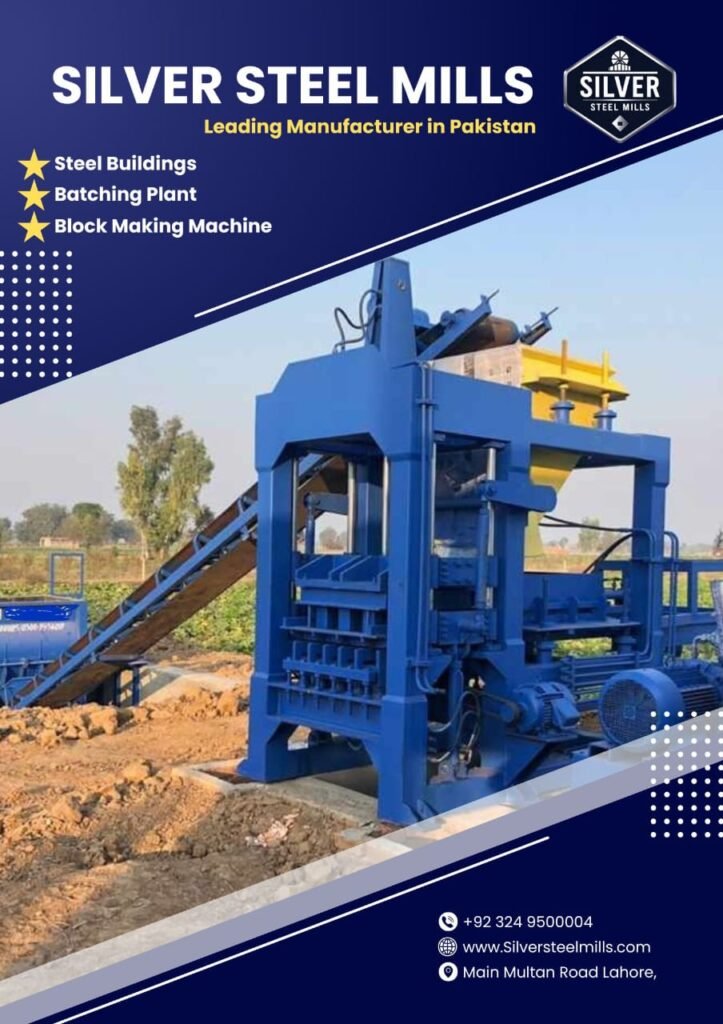

# Tuff Tile Business in Pakistan: How to Get Tenders, Start Manufacturing, and Choose the Right Machine
**By Silver Steel Mills – Manufacturing Tuff Tile Machines Since 2005**
Let me tell you about a phone call I got last year.
A man from Karachi called me. He said, *”Bhai, I heard PWD is giving a tender for tuff tiles. 500,000 tiles. Rate is PKR 180 per tile. I want to apply. What do I need?”*
I asked him, *”Do you have a machine?”*
*”No.”*
*”Do you have land?”*
*”No.”*
*”Do you have experience making tiles?”*
*”No.”*
I told him the truth. *”Beta, tender submit karne ke liye factory chahiye. Factory ke liye machine chahiye. Machine ke liye paisa chahiye. Pehle yeh sab karo. Phir tender dekho.”*
He didn’t call back.
I am telling you this story because tuff tile tenders in Pakistan are real. Government departments – PWD, NESPAK, local municipalities, housing authorities – buy millions of tuff tiles every year. The rates are good. PKR 150 to PKR 250 per tile depending on size and specification.
But you cannot just “get” a tender. You have to earn it. You need a registered business, a working factory, a quality product, and the ability to deliver on time.
This guide is for people who want to do it right. Start the business. Buy the machine. Make good tiles. Then win the tenders.
**Semantic Keywords:** *Tuff tile tender Pakistan, PWD tuff tile rates, how to start tuff tile business, tuff tile making machine price, government tender for tiles*
—
## 1. Introduction: What Are Tuff Tiles and Why the Government Buys Them
Tuff tiles are precast concrete paving tiles. You see them on sidewalks, in parks, on footpaths, and around government buildings. They are called “tuff” because they are hard – much harder than ordinary pavers.
**Why government departments buy tuff tiles:**
| Reason | Explanation |
| :— | :— |
| Durability | Tuff tiles last 10-15 years with minimal maintenance |
| Standardization | Tiles follow PWD/NESPAK specifications – easy to procure |
| Local manufacturing | Government policy encourages local production |
| Cost-effective | Cheaper than imported stone or marble paving |
| Quick installation | Tiles are easy to lay compared to cast-in-place concrete |
**Common tuff tile sizes and specifications in government tenders:**
| Size (inches) | Thickness | Typical Use | PWD Rate Range (PKR per tile) |
| :— | :— | :— | :— |
| 12 x 12 | 1.5 – 2 inches | Footpaths, pedestrian areas | 120 – 180 |
| 18 x 18 | 2 – 2.5 inches | Driveways, light vehicle areas | 200 – 300 |
| 24 x 24 | 2.5 – 3 inches | Heavy traffic, truck loading areas | 350 – 500 |
| 12 x 24 (rectangular) | 2 inches | Parks, gardens, walkways | 180 – 250 |
**Who issues tuff tile tenders in Pakistan:**
| Department | Typical Tender Volume (tiles) | Payment Terms | Quality Requirements |
| :— | :— | :— | :— |
| PWD (Public Works Department) | 50,000 – 500,000 | 30-60 days after delivery | Strict – lab testing required |
| NESPAK (on behalf of clients) | 20,000 – 200,000 | 30-45 days | Very strict – third-party testing |
| LDA (Lahore Development Authority) | 30,000 – 300,000 | 45-60 days | Moderate |
| CDA (Islamabad) | 40,000 – 400,000 | 45-60 days | Strict |
| KMC (Karachi) | 20,000 – 200,000 | 60-90 days | Moderate |
| Housing authorities (DHA, Bahria) | 10,000 – 100,000 | 30-45 days | Strict – aesthetic requirements |
**Real example:** A PWD tender in 2025 for Lahore called for 150,000 tuff tiles (12×12 inches, 2 inches thick) at a rate of PKR 185 per tile. The total contract value was PKR 2.77 crore. Three manufacturers bid. The winner had an SSM-24 double layer machine that could produce 8,000 tiles per day. He delivered the entire order in 20 working days.
—
## 2. Tuff Tile Machine Specifications: What You Need
You cannot make tuff tiles on a standard block machine. Tuff tiles require:
| Requirement | Why |
| :— | :— |
| Higher pressure | Tuff tiles need 5,000-7,000 psi strength – standard blocks are 3,000 psi |
| Double layer (color topping) | Most government tenders specify color tiles (red, grey, brown) |
| Vibrating table | Compact concrete more uniformly than standard molds |
| Hydraulic press | Higher pressure than standard block machines |
| Edge-sharpening mold | Tuff tiles need clean, sharp edges |
**SSM models suitable for tuff tiles:**
| Model | Suitable for Tuff Tiles? | Capacity (tiles/day) | Best For |
| :— | :— | :— | :— |
| SSM-15 | Limited (single color only) | 5,000 – 7,000 | Small tenders, basic tiles |
| SSM-18 | Yes (color topping capable) | 7,000 – 9,000 | Medium tenders, standard colors |
| SSM-24 | **Yes – recommended** | 12,000 – 15,000 | Most government tenders |
| SSM-28 | Yes (with batching) | 15,000 – 18,000 | Large tenders, multiple colors |
| SSM-35 | Yes – industrial scale | 20,000 – 25,000 | Multiple large tenders simultaneously |
**SSM-24 specifications (best for most tuff tile tenders):**
| Component | Specification |
| :— | :— |
| Machine type | Double layer, automatic |
| Hydraulic motor | 30 Hp |
| Vibration motors | 20+20 Hp (two motors) |
| Mold capacity | Curb stones, pavers, tuff tiles |
| Wooden pallet size | 30″ x 42″ |
| Products per pallet | 24-36 tiles (depending on size) |
| Daily production (8 hours) | 12,000 – 15,000 tiles |
| Color topping | Yes – double layer system |
| Batching system | Optional (recommended for tenders) |
| Total connected load | 135 Hp |
| Price | PKR 1.05 Crore (machine only) |
**What you get in an SSM-24 tuff tile package:**
| Component | Included |
| :— | :— |
| Main machine (double layer) | Yes |
| Hydraulic unit with pump and motor | Yes |
| Vibration table with two motors | Yes |
| Aggregate mixer (large, 2-bag capacity) | Yes |
| Color mixer (small, 1-bag capacity) | Yes |
| Conveyor belts (aggregate and color) | Yes |
| Pallet chain conveyor | Yes |
| Wooden pallet stacker system | Yes |
| Mould (your choice of tile size) | Yes (one mould included) |
| Electrical panel | Yes |
| Hydraulic pipes and fittings | Yes |
| Batching system | Optional (extra) |
—
## 3. Production Capacity for Tuff Tiles
Tuff tiles take longer to produce than ordinary blocks because of the double layer and higher compaction requirements.
**SSM-24 production capacity (8-hour shift):**
| Tile Size | Tiles Per Pallet | Pallets Per Hour | Tiles Per Hour | Daily Tiles (8 hrs) |
| :— | :— | :— | :— | :— |
| 12″ x 12″ | 36 (6×6 grid) | 40-45 | 1,440 – 1,620 | 11,500 – 13,000 |
| 18″ x 18″ | 16 (4×4 grid) | 40-45 | 640 – 720 | 5,100 – 5,800 |
| 24″ x 24″ | 9 (3×3 grid) | 40-45 | 360 – 405 | 2,900 – 3,200 |
**SSM-35 production capacity (8-hour shift):**
| Tile Size | Tiles Per Pallet | Pallets Per Hour | Tiles Per Hour | Daily Tiles (8 hrs) |
| :— | :— | :— | :— | :— |
| 12″ x 12″ | 35 | 50-55 | 1,750 – 1,925 | 14,000 – 15,400 |
| 18″ x 18″ | 35 (smaller layout) | 50-55 | 1,750 – 1,925 | 14,000 – 15,400 |
| 24″ x 24″ | 35 | 50-55 | 1,750 – 1,925 | 14,000 – 15,400 |
*Note: SSM-35 uses larger pallets (889x1219mm) and can fit more tiles.*
**Meeting tender deadlines:**
| Tender Volume | Required Daily Production | Minimum Machine | Days to Complete |
| :— | :— | :— | :— |
| 50,000 tiles | 2,500 | SSM-15 (single shift) | 20 days |
| 100,000 tiles | 5,000 | SSM-18 (single shift) | 20 days |
| 200,000 tiles | 10,000 | SSM-24 (single shift) | 20 days |
| 500,000 tiles | 12,500 | SSM-24 (double shift) | 20 days |
| 1,000,000 tiles | 25,000 | SSM-35 (double shift) | 40 days |
**Government tender deadlines are usually 30-60 days.** Do not bid if your machine cannot produce the required volume in the given timeframe. Late delivery penalties are severe (1-2% per day of delay).
—
## 4. Electricity Requirements for Tuff Tile Production
Tuff tile machines use more electricity than block machines because of the extra vibration and hydraulic pressure.
**SSM-24 power breakdown:**
| Component | Horsepower |
| :— | :— |
| Hydraulic pump motor | 30 Hp |
| Vibration motors (2) | 20+20 Hp |
| Large mixer (aggregate) | 30 Hp |
| Small mixer (color) | 10 Hp |
| Stacker motors | 5+3+2 Hp |
| Conveyors | 3+3+3+5 Hp |
| Batching system (if installed) | 10 Hp |
| **Total connected load** | **~135 Hp** |
**Daily consumption:**
| Shift | Hours | Estimated Units | Cost (PKR 35-40/unit) |
| :— | :— | :— | :— |
| Single shift (8 hours) | 8 | 600-700 | 21,000 – 28,000 |
| Double shift (16 hours) | 16 | 1,200-1,400 | 42,000 – 56,000 |
**SSM-35 power breakdown:**
| Component | Horsepower |
| :— | :— |
| Hydraulic pump motor | 30 Hp |
| Vibration motors (2) | 20+20 Hp |
| Large mixer | 30 Hp |
| Small mixer | 10 Hp |
| Stacker + conveyors | 10+11 Hp |
| Batching system | 10 Hp |
| **Total connected load** | **~131 Hp** |
**Power requirements for government tenders:**
Some tenders ask for your factory’s electricity load (in kW) to prove you can produce the required volume. Make sure your connection is sanctioned for at least 80% of your machine’s connected load.
**Karachi-specific note:** K-Electric voltage fluctuates more than other cities. A voltage stabilizer is mandatory for tuff tile production. Inconsistent voltage leads to inconsistent hydraulic pressure, which leads to inconsistent tile strength – and rejected tenders.
—
## 5. Labor Requirements for Tuff Tile Production
Tuff tile production is more labor-intensive than block production because of:
– Color topping (requires careful material handling)
– Quality control (tiles are inspected individually)
– Packaging (tiles are more delicate than blocks)
**SSM-24 labor (single shift, 10-12 people):**
| Position | Number | Daily Wage (PKR) | Skills |
| :— | :— | :— | :— |
| Machine operator | 1 | 1,800 – 2,500 | Must understand double layer process |
| Color mixer operator | 1 | 1,500 – 2,000 | Mixes pigment accurately |
| Aggregate mixer feeder | 1 | 1,000 – 1,300 | |
| Quality control inspector | 1 | 1,500 – 2,000 | Checks each tile for defects |
| Pallet handlers | 2 | 800 – 1,000 each | |
| Curing yard workers | 2-3 | 700 – 900 each | |
| Packaging and stacking | 2 | 800 – 1,000 each | For delivery |
| **Daily total** | **10-12** | **12,000 – 18,000** | |
**SSM-35 labor (single shift, 8-10 people, more automated):**
| Position | Number | Daily Wage (PKR) | Skills |
| :— | :— | :— | :— |
| Control room operator | 1 | 2,500 – 4,000 | PLC and batching system |
| Color batching operator | 1 | 2,000 – 3,000 | Digital pigment dosing |
| Maintenance technician | 1 | 2,000 – 3,000 | |
| Quality control | 1 | 1,500 – 2,000 | |
| General laborers | 4-6 | 800 – 1,000 each | |
| **Daily total** | **8-10** | **14,000 – 22,000** | |
**Quality control is critical for tenders.** Government departments reject tiles with:
– Chipped edges
– Uneven color
– Surface cracks
– Incorrect dimensions
– Low strength (tested by lab)
**Hire a dedicated QC person.** It is worth the extra PKR 1,500 per day. One rejected tender of 100,000 tiles costs you PKR 1.5-2 crore in lost revenue.
—
## 6. Area Requirements for Tuff Tile Production
Tuff tiles need more space than blocks because:
– Tiles are more delicate – need careful stacking
– Curing takes longer (14 days minimum for tuff quality)
– Color pigments require separate, clean storage
**SSM-24 minimum land: 4-5 Kanal (20,000 – 25,000 sq ft)**
| Area | Size (sq ft) | Notes |
| :— | :— | :— |
| Machine foundation | 600 – 800 | Double layer machine is larger |
| Aggregate raw material storage | 2,000 – 3,000 | Covered for crush and sand |
| Color pigment storage | 500 – 800 | Clean, dry, separate from aggregate |
| Curing yard | 8,000 – 10,000 | Tiles need careful stacking with spacers |
| Finished goods storage | 3,000 – 4,000 | Covered – sun damages tile color |
| Quality control area | 200 – 300 | For daily strength testing |
| Office/store | 400 – 500 | |
| Access road | 500 – 800 | For truck loading |
**SSM-35 minimum land: 8-10 Kanal (40,000 – 50,000 sq ft)**
| Area | Size (sq ft) | Notes |
| :— | :— | :— |
| Main plant + batching | 2,500 – 3,500 | |
| Raw material bays | 5,000 – 8,000 | Multiple bays for different colors |
| Pigment storage (air-conditioned) | 500 – 800 | Pigments absorb moisture |
| Curing yard | 15,000 – 20,000 | Mechanical stacker helps but still needs space |
| Finished goods | 8,000 – 10,000 | Covered, forklift access |
| QC lab | 300 – 500 | For compressive strength testing |
| Workshop | 500 – 800 | |
| Office | 500 – 800 | |
| Parking | 2,000 – 3,000 | |
**Critical for tuff tiles: covered storage for finished goods.** Sun fades colored tiles. Rain damages them. Government inspectors will check your storage before approving your tender application.
—
## 7. Raw Materials for Tuff Tiles
Tuff tiles require higher quality raw materials than ordinary blocks.
**Materials and specifications:**
| Material | Specification | For Top Color Layer | For Base Layer |
| :— | :— | :— | :— |
| Cement (white) | White cement (for colors) | Required | Optional |
| Cement (grey) | OPC (Lucky, DG, Bestway) | No | Yes |
| Sand | Fine, washed, no salt | Yes | Yes |
| Crush | 6mm to 9mm (smaller than blocks) | No | Yes |
| Marble dust (for smooth finish) | Fine powder | Yes | No |
| Pigment (iron oxide) | Red, brown, charcoal, yellow, green | Yes | No |
| Water | Clean, low salinity | Yes | Yes |
| Admixture (superplasticizer) | For high strength (5,000+ psi) | Optional | Optional |
**Material costs per tile (12″ x 12″ x 2″):**
| Material | Quantity | Cost (PKR) | Notes |
| :— | :— | :— | :— |
| Grey cement (base) | 1.5 kg | 40 | |
| White cement (color layer) | 0.3 kg | 18 | For colored tiles |
| Sand | 3 kg | 5 | |
| Crush (6mm) | 4 kg | 8 | |
| Pigment | 50-100 grams | 5-10 | Depending on color intensity |
| Marble dust | 0.5 kg | 3 | For smooth finish |
| Water | 2 liters | 1 | |
| **Total raw material cost (colored tile)** | | **80 – 85** | |
| **Total raw material cost (grey tile)** | | **55 – 60** | No white cement, no pigment |
**Pigment color costs:**
| Color | Cost per kg (PKR) | Intensity Required | Cost per tile |
| :— | :— | :— | :— |
| Red (iron oxide) | 100-150 | Medium | 5-8 |
| Brown | 80-120 | Medium | 4-6 |
| Charcoal/Black | 120-180 | Low | 3-5 |
| Yellow | 150-200 | High | 8-12 |
| Green | 180-250 | High | 10-15 |
**Government tender specifications often require:**
| Requirement | Typical Value |
| :— | :— |
| Compressive strength | 4,000 – 5,000 psi (minimum) |
| Water absorption | Less than 5% |
| Abrasion resistance | Less than 2mm wear |
| Color uniformity | No visible variation |
| Dimensions tolerance | ± 2mm |
**Meeting these specs requires quality raw materials and precise mixing.** Do not cut corners on cement or pigment. Tender inspectors have lab equipment. They will test your samples. If you fail, you are disqualified.
—
## 8. Manufacturing Process for Tuff Tiles (Double Layer)
The double layer process is what makes tuff tiles different from ordinary pavers.
**Step 1: Batching – Two separate mixes**
| Mix | Components | Purpose |
| :— | :— | :— |
| Base mix | Grey cement, sand, 6mm crush, water | Structural strength |
| Top mix (color layer) | White cement, fine sand, marble dust, pigment, water | Color and smooth finish |
**Step 2: Mixing**
– Base mix: 3 minutes in large mixer
– Top mix: 2 minutes in small mixer (pigment must be evenly distributed)
**Step 3: First layer (base)**
The machine deposits base mix into the mold first. Vibration compacts it partially.
**Step 4: Second layer (color)**
The machine deposits the colored top mix onto the base layer. This is the “double layer” or “color topping” feature.
**Step 5: Final vibration and pressing**
Heavy vibration (20+20 Hp) compacts both layers together. Hydraulic press (30 Hp) applies high pressure. The two layers fuse.
**Step 6: Stripping**
The mold lifts. The tile remains on the wooden pallet. The top layer should be smooth and evenly colored.
**Step 7: Curing (critical for tuff tiles)**
– Days 1-3: Cover with plastic. Light water spray (avoid washing off color layer)
– Days 4-7: Regular water spray (4-6 times per day)
– Days 8-14: Reduce spraying (2-3 times per day)
**Why 14 days?** Tuff tiles need higher strength than ordinary blocks. 7-day curing gives 3,000 psi. 14-day curing gives 5,000+ psi.
**Step 8: Quality control**
Every pallet is inspected. Tiles with:
– Color variation
– Chipped edges
– Surface cracks
– Size variation
…are rejected. Reject rate for new operations: 5-10%. Experienced operations: 2-3%.
—
## 9. Tuff Tile Tenders in Pakistan: How to Get Them
This is the section you came for.
### 9.1 Where Tenders Are Published
| Source | How to Access | Frequency |
| :— | :— | :— |
| PPRA (Public Procurement Regulatory Authority) | www.ppra.org.pk | Daily |
| PWD (Public Works Department) | Local office or website | Monthly |
| NESPAK | www.nespak.com.pk | Quarterly |
| LDA | www.lda.gop.pk | Monthly |
| CDA | www.cda.gov.pk | Monthly |
| KMC | www.kmc.gkp.pk | Monthly |
| Newspapers (Dawn, The News, Jang, Nawaiwaqt) | Tender pages | Weekly |
### 9.2 How to Apply for a Tender (Step by Step)
**Step 1: Register your business**
You need:
– Sales Tax registration
– NTN
– SECP registration (company)
– EPA approval (environmental)
– Bank account for tender fee deposit
**Step 2: Buy the tender document**
Tender documents cost PKR 5,000 – 25,000 depending on department. Non-refundable.
**Step 3: Read the specifications carefully**
| What to check | Why |
| :— | :— |
| Tile dimensions | Your mould must match exactly |
| Color specification | Some tenders specify exact shades |
| Strength requirement | Minimum psi – your process must achieve it |
| Delivery schedule | Can your machine produce enough in time? |
| Payment terms | Some departments pay after 90 days |
| Earnest money deposit | Refundable security (usually 2-5% of bid value) |
| Bid bond | Bank guarantee (1-2% of bid value) |
**Step 4: Prepare your bid**
Your bid needs:
– Technical proposal (machine specs, production capacity, quality control process)
– Financial proposal (your price per tile)
– Samples (physical tiles matching specifications)
– Test reports (from a recognized lab – PCRWR or university engineering lab)
**Step 5: Submit samples for testing**
Most tenders require you to submit 10-20 tiles for lab testing. The lab tests:
– Compressive strength
– Water absorption
– Abrasion resistance
– Dimensions
If your samples fail, your bid is rejected.
**Step 6: Submit your bid**
Before the deadline (usually 2-4 weeks after tender publication). Late bids are not accepted.
**Step 7: Wait for evaluation**
Evaluation takes 2-6 weeks. Lowest bidder usually wins, but technical capability matters. Some tenders use a 70/30 or 80/20 formula (70% price, 30% technical).
**Step 8: If you win – sign the contract**
You will need:
– Performance security (5-10% of contract value – bank guarantee)
– Insurance
– Delivery schedule
**Step 9: Deliver**
Produce tiles. Deliver on time. Get inspected. Get paid.
### 9.3 Common Reasons Bids Are Rejected
| Reason | Prevention |
| :— | :— |
| Samples fail strength test | Cure tiles for 14+ days, use quality raw materials |
| Samples have color variation | Use accurate pigment dosing, clean mixer between colors |
| Business not registered | Register before applying |
| Late submission | Submit 2-3 days before deadline |
| Missing documents | Create a checklist – tick each item |
| Price too high | Calculate your cost carefully, add reasonable margin |
### 9.4 How to Price Your Bid
**Calculate your cost per tile:**
| Cost Component | Amount (PKR) – 12″ x 12″ colored tile |
| :— | :— |
| Raw materials | 80 |
| Labor | 10 |
| Electricity | 8 |
| Pigment | 7 |
| Packaging | 5 |
| Transportation (to site) | 10 |
| Depreciation (machine) | 5 |
| Overhead (rent, administration) | 5 |
| **Total cost** | **130** |
**Add your margin:**
| Margin | Bid Price | Profit per tile |
| :— | :— | :— |
| 20% | 156 | 26 |
| 30% | 169 | 39 |
| 40% | 182 | 52 |
| 50% | 195 | 65 |
**Government tender rates typically range from PKR 150-250 per tile.** Bid too high, you lose. Bid too low, you lose money.
**Real example:** A manufacturer bid PKR 160 per tile for a 200,000 tile tender. His cost was PKR 135. He made PKR 25 per tile – PKR 50 lakhs profit on the contract. He won because larger manufacturers bid PKR 170-180.
—
## 10. How to Start a Tuff Tile Business (Without a Tender First)
You cannot win a tender without a working factory. So start the business first.
**Step 1: Buy the right machine**
For most startups, the SSM-24 is ideal. It produces enough volume for medium tenders and has the double layer feature for colored tiles.
**Step 2: Set up your factory**
Land, foundation, electricity, water, storage. See sections 4-7.
**Step 3: Hire and train staff**
Especially the color mixer operator. Pigment dosing must be accurate. Practice for 2-4 weeks before commercial production.
**Step 4: Produce sample tiles**
Make 1,000 tiles of different colors. Test them. Adjust your mix ratio until you consistently meet 5,000 psi strength.
**Step 5: Get your samples tested**
Send tiles to a recognized lab. Get a certificate. You will need this for tenders.
**Step 6: Register with government departments**
Some departments maintain approved vendor lists. Apply to be on the list. This speeds up the tender process.
**Step 7: Start selling commercially (without tenders)**
Sell to:
– Hardware stores in your area
– Small contractors
– Housing societies
– Landscaping companies
Build a reputation. Then start bidding on tenders.
**Investment required for tuff tile business (SSM-24):**
| Item | Amount (PKR) |
| :— | :— |
| SSM-24 machine | 1,05,00,000 |
| Batching system | 30,00,000 |
| Foundation and civil work | 8,00,000 |
| Electrical (stabilizer, cables) | 5,00,000 |
| Generator (150 kVA) | 15,00,000 |
| Wooden pallets (500) | 3,00,000 |
| Moulds (2 sizes) | 5,00,000 |
| Pigment inventory (initial) | 5,00,000 |
| Raw material working capital | 15,00,000 |
| **Total investment** | **1,91,00,000** |
**Monthly profit potential (SSM-24, commercial sales, no tenders yet):**
| Item | Amount (PKR) |
| :— | :— |
| Production (10,000 tiles/day × 25 days) | 250,000 tiles |
| Selling price (commercial) | PKR 150 per tile |
| Revenue | 3,75,00,000 |
| Cost (PKR 130 per tile) | 3,25,00,000 |
| **Monthly profit** | **50,00,000** |
*Note: This assumes 100% sales. Realistic first-year volume is lower. Build gradually.*
—
## 11. Maintenance Guidance for Tuff Tile Machines
Tuff tile machines work harder than block machines – more vibration, more pressure, more wear.
**Daily checklist:**
| Item | Action |
| :— | :— |
| Hydraulic oil level | Check – top up if low |
| Color mixer | Clean thoroughly – dried pigment ruins next batch |
| Vibration motors | Listen for unusual noise |
| Mould | Check for wear – worn moulds produce fuzzy edges |
| Conveyor belts | Check alignment |
**Weekly checklist:**
| Item | Action |
| :— | :— |
| Hydraulic oil | Check for contamination (pigment dust can enter) |
| Bearings | Grease all |
| Water lines for cooling | Clean – Karachi/industrial area water has sediment |
| Electrical panel | Clean dust (dust + humidity = short circuits) |
**Monthly checklist:**
| Item | Action |
| :— | :— |
| Hydraulic oil | Change every 1,000 hours (more often if producing colored tiles – pigment dust contaminates oil) |
| Mould | Measure wear – replace if edges are rounded |
| Vibration motor bearings | Replace after 1,500 hours (tile production is harder on bearings) |
| Color dosing system | Calibrate – inaccurate pigment ruins tender samples |
**Most common tuff tile machine failure:** Color mixer contamination. Pigment dust gets into the hydraulic system or the bearing grease. Keep the color area clean. Vacuum daily. Use sealed bearings on the color mixer.
—
## 12. Comparison Table: SSM Models for Tuff Tiles
| Feature | SSM-15 | SSM-18 | SSM-24 | SSM-28 | SSM-35 |
| :— | :— | :— | :— | :— | :— |
| **Price (PKR)** | 41 Lakhs | 45 Lakhs | 1.05 Crore | 1 Crore+ | 1.5 Crore+ |
| **Double layer (color topping)** | No | Yes | Yes | Yes | Yes |
| **Daily tiles (12″x12″)** | 5,000-7,000 | 7,000-9,000 | 12,000-15,000 | 15,000-18,000 | 20,000-25,000 |
| **Best tender size** | Under 50,000 tiles | 50,000-100,000 | 100,000-500,000 | 200,000-1M | 500,000+ |
| **Batching system** | No | Optional | Optional | Yes | Yes |
| **Color change time** | N/A | 30 min | 20 min | 15 min (auto) | 10 min (auto) |
| **QC rejection rate (typical)** | 8-10% | 6-8% | 4-6% | 3-5% | 2-4% |
| **Best for** | Small contracts | Medium tenders | Most government tenders | Large tenders | Multiple large tenders |
—
## 13. FAQs for Tuff Tile Business
**Q1: What is the difference between tuff tiles and ordinary pavers?**
| Feature | Tuff Tiles | Ordinary Pavers |
| :— | :— | :— |
| Strength | 4,000-7,000 psi | 2,000-3,000 psi |
| Thickness | 1.5-3 inches | 1-2 inches |
| Color layer | Yes (double layer) | No (single layer) |
| Use | Government projects, heavy traffic | Residential driveways, light traffic |
| Price (per tile, 12×12) | PKR 150-250 | PKR 80-120 |
**Q2: Can I apply for a tender with an SSM-15?**
Yes, for small tenders (under 50,000 tiles). But most government tenders are larger. You also need double layer for colored tiles – SSM-15 does not have this.
**Q3: How do I get my tiles tested for a tender?**
Send samples to:
– PCRWR (Pakistan Council of Research in Water Resources) – material testing lab
– NESPAK lab
– Any PEC-registered university engineering lab (UET, NED, MUET)
Cost: PKR 10,000 – 30,000 per test.
**Q4: What is the earnest money deposit?**
A refundable security (2-5% of your bid value). If you win, it is returned. If you back out, it is forfeited.
**Q5: How long does it take to get paid after delivering tiles?**
Government departments: 30-90 days. Housing authorities (DHA, Bahria): 30-45 days. Factor this into your cash flow.
**Q6: Do I need a separate factory for tuff tiles?**
No, the same SSM machine makes tuff tiles and other products (blocks, pavers, curbstones). You change the mould and adjust the settings.
**Q7: What is the most profitable tuff tile size?**
12″ x 12″ colored tiles for footpaths. High volume, good margin, frequent tenders.
**Q8: Do you provide training for tuff tile production?**
Yes. When you buy an SSM machine, our technician stays for 3-7 days to train your operators. This includes double layer process, pigment mixing, and quality control.
—
## 14. Buyer Guidance for Tuff Tile Machines
**Step 1: Start with the end in mind**
What tenders will you bid on? What tile sizes and colors? This determines your machine size and moulds.
**Step 2: Buy a double layer machine**
Do not try to make colored tiles with a single layer machine. The color will wear off in months. Government tenders specify double layer.
**Step 3: Buy a batching system (digital)**
For tenders, consistency is everything. Manual batching leads to color variation. Digital batching (load cells) ensures every tile is identical.
**Step 4: Buy spare moulds for common sizes**
Keep moulds for 12×12, 18×18, and 24×24. You never know which size a tender will specify.
**Step 5: Build a quality control process**
Before you bid on any tender, produce 1,000 tiles. Test them. Failures are cheaper than rejected tenders.
**Step 6: Register with PPRA and relevant departments**
Do this before you need it. Registration takes 2-4 weeks.
**Step 7: Visit Silver Steel Mills**
Come to our factory. See the SSM-24 or SSM-35 running. Bring your own pigment and crush. We will make tiles with your materials. You will see the quality.
—
## 15. Market Demand for Tuff Tiles in Pakistan
**Current demand drivers:**
| Sector | Annual Demand (tiles) | Growth Rate |
| :— | :— | :— |
| Government infrastructure (PWD, NESPAK) | 10-20 million | 5-10% |
| Housing authorities (LDA, CDA, KMC) | 5-10 million | 10-15% |
| Private housing schemes (DHA, Bahria) | 5-8 million | 15-20% |
| Commercial development | 3-5 million | 10-15% |
| Residential (individual) | 2-3 million | 5-10% |
**Total market:** 25-50 million tuff tiles per year.
**Price trends:**
| Year | Average Tender Rate (12×12 colored) | Notes |
| :— | :— | :— |
| 2020 | PKR 120-150 | Pre-inflation |
| 2022 | PKR 140-180 | Cement price increase |
| 2024 | PKR 160-220 | Pigment cost increase |
| 2026 | PKR 180-250 | Current rates |
**The opportunity:** Government is investing in infrastructure (roads, sidewalks, parks). Each kilometer of sidewalk uses 50,000-100,000 tuff tiles. This demand will continue for years.
—
## 16. Future Industry Trends
**Trend 1: Digital color matching**
Tenders are becoming more specific about colors. “Lahore red” is different from “Karachi red.” Digital pigment dosing systems (available on SSM-35) will become standard.
**Trend 2: Higher strength requirements**
PWD now asks for 5,000 psi minimum (up from 4,000 psi). This requires better raw materials, longer curing, and higher pressure machines.
**Trend 3: Eco-friendly pigments**
Some housing authorities prefer natural earth pigments over synthetic. These cost more but offer a premium market.
**Trend 4: Interlocking tuff tiles**
New designs allow tiles to lock together without mortar. These are easier to install and remove. Look for tenders specifying interlocking tiles.
**Trend 5: Online tender submission**
PPRA is moving to fully online bidding. You need a digital signature and online bid submission capability. Get registered now.
—
## Final Word from Silver Steel Mills
Tuff tile tenders in Pakistan are a real opportunity. Government and housing authorities buy millions of tiles every year. The rates are good. The demand is stable.
But you cannot just “get” a tender. You have to earn it.
Buy the right machine. Set up a proper factory. Learn to make consistent, high-quality tiles. Build a track record. Then start bidding.
At **Silver Steel Mills**, we have the machines you need. SSM-24 for most tenders. SSM-35 for industrial scale. Both with double layer, both capable of meeting government specifications.
Come visit our factory. See the machines running. Bring your own materials. We will make tiles together.
Then go win that tender.
—
**Silver Steel Mills**
Website: silversteelmills.com
Sales Department: 0324-9500004
*This guide was written by the engineering team at Silver Steel Mills based on 20+ years of manufacturing tuff tile machines and supporting customers who have won government tenders across Pakistan.*
# Tuff Tile Business in Pakistan: How to Get Tenders, Start Manufacturing, and Choose the Right Machine
**By Silver Steel Mills – Manufacturing Tuff Tile Machines Since 2005**
Let me tell you about a phone call I got last year.
A man from Karachi called me. He said, *”Bhai, I heard PWD is giving a tender for tuff tiles. 500,000 tiles. Rate is PKR 180 per tile. I want to apply. What do I need?”*
I asked him, *”Do you have a machine?”*
*”No.”*
*”Do you have land?”*
*”No.”*
*”Do you have experience making tiles?”*
*”No.”*
I told him the truth. *”Beta, tender submit karne ke liye factory chahiye. Factory ke liye machine chahiye. Machine ke liye paisa chahiye. Pehle yeh sab karo. Phir tender dekho.”*
He didn’t call back.
I am telling you this story because tuff tile tenders in Pakistan are real. Government departments – PWD, NESPAK, local municipalities, housing authorities – buy millions of tuff tiles every year. The rates are good. PKR 150 to PKR 250 per tile depending on size and specification.
But you cannot just “get” a tender. You have to earn it. You need a registered business, a working factory, a quality product, and the ability to deliver on time.
This guide is for people who want to do it right. Start the business. Buy the machine. Make good tiles. Then win the tenders.
**Semantic Keywords:** *Tuff tile tender Pakistan, PWD tuff tile rates, how to start tuff tile business, tuff tile making machine price, government tender for tiles*
—
## 1. Introduction: What Are Tuff Tiles and Why the Government Buys Them
Tuff tiles are precast concrete paving tiles. You see them on sidewalks, in parks, on footpaths, and around government buildings. They are called “tuff” because they are hard – much harder than ordinary pavers.
**Why government departments buy tuff tiles:**
| Reason | Explanation |
| :— | :— |
| Durability | Tuff tiles last 10-15 years with minimal maintenance |
| Standardization | Tiles follow PWD/NESPAK specifications – easy to procure |
| Local manufacturing | Government policy encourages local production |
| Cost-effective | Cheaper than imported stone or marble paving |
| Quick installation | Tiles are easy to lay compared to cast-in-place concrete |
**Common tuff tile sizes and specifications in government tenders:**
| Size (inches) | Thickness | Typical Use | PWD Rate Range (PKR per tile) |
| :— | :— | :— | :— |
| 12 x 12 | 1.5 – 2 inches | Footpaths, pedestrian areas | 120 – 180 |
| 18 x 18 | 2 – 2.5 inches | Driveways, light vehicle areas | 200 – 300 |
| 24 x 24 | 2.5 – 3 inches | Heavy traffic, truck loading areas | 350 – 500 |
| 12 x 24 (rectangular) | 2 inches | Parks, gardens, walkways | 180 – 250 |
**Who issues tuff tile tenders in Pakistan:**
| Department | Typical Tender Volume (tiles) | Payment Terms | Quality Requirements |
| :— | :— | :— | :— |
| PWD (Public Works Department) | 50,000 – 500,000 | 30-60 days after delivery | Strict – lab testing required |
| NESPAK (on behalf of clients) | 20,000 – 200,000 | 30-45 days | Very strict – third-party testing |
| LDA (Lahore Development Authority) | 30,000 – 300,000 | 45-60 days | Moderate |
| CDA (Islamabad) | 40,000 – 400,000 | 45-60 days | Strict |
| KMC (Karachi) | 20,000 – 200,000 | 60-90 days | Moderate |
| Housing authorities (DHA, Bahria) | 10,000 – 100,000 | 30-45 days | Strict – aesthetic requirements |
**Real example:** A PWD tender in 2025 for Lahore called for 150,000 tuff tiles (12×12 inches, 2 inches thick) at a rate of PKR 185 per tile. The total contract value was PKR 2.77 crore. Three manufacturers bid. The winner had an SSM-24 double layer machine that could produce 8,000 tiles per day. He delivered the entire order in 20 working days.
—
## 2. Tuff Tile Machine Specifications: What You Need
You cannot make tuff tiles on a standard block machine. Tuff tiles require:
| Requirement | Why |
| :— | :— |
| Higher pressure | Tuff tiles need 5,000-7,000 psi strength – standard blocks are 3,000 psi |
| Double layer (color topping) | Most government tenders specify color tiles (red, grey, brown) |
| Vibrating table | Compact concrete more uniformly than standard molds |
| Hydraulic press | Higher pressure than standard block machines |
| Edge-sharpening mold | Tuff tiles need clean, sharp edges |
**SSM models suitable for tuff tiles:**
| Model | Suitable for Tuff Tiles? | Capacity (tiles/day) | Best For |
| :— | :— | :— | :— |
| SSM-15 | Limited (single color only) | 5,000 – 7,000 | Small tenders, basic tiles |
| SSM-18 | Yes (color topping capable) | 7,000 – 9,000 | Medium tenders, standard colors |
| SSM-24 | **Yes – recommended** | 12,000 – 15,000 | Most government tenders |
| SSM-28 | Yes (with batching) | 15,000 – 18,000 | Large tenders, multiple colors |
| SSM-35 | Yes – industrial scale | 20,000 – 25,000 | Multiple large tenders simultaneously |
**SSM-24 specifications (best for most tuff tile tenders):**
| Component | Specification |
| :— | :— |
| Machine type | Double layer, automatic |
| Hydraulic motor | 30 Hp |
| Vibration motors | 20+20 Hp (two motors) |
| Mold capacity | Curb stones, pavers, tuff tiles |
| Wooden pallet size | 30″ x 42″ |
| Products per pallet | 24-36 tiles (depending on size) |
| Daily production (8 hours) | 12,000 – 15,000 tiles |
| Color topping | Yes – double layer system |
| Batching system | Optional (recommended for tenders) |
| Total connected load | 135 Hp |
| Price | PKR 1.05 Crore (machine only) |
**What you get in an SSM-24 tuff tile package:**
| Component | Included |
| :— | :— |
| Main machine (double layer) | Yes |
| Hydraulic unit with pump and motor | Yes |
| Vibration table with two motors | Yes |
| Aggregate mixer (large, 2-bag capacity) | Yes |
| Color mixer (small, 1-bag capacity) | Yes |
| Conveyor belts (aggregate and color) | Yes |
| Pallet chain conveyor | Yes |
| Wooden pallet stacker system | Yes |
| Mould (your choice of tile size) | Yes (one mould included) |
| Electrical panel | Yes |
| Hydraulic pipes and fittings | Yes |
| Batching system | Optional (extra) |
—
## 3. Production Capacity for Tuff Tiles
Tuff tiles take longer to produce than ordinary blocks because of the double layer and higher compaction requirements.
**SSM-24 production capacity (8-hour shift):**
| Tile Size | Tiles Per Pallet | Pallets Per Hour | Tiles Per Hour | Daily Tiles (8 hrs) |
| :— | :— | :— | :— | :— |
| 12″ x 12″ | 36 (6×6 grid) | 40-45 | 1,440 – 1,620 | 11,500 – 13,000 |
| 18″ x 18″ | 16 (4×4 grid) | 40-45 | 640 – 720 | 5,100 – 5,800 |
| 24″ x 24″ | 9 (3×3 grid) | 40-45 | 360 – 405 | 2,900 – 3,200 |
**SSM-35 production capacity (8-hour shift):**
| Tile Size | Tiles Per Pallet | Pallets Per Hour | Tiles Per Hour | Daily Tiles (8 hrs) |
| :— | :— | :— | :— | :— |
| 12″ x 12″ | 35 | 50-55 | 1,750 – 1,925 | 14,000 – 15,400 |
| 18″ x 18″ | 35 (smaller layout) | 50-55 | 1,750 – 1,925 | 14,000 – 15,400 |
| 24″ x 24″ | 35 | 50-55 | 1,750 – 1,925 | 14,000 – 15,400 |
*Note: SSM-35 uses larger pallets (889x1219mm) and can fit more tiles.*
**Meeting tender deadlines:**
| Tender Volume | Required Daily Production | Minimum Machine | Days to Complete |
| :— | :— | :— | :— |
| 50,000 tiles | 2,500 | SSM-15 (single shift) | 20 days |
| 100,000 tiles | 5,000 | SSM-18 (single shift) | 20 days |
| 200,000 tiles | 10,000 | SSM-24 (single shift) | 20 days |
| 500,000 tiles | 12,500 | SSM-24 (double shift) | 20 days |
| 1,000,000 tiles | 25,000 | SSM-35 (double shift) | 40 days |
**Government tender deadlines are usually 30-60 days.** Do not bid if your machine cannot produce the required volume in the given timeframe. Late delivery penalties are severe (1-2% per day of delay).
—
## 4. Electricity Requirements for Tuff Tile Production
Tuff tile machines use more electricity than block machines because of the extra vibration and hydraulic pressure.
**SSM-24 power breakdown:**
| Component | Horsepower |
| :— | :— |
| Hydraulic pump motor | 30 Hp |
| Vibration motors (2) | 20+20 Hp |
| Large mixer (aggregate) | 30 Hp |
| Small mixer (color) | 10 Hp |
| Stacker motors | 5+3+2 Hp |
| Conveyors | 3+3+3+5 Hp |
| Batching system (if installed) | 10 Hp |
| **Total connected load** | **~135 Hp** |
**Daily consumption:**
| Shift | Hours | Estimated Units | Cost (PKR 35-40/unit) |
| :— | :— | :— | :— |
| Single shift (8 hours) | 8 | 600-700 | 21,000 – 28,000 |
| Double shift (16 hours) | 16 | 1,200-1,400 | 42,000 – 56,000 |
**SSM-35 power breakdown:**
| Component | Horsepower |
| :— | :— |
| Hydraulic pump motor | 30 Hp |
| Vibration motors (2) | 20+20 Hp |
| Large mixer | 30 Hp |
| Small mixer | 10 Hp |
| Stacker + conveyors | 10+11 Hp |
| Batching system | 10 Hp |
| **Total connected load** | **~131 Hp** |
**Power requirements for government tenders:**
Some tenders ask for your factory’s electricity load (in kW) to prove you can produce the required volume. Make sure your connection is sanctioned for at least 80% of your machine’s connected load.
**Karachi-specific note:** K-Electric voltage fluctuates more than other cities. A voltage stabilizer is mandatory for tuff tile production. Inconsistent voltage leads to inconsistent hydraulic pressure, which leads to inconsistent tile strength – and rejected tenders.
—
## 5. Labor Requirements for Tuff Tile Production
Tuff tile production is more labor-intensive than block production because of:
– Color topping (requires careful material handling)
– Quality control (tiles are inspected individually)
– Packaging (tiles are more delicate than blocks)
**SSM-24 labor (single shift, 10-12 people):**
| Position | Number | Daily Wage (PKR) | Skills |
| :— | :— | :— | :— |
| Machine operator | 1 | 1,800 – 2,500 | Must understand double layer process |
| Color mixer operator | 1 | 1,500 – 2,000 | Mixes pigment accurately |
| Aggregate mixer feeder | 1 | 1,000 – 1,300 | |
| Quality control inspector | 1 | 1,500 – 2,000 | Checks each tile for defects |
| Pallet handlers | 2 | 800 – 1,000 each | |
| Curing yard workers | 2-3 | 700 – 900 each | |
| Packaging and stacking | 2 | 800 – 1,000 each | For delivery |
| **Daily total** | **10-12** | **12,000 – 18,000** | |
**SSM-35 labor (single shift, 8-10 people, more automated):**
| Position | Number | Daily Wage (PKR) | Skills |
| :— | :— | :— | :— |
| Control room operator | 1 | 2,500 – 4,000 | PLC and batching system |
| Color batching operator | 1 | 2,000 – 3,000 | Digital pigment dosing |
| Maintenance technician | 1 | 2,000 – 3,000 | |
| Quality control | 1 | 1,500 – 2,000 | |
| General laborers | 4-6 | 800 – 1,000 each | |
| **Daily total** | **8-10** | **14,000 – 22,000** | |
**Quality control is critical for tenders.** Government departments reject tiles with:
– Chipped edges
– Uneven color
– Surface cracks
– Incorrect dimensions
– Low strength (tested by lab)
**Hire a dedicated QC person.** It is worth the extra PKR 1,500 per day. One rejected tender of 100,000 tiles costs you PKR 1.5-2 crore in lost revenue.
—
## 6. Area Requirements for Tuff Tile Production
Tuff tiles need more space than blocks because:
– Tiles are more delicate – need careful stacking
– Curing takes longer (14 days minimum for tuff quality)
– Color pigments require separate, clean storage
**SSM-24 minimum land: 4-5 Kanal (20,000 – 25,000 sq ft)**
| Area | Size (sq ft) | Notes |
| :— | :— | :— |
| Machine foundation | 600 – 800 | Double layer machine is larger |
| Aggregate raw material storage | 2,000 – 3,000 | Covered for crush and sand |
| Color pigment storage | 500 – 800 | Clean, dry, separate from aggregate |
| Curing yard | 8,000 – 10,000 | Tiles need careful stacking with spacers |
| Finished goods storage | 3,000 – 4,000 | Covered – sun damages tile color |
| Quality control area | 200 – 300 | For daily strength testing |
| Office/store | 400 – 500 | |
| Access road | 500 – 800 | For truck loading |
**SSM-35 minimum land: 8-10 Kanal (40,000 – 50,000 sq ft)**
| Area | Size (sq ft) | Notes |
| :— | :— | :— |
| Main plant + batching | 2,500 – 3,500 | |
| Raw material bays | 5,000 – 8,000 | Multiple bays for different colors |
| Pigment storage (air-conditioned) | 500 – 800 | Pigments absorb moisture |
| Curing yard | 15,000 – 20,000 | Mechanical stacker helps but still needs space |
| Finished goods | 8,000 – 10,000 | Covered, forklift access |
| QC lab | 300 – 500 | For compressive strength testing |
| Workshop | 500 – 800 | |
| Office | 500 – 800 | |
| Parking | 2,000 – 3,000 | |
**Critical for tuff tiles: covered storage for finished goods.** Sun fades colored tiles. Rain damages them. Government inspectors will check your storage before approving your tender application.
—
## 7. Raw Materials for Tuff Tiles
Tuff tiles require higher quality raw materials than ordinary blocks.
**Materials and specifications:**
| Material | Specification | For Top Color Layer | For Base Layer |
| :— | :— | :— | :— |
| Cement (white) | White cement (for colors) | Required | Optional |
| Cement (grey) | OPC (Lucky, DG, Bestway) | No | Yes |
| Sand | Fine, washed, no salt | Yes | Yes |
| Crush | 6mm to 9mm (smaller than blocks) | No | Yes |
| Marble dust (for smooth finish) | Fine powder | Yes | No |
| Pigment (iron oxide) | Red, brown, charcoal, yellow, green | Yes | No |
| Water | Clean, low salinity | Yes | Yes |
| Admixture (superplasticizer) | For high strength (5,000+ psi) | Optional | Optional |
**Material costs per tile (12″ x 12″ x 2″):**
| Material | Quantity | Cost (PKR) | Notes |
| :— | :— | :— | :— |
| Grey cement (base) | 1.5 kg | 40 | |
| White cement (color layer) | 0.3 kg | 18 | For colored tiles |
| Sand | 3 kg | 5 | |
| Crush (6mm) | 4 kg | 8 | |
| Pigment | 50-100 grams | 5-10 | Depending on color intensity |
| Marble dust | 0.5 kg | 3 | For smooth finish |
| Water | 2 liters | 1 | |
| **Total raw material cost (colored tile)** | | **80 – 85** | |
| **Total raw material cost (grey tile)** | | **55 – 60** | No white cement, no pigment |
**Pigment color costs:**
| Color | Cost per kg (PKR) | Intensity Required | Cost per tile |
| :— | :— | :— | :— |
| Red (iron oxide) | 100-150 | Medium | 5-8 |
| Brown | 80-120 | Medium | 4-6 |
| Charcoal/Black | 120-180 | Low | 3-5 |
| Yellow | 150-200 | High | 8-12 |
| Green | 180-250 | High | 10-15 |
**Government tender specifications often require:**
| Requirement | Typical Value |
| :— | :— |
| Compressive strength | 4,000 – 5,000 psi (minimum) |
| Water absorption | Less than 5% |
| Abrasion resistance | Less than 2mm wear |
| Color uniformity | No visible variation |
| Dimensions tolerance | ± 2mm |
**Meeting these specs requires quality raw materials and precise mixing.** Do not cut corners on cement or pigment. Tender inspectors have lab equipment. They will test your samples. If you fail, you are disqualified.
—
## 8. Manufacturing Process for Tuff Tiles (Double Layer)
The double layer process is what makes tuff tiles different from ordinary pavers.
**Step 1: Batching – Two separate mixes**
| Mix | Components | Purpose |
| :— | :— | :— |
| Base mix | Grey cement, sand, 6mm crush, water | Structural strength |
| Top mix (color layer) | White cement, fine sand, marble dust, pigment, water | Color and smooth finish |
**Step 2: Mixing**
– Base mix: 3 minutes in large mixer
– Top mix: 2 minutes in small mixer (pigment must be evenly distributed)
**Step 3: First layer (base)**
The machine deposits base mix into the mold first. Vibration compacts it partially.
**Step 4: Second layer (color)**
The machine deposits the colored top mix onto the base layer. This is the “double layer” or “color topping” feature.
**Step 5: Final vibration and pressing**
Heavy vibration (20+20 Hp) compacts both layers together. Hydraulic press (30 Hp) applies high pressure. The two layers fuse.
**Step 6: Stripping**
The mold lifts. The tile remains on the wooden pallet. The top layer should be smooth and evenly colored.
**Step 7: Curing (critical for tuff tiles)**
– Days 1-3: Cover with plastic. Light water spray (avoid washing off color layer)
– Days 4-7: Regular water spray (4-6 times per day)
– Days 8-14: Reduce spraying (2-3 times per day)
**Why 14 days?** Tuff tiles need higher strength than ordinary blocks. 7-day curing gives 3,000 psi. 14-day curing gives 5,000+ psi.
**Step 8: Quality control**
Every pallet is inspected. Tiles with:
– Color variation
– Chipped edges
– Surface cracks
– Size variation
…are rejected. Reject rate for new operations: 5-10%. Experienced operations: 2-3%.
—
## 9. Tuff Tile Tenders in Pakistan: How to Get Them
This is the section you came for.
### 9.1 Where Tenders Are Published
| Source | How to Access | Frequency |
| :— | :— | :— |
| PPRA (Public Procurement Regulatory Authority) | www.ppra.org.pk | Daily |
| PWD (Public Works Department) | Local office or website | Monthly |
| NESPAK | www.nespak.com.pk | Quarterly |
| LDA | www.lda.gop.pk | Monthly |
| CDA | www.cda.gov.pk | Monthly |
| KMC | www.kmc.gkp.pk | Monthly |
| Newspapers (Dawn, The News, Jang, Nawaiwaqt) | Tender pages | Weekly |
### 9.2 How to Apply for a Tender (Step by Step)
**Step 1: Register your business**
You need:
– Sales Tax registration
– NTN
– SECP registration (company)
– EPA approval (environmental)
– Bank account for tender fee deposit
**Step 2: Buy the tender document**
Tender documents cost PKR 5,000 – 25,000 depending on department. Non-refundable.
**Step 3: Read the specifications carefully**
| What to check | Why |
| :— | :— |
| Tile dimensions | Your mould must match exactly |
| Color specification | Some tenders specify exact shades |
| Strength requirement | Minimum psi – your process must achieve it |
| Delivery schedule | Can your machine produce enough in time? |
| Payment terms | Some departments pay after 90 days |
| Earnest money deposit | Refundable security (usually 2-5% of bid value) |
| Bid bond | Bank guarantee (1-2% of bid value) |
**Step 4: Prepare your bid**
Your bid needs:
– Technical proposal (machine specs, production capacity, quality control process)
– Financial proposal (your price per tile)
– Samples (physical tiles matching specifications)
– Test reports (from a recognized lab – PCRWR or university engineering lab)
**Step 5: Submit samples for testing**
Most tenders require you to submit 10-20 tiles for lab testing. The lab tests:
– Compressive strength
– Water absorption
– Abrasion resistance
– Dimensions
If your samples fail, your bid is rejected.
**Step 6: Submit your bid**
Before the deadline (usually 2-4 weeks after tender publication). Late bids are not accepted.
**Step 7: Wait for evaluation**
Evaluation takes 2-6 weeks. Lowest bidder usually wins, but technical capability matters. Some tenders use a 70/30 or 80/20 formula (70% price, 30% technical).
**Step 8: If you win – sign the contract**
You will need:
– Performance security (5-10% of contract value – bank guarantee)
– Insurance
– Delivery schedule
**Step 9: Deliver**
Produce tiles. Deliver on time. Get inspected. Get paid.
### 9.3 Common Reasons Bids Are Rejected
| Reason | Prevention |
| :— | :— |
| Samples fail strength test | Cure tiles for 14+ days, use quality raw materials |
| Samples have color variation | Use accurate pigment dosing, clean mixer between colors |
| Business not registered | Register before applying |
| Late submission | Submit 2-3 days before deadline |
| Missing documents | Create a checklist – tick each item |
| Price too high | Calculate your cost carefully, add reasonable margin |
### 9.4 How to Price Your Bid
**Calculate your cost per tile:**
| Cost Component | Amount (PKR) – 12″ x 12″ colored tile |
| :— | :— |
| Raw materials | 80 |
| Labor | 10 |
| Electricity | 8 |
| Pigment | 7 |
| Packaging | 5 |
| Transportation (to site) | 10 |
| Depreciation (machine) | 5 |
| Overhead (rent, administration) | 5 |
| **Total cost** | **130** |
**Add your margin:**
| Margin | Bid Price | Profit per tile |
| :— | :— | :— |
| 20% | 156 | 26 |
| 30% | 169 | 39 |
| 40% | 182 | 52 |
| 50% | 195 | 65 |
**Government tender rates typically range from PKR 150-250 per tile.** Bid too high, you lose. Bid too low, you lose money.
**Real example:** A manufacturer bid PKR 160 per tile for a 200,000 tile tender. His cost was PKR 135. He made PKR 25 per tile – PKR 50 lakhs profit on the contract. He won because larger manufacturers bid PKR 170-180.
—
## 10. How to Start a Tuff Tile Business (Without a Tender First)
You cannot win a tender without a working factory. So start the business first.
**Step 1: Buy the right machine**
For most startups, the SSM-24 is ideal. It produces enough volume for medium tenders and has the double layer feature for colored tiles.
**Step 2: Set up your factory**
Land, foundation, electricity, water, storage. See sections 4-7.
**Step 3: Hire and train staff**
Especially the color mixer operator. Pigment dosing must be accurate. Practice for 2-4 weeks before commercial production.
**Step 4: Produce sample tiles**
Make 1,000 tiles of different colors. Test them. Adjust your mix ratio until you consistently meet 5,000 psi strength.
**Step 5: Get your samples tested**
Send tiles to a recognized lab. Get a certificate. You will need this for tenders.
**Step 6: Register with government departments**
Some departments maintain approved vendor lists. Apply to be on the list. This speeds up the tender process.
**Step 7: Start selling commercially (without tenders)**
Sell to:
– Hardware stores in your area
– Small contractors
– Housing societies
– Landscaping companies
Build a reputation. Then start bidding on tenders.
**Investment required for tuff tile business (SSM-24):**
| Item | Amount (PKR) |
| :— | :— |
| SSM-24 machine | 1,05,00,000 |
| Batching system | 30,00,000 |
| Foundation and civil work | 8,00,000 |
| Electrical (stabilizer, cables) | 5,00,000 |
| Generator (150 kVA) | 15,00,000 |
| Wooden pallets (500) | 3,00,000 |
| Moulds (2 sizes) | 5,00,000 |
| Pigment inventory (initial) | 5,00,000 |
| Raw material working capital | 15,00,000 |
| **Total investment** | **1,91,00,000** |
**Monthly profit potential (SSM-24, commercial sales, no tenders yet):**
| Item | Amount (PKR) |
| :— | :— |
| Production (10,000 tiles/day × 25 days) | 250,000 tiles |
| Selling price (commercial) | PKR 150 per tile |
| Revenue | 3,75,00,000 |
| Cost (PKR 130 per tile) | 3,25,00,000 |
| **Monthly profit** | **50,00,000** |
*Note: This assumes 100% sales. Realistic first-year volume is lower. Build gradually.*
—
## 11. Maintenance Guidance for Tuff Tile Machines
Tuff tile machines work harder than block machines – more vibration, more pressure, more wear.
**Daily checklist:**
| Item | Action |
| :— | :— |
| Hydraulic oil level | Check – top up if low |
| Color mixer | Clean thoroughly – dried pigment ruins next batch |
| Vibration motors | Listen for unusual noise |
| Mould | Check for wear – worn moulds produce fuzzy edges |
| Conveyor belts | Check alignment |
**Weekly checklist:**
| Item | Action |
| :— | :— |
| Hydraulic oil | Check for contamination (pigment dust can enter) |
| Bearings | Grease all |
| Water lines for cooling | Clean – Karachi/industrial area water has sediment |
| Electrical panel | Clean dust (dust + humidity = short circuits) |
**Monthly checklist:**
| Item | Action |
| :— | :— |
| Hydraulic oil | Change every 1,000 hours (more often if producing colored tiles – pigment dust contaminates oil) |
| Mould | Measure wear – replace if edges are rounded |
| Vibration motor bearings | Replace after 1,500 hours (tile production is harder on bearings) |
| Color dosing system | Calibrate – inaccurate pigment ruins tender samples |
**Most common tuff tile machine failure:** Color mixer contamination. Pigment dust gets into the hydraulic system or the bearing grease. Keep the color area clean. Vacuum daily. Use sealed bearings on the color mixer.
—
## 12. Comparison Table: SSM Models for Tuff Tiles
| Feature | SSM-15 | SSM-18 | SSM-24 | SSM-28 | SSM-35 |
| :— | :— | :— | :— | :— | :— |
| **Price (PKR)** | 41 Lakhs | 45 Lakhs | 1.05 Crore | 1 Crore+ | 1.5 Crore+ |
| **Double layer (color topping)** | No | Yes | Yes | Yes | Yes |
| **Daily tiles (12″x12″)** | 5,000-7,000 | 7,000-9,000 | 12,000-15,000 | 15,000-18,000 | 20,000-25,000 |
| **Best tender size** | Under 50,000 tiles | 50,000-100,000 | 100,000-500,000 | 200,000-1M | 500,000+ |
| **Batching system** | No | Optional | Optional | Yes | Yes |
| **Color change time** | N/A | 30 min | 20 min | 15 min (auto) | 10 min (auto) |
| **QC rejection rate (typical)** | 8-10% | 6-8% | 4-6% | 3-5% | 2-4% |
| **Best for** | Small contracts | Medium tenders | Most government tenders | Large tenders | Multiple large tenders |
—
## 13. FAQs for Tuff Tile Business
**Q1: What is the difference between tuff tiles and ordinary pavers?**
| Feature | Tuff Tiles | Ordinary Pavers |
| :— | :— | :— |
| Strength | 4,000-7,000 psi | 2,000-3,000 psi |
| Thickness | 1.5-3 inches | 1-2 inches |
| Color layer | Yes (double layer) | No (single layer) |
| Use | Government projects, heavy traffic | Residential driveways, light traffic |
| Price (per tile, 12×12) | PKR 150-250 | PKR 80-120 |
**Q2: Can I apply for a tender with an SSM-15?**
Yes, for small tenders (under 50,000 tiles). But most government tenders are larger. You also need double layer for colored tiles – SSM-15 does not have this.
**Q3: How do I get my tiles tested for a tender?**
Send samples to:
– PCRWR (Pakistan Council of Research in Water Resources) – material testing lab
– NESPAK lab
– Any PEC-registered university engineering lab (UET, NED, MUET)
Cost: PKR 10,000 – 30,000 per test.
**Q4: What is the earnest money deposit?**
A refundable security (2-5% of your bid value). If you win, it is returned. If you back out, it is forfeited.
**Q5: How long does it take to get paid after delivering tiles?**
Government departments: 30-90 days. Housing authorities (DHA, Bahria): 30-45 days. Factor this into your cash flow.
**Q6: Do I need a separate factory for tuff tiles?**
No, the same SSM machine makes tuff tiles and other products (blocks, pavers, curbstones). You change the mould and adjust the settings.
**Q7: What is the most profitable tuff tile size?**
12″ x 12″ colored tiles for footpaths. High volume, good margin, frequent tenders.
**Q8: Do you provide training for tuff tile production?**
Yes. When you buy an SSM machine, our technician stays for 3-7 days to train your operators. This includes double layer process, pigment mixing, and quality control.
—
## 14. Buyer Guidance for Tuff Tile Machines
**Step 1: Start with the end in mind**
What tenders will you bid on? What tile sizes and colors? This determines your machine size and moulds.
**Step 2: Buy a double layer machine**
Do not try to make colored tiles with a single layer machine. The color will wear off in months. Government tenders specify double layer.
**Step 3: Buy a batching system (digital)**
For tenders, consistency is everything. Manual batching leads to color variation. Digital batching (load cells) ensures every tile is identical.
**Step 4: Buy spare moulds for common sizes**
Keep moulds for 12×12, 18×18, and 24×24. You never know which size a tender will specify.
**Step 5: Build a quality control process**
Before you bid on any tender, produce 1,000 tiles. Test them. Failures are cheaper than rejected tenders.
**Step 6: Register with PPRA and relevant departments**
Do this before you need it. Registration takes 2-4 weeks.
**Step 7: Visit Silver Steel Mills**
Come to our factory. See the SSM-24 or SSM-35 running. Bring your own pigment and crush. We will make tiles with your materials. You will see the quality.
—
## 15. Market Demand for Tuff Tiles in Pakistan
**Current demand drivers:**
| Sector | Annual Demand (tiles) | Growth Rate |
| :— | :— | :— |
| Government infrastructure (PWD, NESPAK) | 10-20 million | 5-10% |
| Housing authorities (LDA, CDA, KMC) | 5-10 million | 10-15% |
| Private housing schemes (DHA, Bahria) | 5-8 million | 15-20% |
| Commercial development | 3-5 million | 10-15% |
| Residential (individual) | 2-3 million | 5-10% |
**Total market:** 25-50 million tuff tiles per year.
**Price trends:**
| Year | Average Tender Rate (12×12 colored) | Notes |
| :— | :— | :— |
| 2020 | PKR 120-150 | Pre-inflation |
| 2022 | PKR 140-180 | Cement price increase |
| 2024 | PKR 160-220 | Pigment cost increase |
| 2026 | PKR 180-250 | Current rates |
**The opportunity:** Government is investing in infrastructure (roads, sidewalks, parks). Each kilometer of sidewalk uses 50,000-100,000 tuff tiles. This demand will continue for years.
—
## 16. Future Industry Trends
**Trend 1: Digital color matching**
Tenders are becoming more specific about colors. “Lahore red” is different from “Karachi red.” Digital pigment dosing systems (available on SSM-35) will become standard.
**Trend 2: Higher strength requirements**
PWD now asks for 5,000 psi minimum (up from 4,000 psi). This requires better raw materials, longer curing, and higher pressure machines.
**Trend 3: Eco-friendly pigments**
Some housing authorities prefer natural earth pigments over synthetic. These cost more but offer a premium market.
**Trend 4: Interlocking tuff tiles**
New designs allow tiles to lock together without mortar. These are easier to install and remove. Look for tenders specifying interlocking tiles.
**Trend 5: Online tender submission**
PPRA is moving to fully online bidding. You need a digital signature and online bid submission capability. Get registered now.
—
## Final Word from Silver Steel Mills
Tuff tile tenders in Pakistan are a real opportunity. Government and housing authorities buy millions of tiles every year. The rates are good. The demand is stable.
But you cannot just “get” a tender. You have to earn it.
Buy the right machine. Set up a proper factory. Learn to make consistent, high-quality tiles. Build a track record. Then start bidding.
At **Silver Steel Mills**, we have the machines you need. SSM-24 for most tenders. SSM-35 for industrial scale. Both with double layer, both capable of meeting government specifications.
Come visit our factory. See the machines running. Bring your own materials. We will make tiles together.
Then go win that tender.
—
**Silver Steel Mills**
Website: silversteelmills.com
Sales Department: 0324-9500004
*This guide was written by the engineering team at Silver Steel Mills based on 20+ years of manufacturing tuff tile machines and supporting customers who have won government tenders across Pakistan.*

Hi, this is a comment.
To get started with moderating, editing, and deleting comments, please visit the Comments screen in the dashboard.
Commenter avatars come from Gravatar.