
Paver Plant Machine Price in Pakistan – Industrial Buyer Guide (2026)
H1: Paver Plant Machine Price in Pakistan – Complete Manufacturing & Investment Guide
Pakistan me paver blocks ki demand ab sirf urban roads tak limited nahi rahi. Aaj DHA housing schemes, commercial plazas, parking areas, industrial yards aur even farmhouses tak interlocking pavers ka use standard ban chuka hai. Isi demand ne paver plant machine ko ek strong industrial investment bana diya hai.
Silver Steel Mills jaise manufacturers Pakistan me aisi machines design kar rahe hain jo local material, local labor aur harsh working conditions me continuous production de sakti hain.
Is article me hum sirf price nahi, balkay real factory-level breakdown samjhenge: machine specs, production system, cost structure aur actual profit potential.
H2: Paver Plant Machine Price in Pakistan (Real Market Range)
Pakistan me paver plant machine price fixed nahi hota, kyun ke system configuration aur automation level decide karta hai total cost.
| Machine Type | Production Level | Price Range (PKR) |
|---|---|---|
| Manual / Semi Block & Paver Unit | 500–1500 pavers/day | 18 – 30 lakh |
| Semi Automatic Paver Plant | 1500–3500 pavers/day | 30 – 55 lakh |
| Automatic Paver Plant (SSM-15 Type) | 4000–7000 pavers/day | 40 – 80 lakh |
| Fully Industrial Plant | 8000+ pavers/day | 80 lakh – 1.5 crore |
👉 Example:
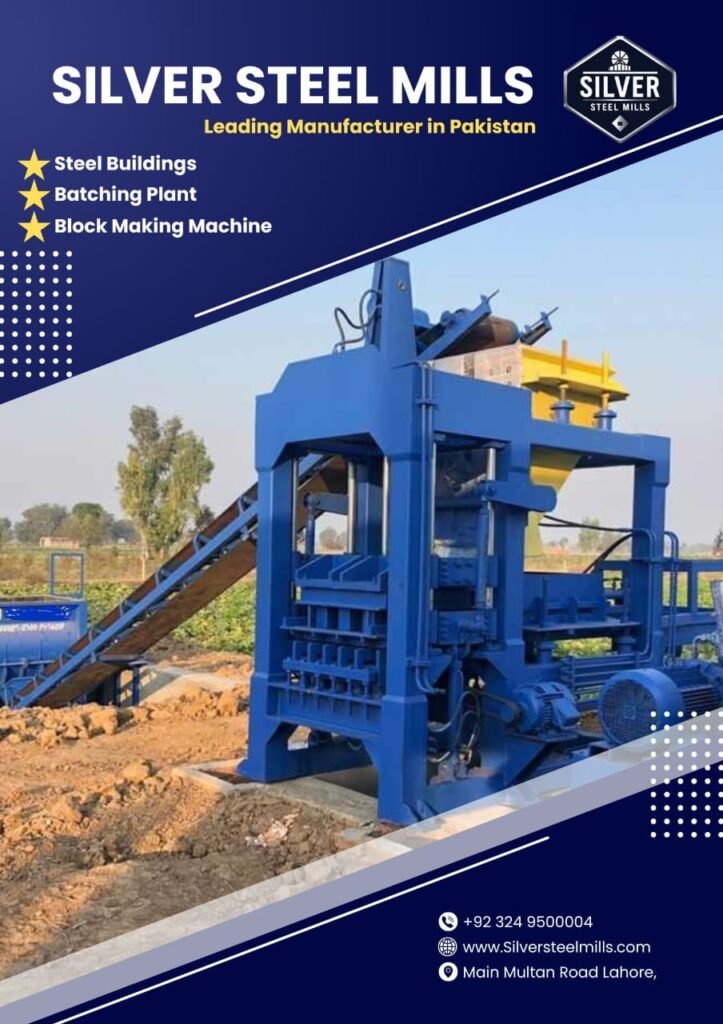
Silver Steel Mills ka SSM-15 Auto Single Plant (real quotation based system) approx 41,00,000 PKR me market me place hota hai, jo 100–110 pallets/hour production tak support karta hai.
H2: Machine Overview (Industrial Understanding)
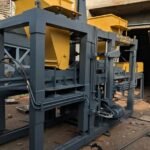
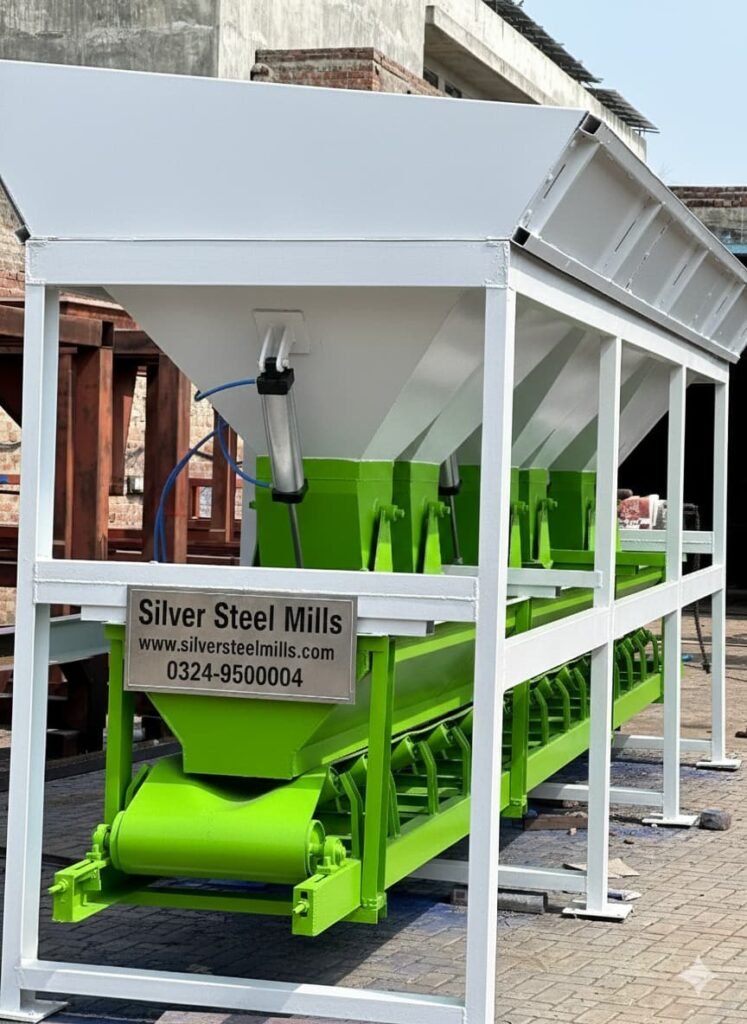
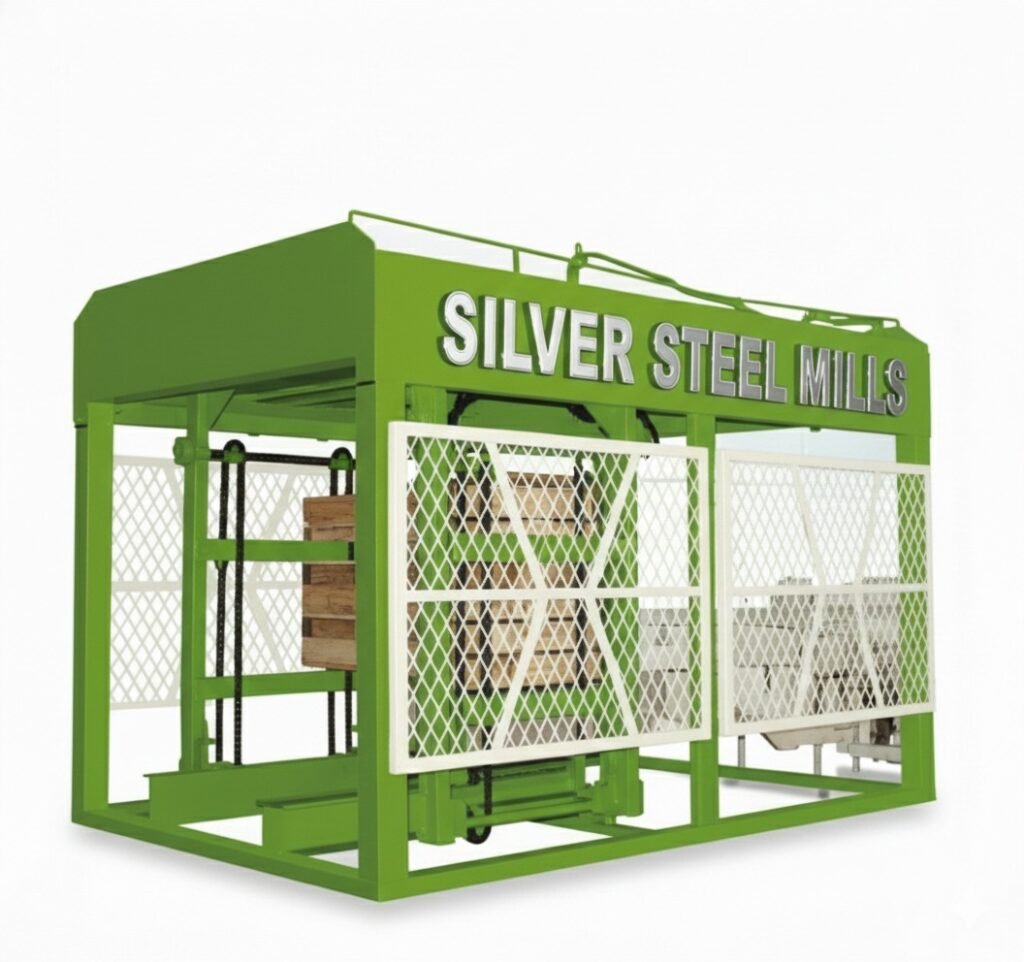
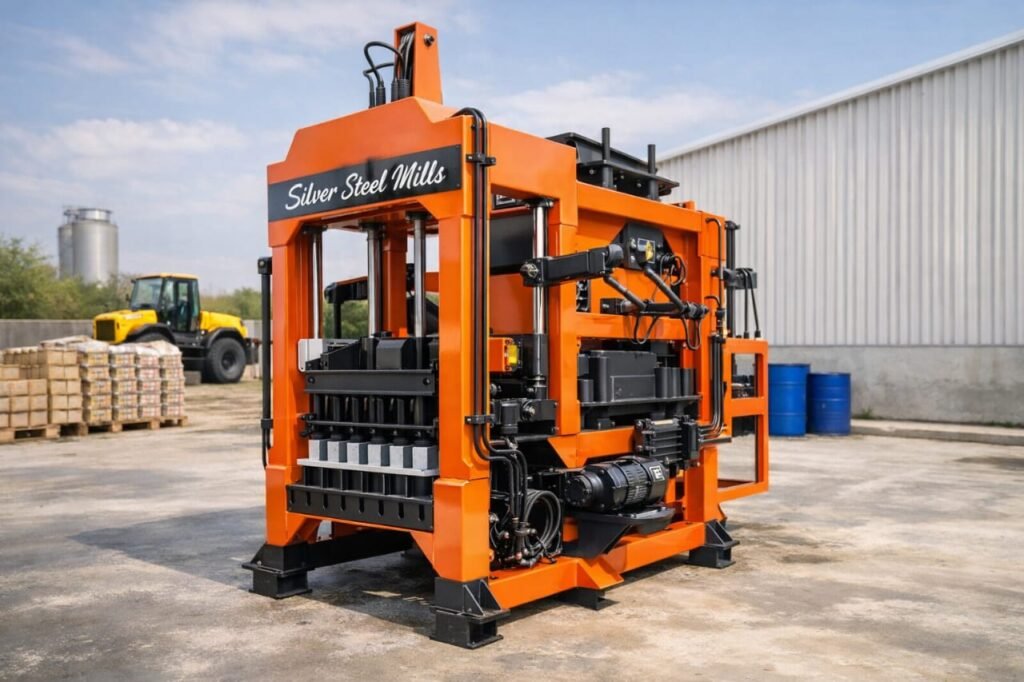
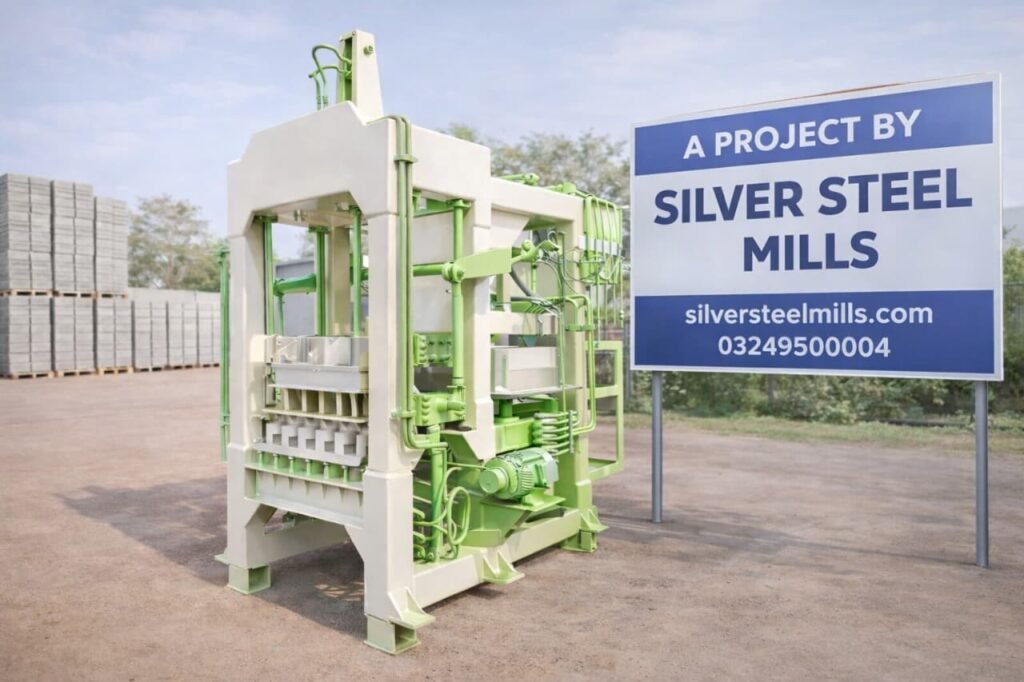
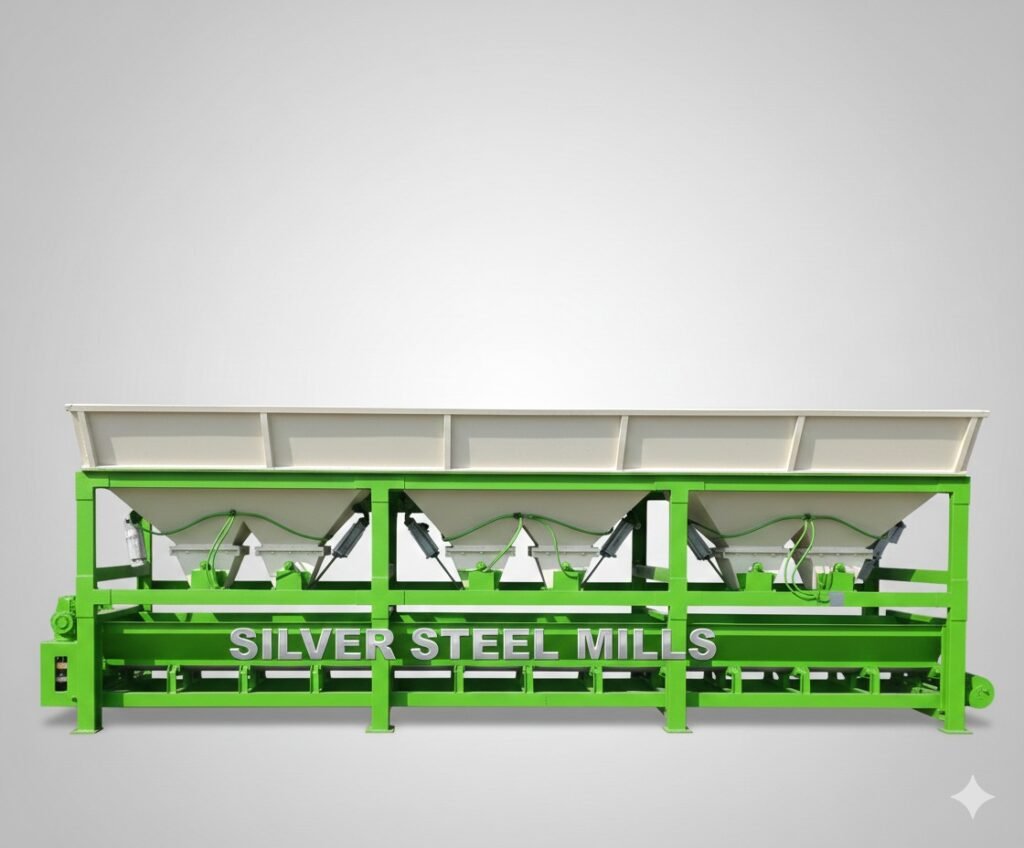
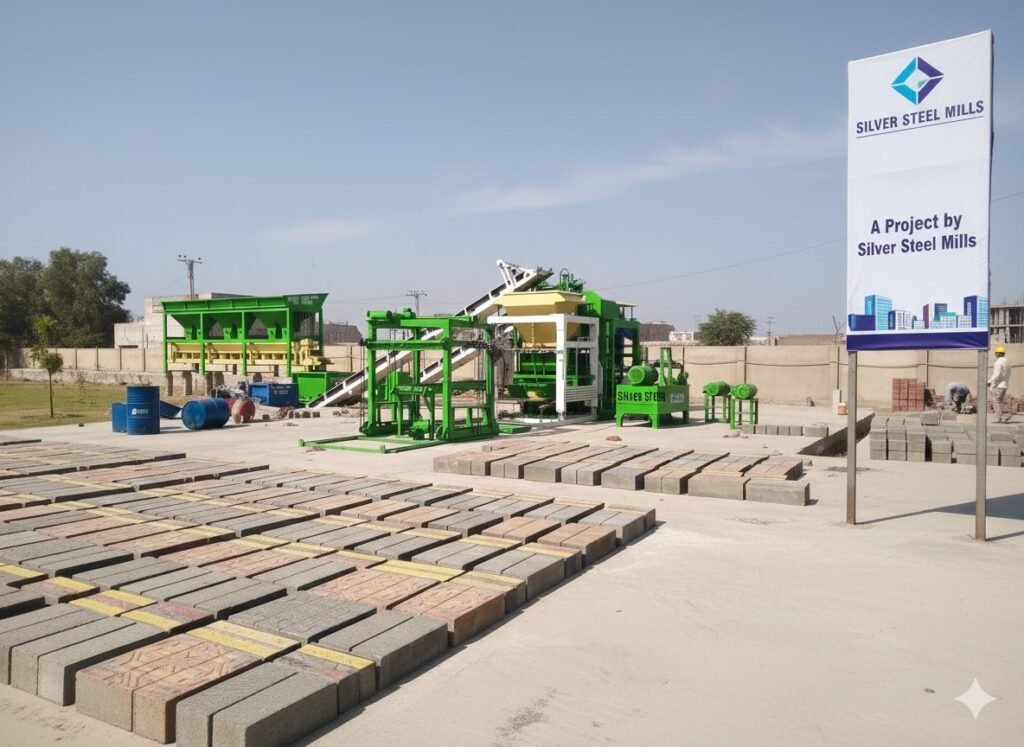
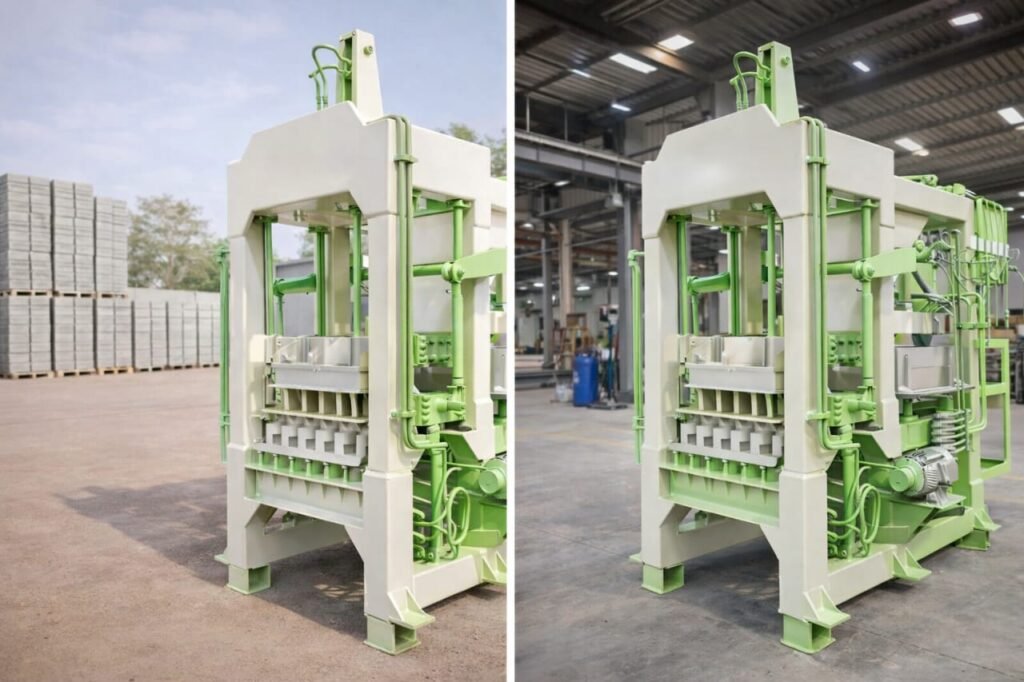
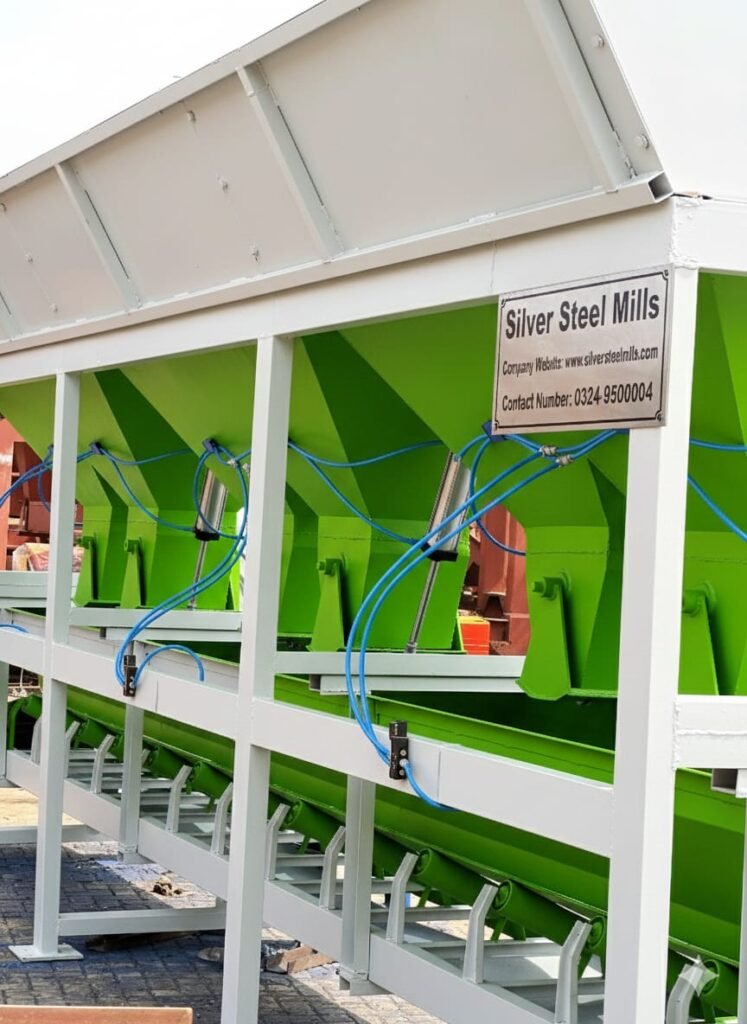
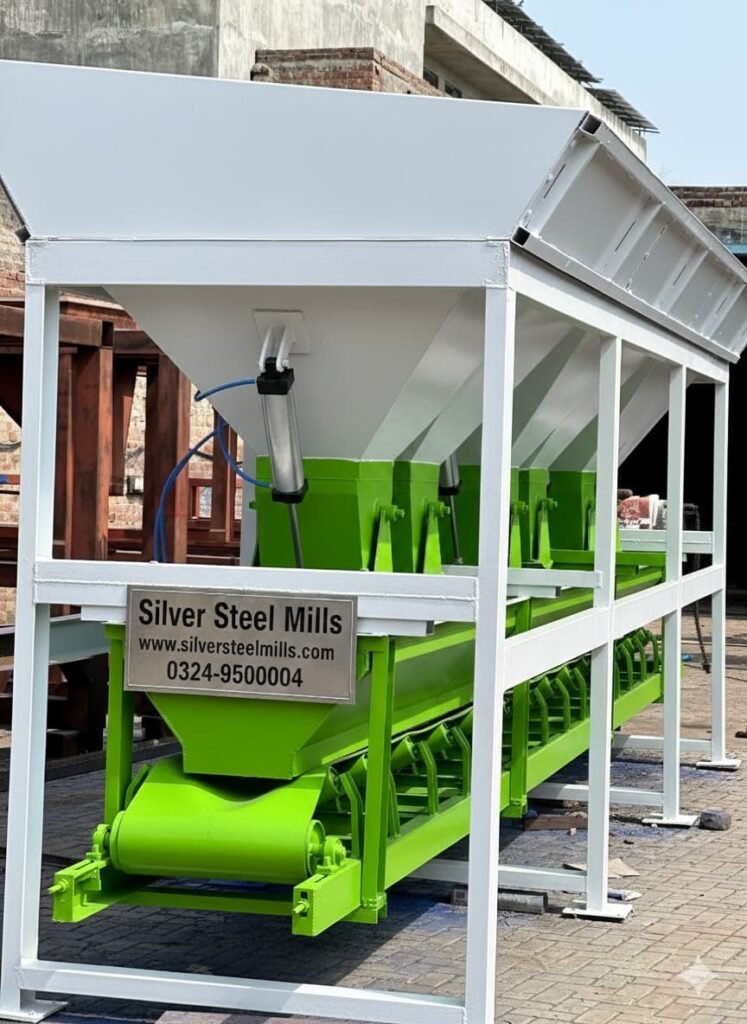
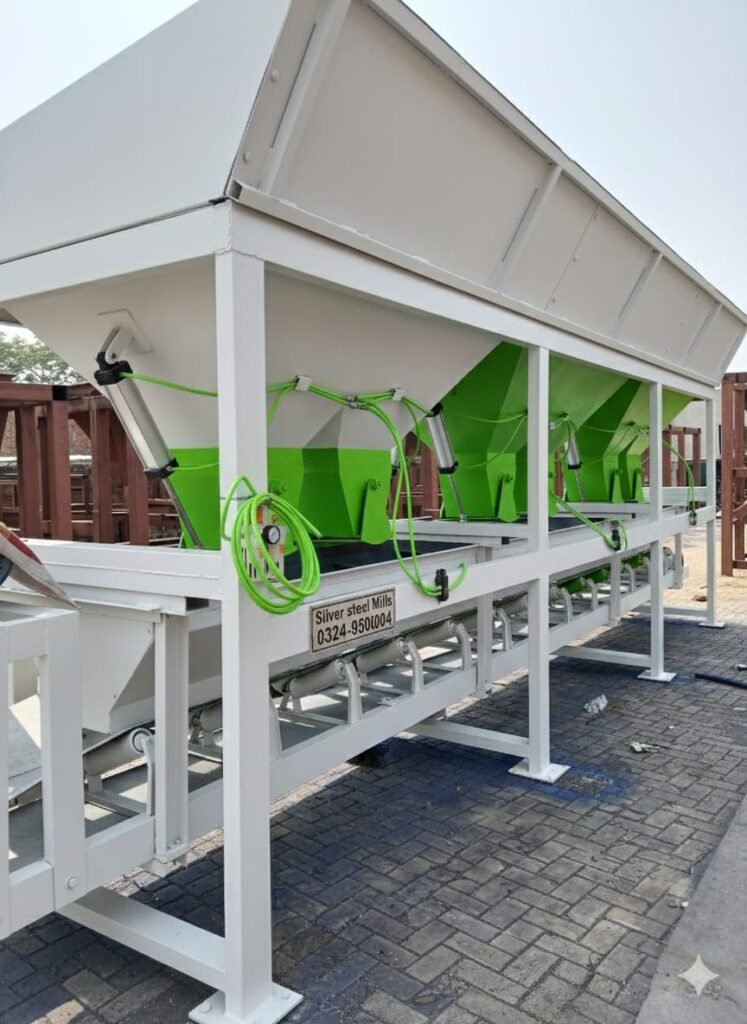
Paver plant machine actually ek complete production line hoti hai, sirf “press machine” nahi hoti. Is system me:
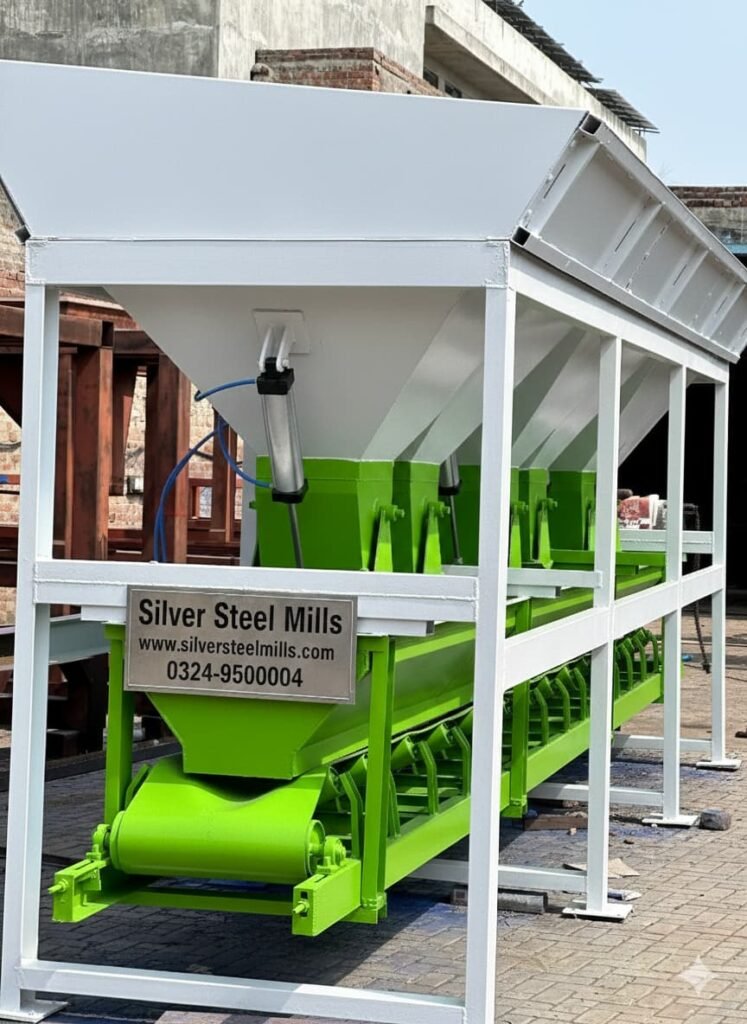
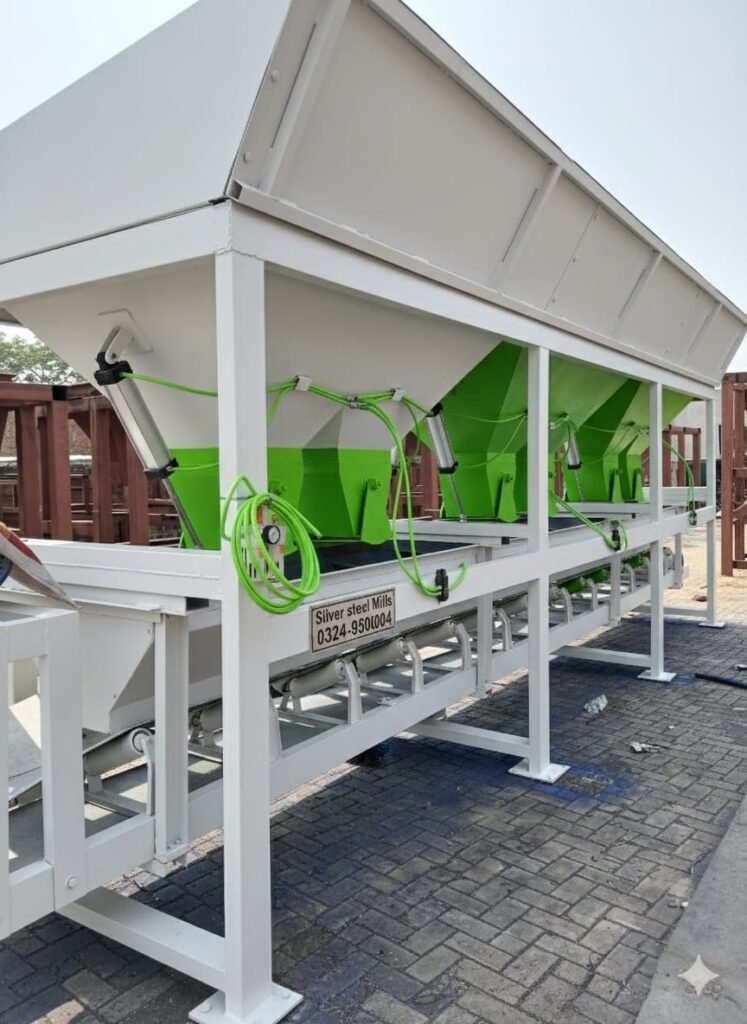
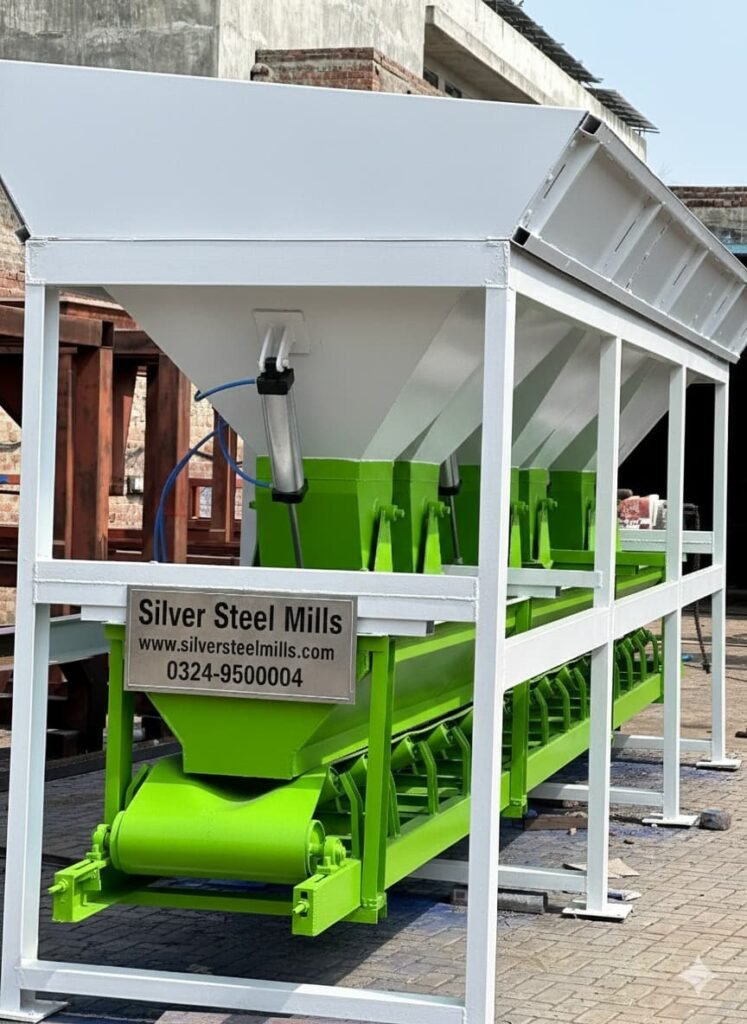
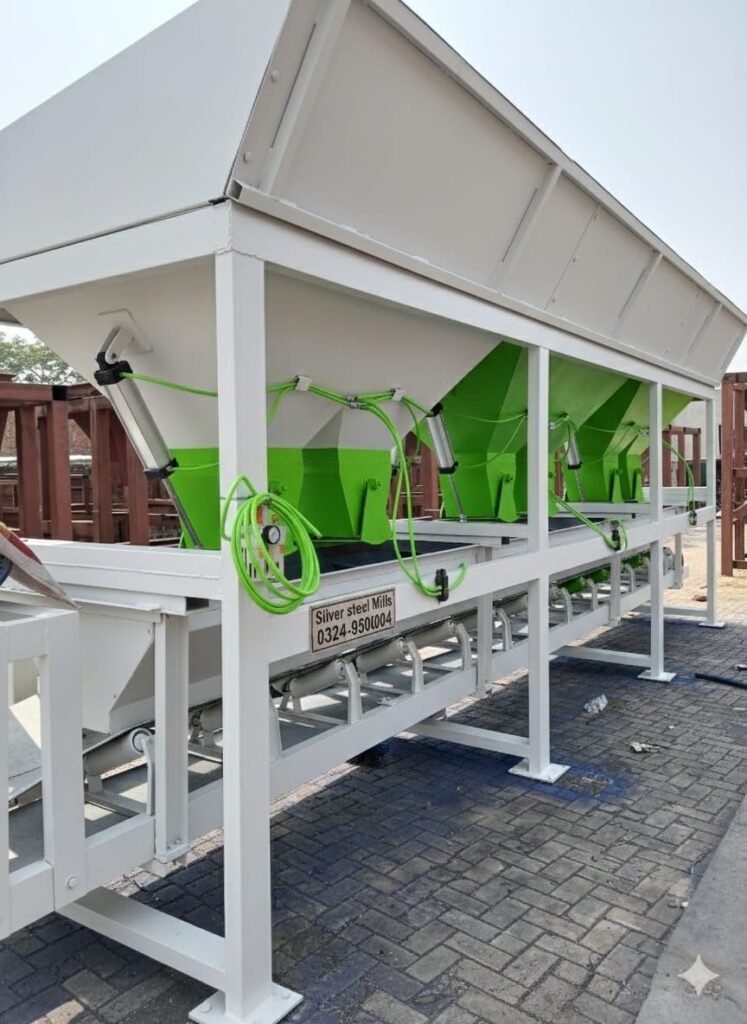
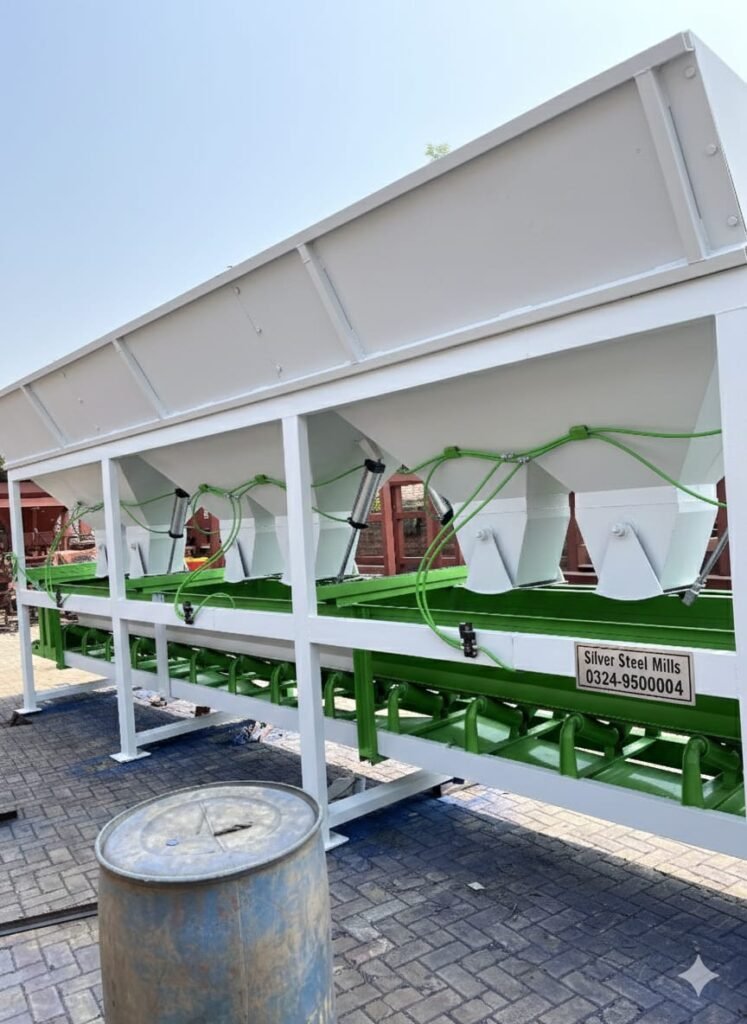
- Aggregate storage hopper
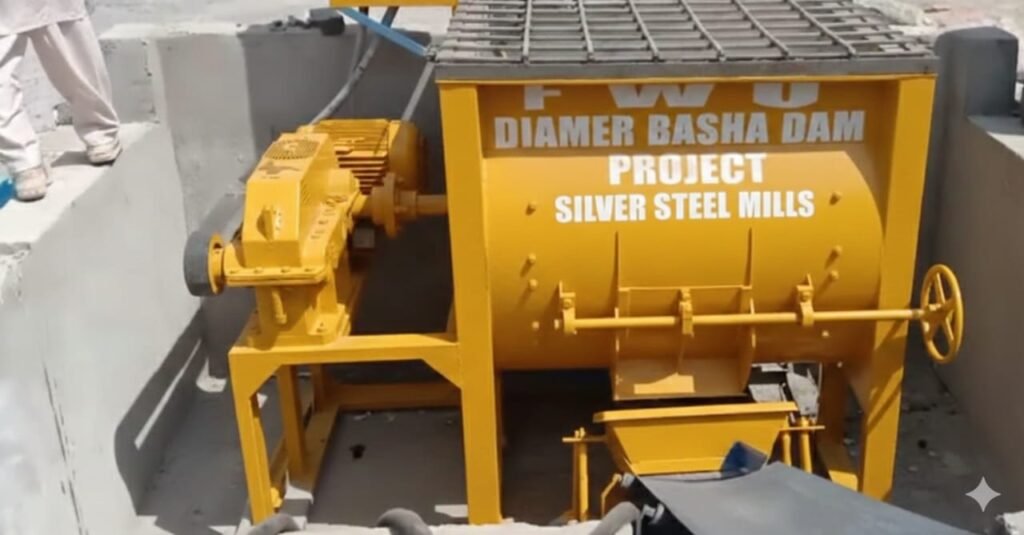
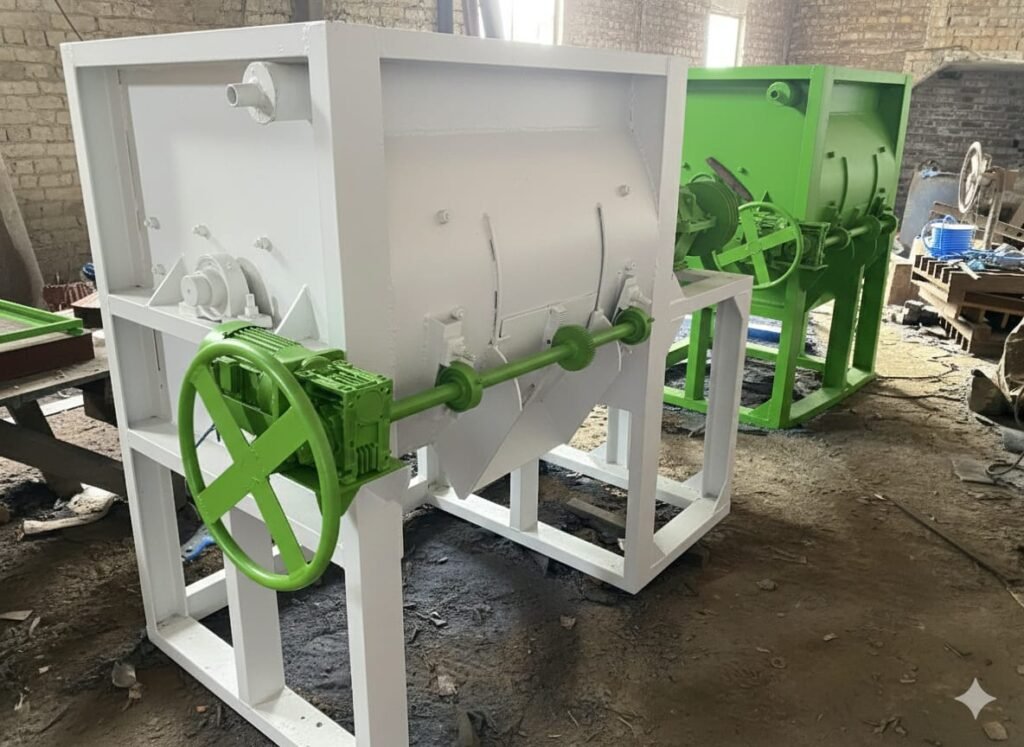
- Concrete mixer
- Conveyor system
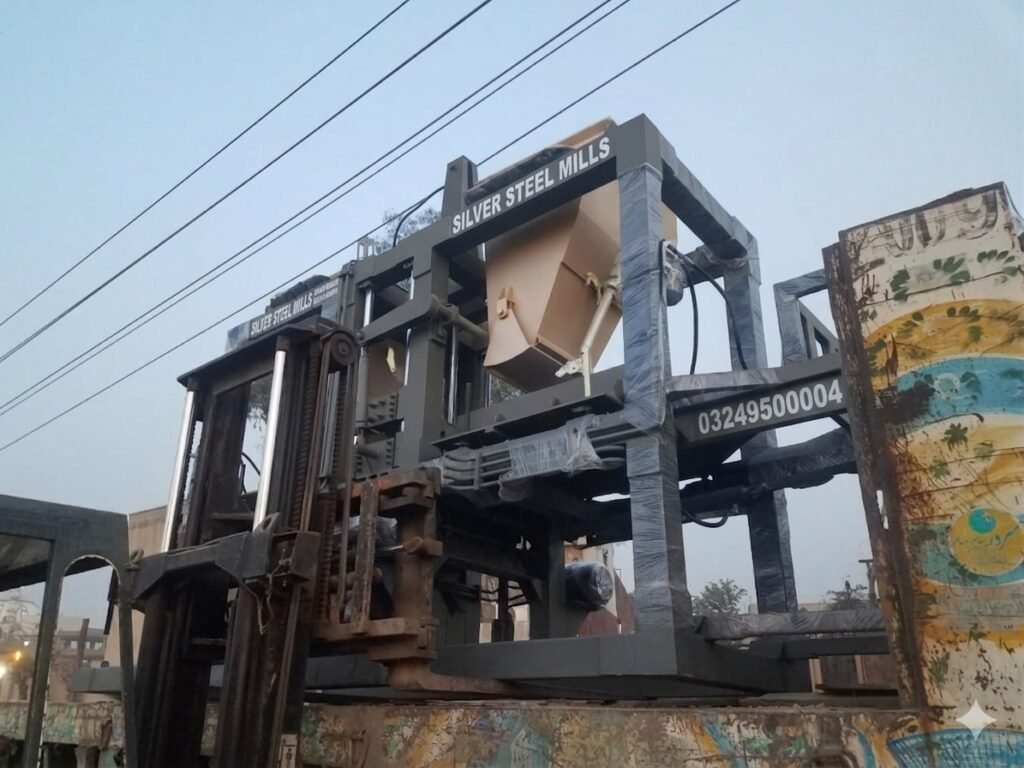
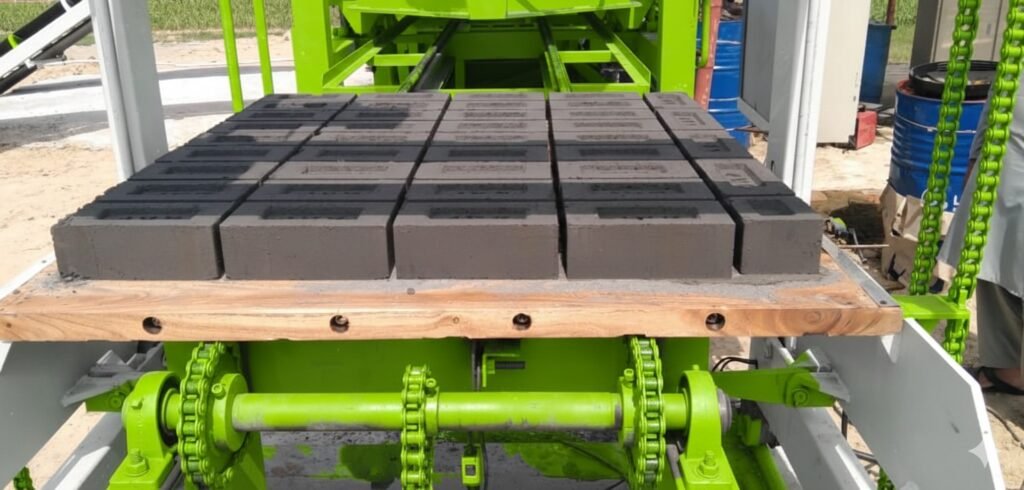
- Hydraulic press unit
- Vibration system
- Mould unit
- Pallet handling system
ye sab integrated hota hai.
Silver Steel Mills ke systems me imported gears, hydraulic pumps aur vibration motors use hote hain jisse production stable rehta hai.
H2: Technical Specifications (Real Factory Data)
H3: SSM-15 Paver Plant Key Specs
- Production cycle: 25–35 seconds
- Output: 100–110 pallets/hour
- Hydraulic pressure system: 20 HP pump
- Vibration system: 20 HP (10×2 motors)
- Mixer motor: 20 HP
- Total power load: ~63 HP
- Product height range: 50mm – 200mm
- Pallet size: 650 x 750 mm
👉 Real factory observation:
Is level par machine 1 shift me easily 5000–6000 pavers produce kar leti hai agar material supply continuous ho.
H2: Electricity Requirements
Paver plant ka power consumption industrial category me aata hai.
Average Load:
- 45 HP – 80 HP depending on model
- 3-phase industrial connection required
- Generator backup strongly recommended (especially Punjab/Sindh areas where voltage fluctuation common hai)
👉 Practical issue:
Agar voltage unstable ho to vibration quality impact hoti hai aur block density weak ho sakti hai.
H2: Labor Requirements (Real Factory Setup)
Semi automatic plant me labor dependency moderate hoti hai.
| Position | Quantity |
|---|---|
| Machine operator | 1–2 |
| Mixer operator | 1 |
| Material loader | 2 |
| Curing workers | 3–5 |
| Packing & shifting | 2 |
👉 Total: 7–10 workers per shift
Fully automatic plant me labor 30–40% kam ho jata hai.
H2: Area Requirement (Factory Layout)
| Plant Type | Area Required |
|---|---|
| Small setup | 5–10 marla |
| Medium plant | 1–2 kanal |
| Industrial plant | 3–5 kanal |
Important point:
Paver business me curing yard sab se important hota hai. Production se zyada space curing blocks consume karte hain.
H2: Raw Materials Used
Pakistan me locally available material use hota hai:
- Cement (OPC 43/53 grade)
- Crush (3/8 or 5/8)
- River sand
- Stone dust
- Fly ash (cost reduction option)
👉 Industrial ratio usually:
1 cement : 3 sand : 2 crush (application ke hisaab se change hota hai)
H2: Manufacturing Process (Factory Workflow)
Paver production ek continuous mechanical process hai:
Step-by-step flow:
- Material batching (manual or semi automatic)
- Mixer blending (uniform concrete mix)
- Conveyor feeding into hopper
- Hydraulic pressing into mould
- Vibration compaction
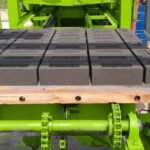
- Pallet ejection
- Curing (7–14 days standard)
- Storage & dispatch
👉 Real insight:
Curing quality directly product strength decide karti hai, machine nahi.
H2: Production Capacity vs Reality
| Machine Type | Theoretical Output | Real Factory Output |
|---|---|---|
| Semi manual | 1000–2000/day | 800–1500/day |
| Semi auto | 2500–4000/day | 2000–3500/day |
| SSM-15 automatic | 6000+/day | 4500–6500/day |
👉 Gap kyun hota hai?
- material delay
- labor inefficiency
- curing space limitation
H2: Business Profit Potential (Pakistan Market)
Example calculation (realistic factory model):
- Daily production: 5000 pavers
- Selling price: 25–45 PKR per paver (design & size dependent)
- Cost per unit: 15–25 PKR
Daily profit:
~50,000 to 120,000 PKR
Monthly profit:
~12 lakh to 30 lakh PKR
👉 High profit cases:
Contract-based supply (DHA, housing societies) me profit aur zyada hota hai.
H2: Maintenance Guide (Real Factory Experience)
Industrial machines failure ka main reason maintenance negligence hota hai.
Daily checks:
- Hydraulic oil level
- Vibration bolts tightness
- Mould alignment
- Conveyor belt tension
Weekly:
- Bearing lubrication
- Hydraulic filter cleaning
Monthly:
- Electrical panel inspection
- Gearbox oil check
👉 Important:
Imported hydraulic pumps ko overheating se bachana production life increase karta hai.
H2: Comparison Table – Semi Auto vs Automatic Plant
| Feature | Semi Automatic | Automatic Plant |
|---|---|---|
| Investment | Medium | High |
| Labor | Medium | Low |
| Production stability | Good | Excellent |
| Maintenance | Easy | Moderate |
| ROI speed | Fast | Medium-fast |
H2: Market Demand in Pakistan
Pakistan me paver demand rapidly increase ho rahi hai due to:
- Smart city projects
- DHA expansion phases
- Industrial zones development
- Parking area conversions
- Road beautification projects
Lahore, Karachi aur Islamabad me paver usage standard civil requirement ban chuka hai.
H2: Future Industry Trends
Next 5–10 years me paver industry me ye changes expected hain:
- Fully automatic robotic plants increase honge
- Eco-friendly fly ash pavers ka use barhega
- Export demand Middle East me increase hogi
- Smart molds aur CNC design systems adopt honge
- Energy-efficient hydraulic systems standard banenge
H2: Buyer Guide (Factory Owner Perspective)
Agar aap paver plant purchase karna chahte hain to sirf price par focus na karein.
Check list:
- Steel structure thickness
- Hydraulic pump brand & PSI rating
- Mould quality (CNC cut preferred)
- After-sales service availability
- Spare parts local market availability
- Installation support
👉 Real advice:
Cheap machine long-term me zyada loss deti hai due to downtime aur repair cost.
H2: FAQs
Q1: Paver plant machine price in Pakistan kitna hai?
Price 18 lakh se 1.5 crore tak jata hai depending on automation level aur capacity.
Q2: SSM-15 plant kitna production deta hai?
Approx 5000–7000 pavers per day under proper operation.
Q3: Kya paver business profitable hai?
Haan, agar proper contracts aur consistent production ho to ye high-margin industrial business hai.
Q4: Kya fly ash pavers bana sakte hain?
Yes, modern machines fly ash aur cement mix dono support karti hain.
Q5: Minimum space kitni chahiye?
Small setup ke liye 5–10 marla aur industrial plant ke liye 1–5 kanal required hota hai.
The infrastructure shift across Pakistan is no longer a prediction; it is an active floor reality. From municipal walkways managed by the Lahore Development Authority (LDA) and extensive parking plazas in DHA Karachi, to heavy-duty logistical service bays along the China-Pakistan Economic Corridor (CPEC) networks, interlocking concrete pavers—locally called tuff tiles—have permanently replaced traditional asphalt and clay bricks.
For commercial investors, setting up a mechanized precast yard offers an exceptionally stable, weather-independent industrial business. However, navigating the machinery market to evaluate a true paver plant machine price in Pakistan can be highly deceptive for buyers who evaluate machinery based on fresh paint rather than steel specifications and hydraulic engineering.
As active manufacturers at Silver Steel Mills (SSM), we believe in radical transparency. Cheap, non-engineered roadside workshops often quote deceptively low prices by using structural scrap from ship-breaking yards and masking the flaws with body filler. This comprehensive guide breaks down actual market pricing tiers, mechanical specifications, raw material footprints, and the real-world operational economics required to run a high-yield, lab-compliant paver factory in Pakistan.
1. Concrete Paver Market Demand & Industry Trends in Pakistan
The structural demand for precast paving blocks is dictated by localized construction economics. A high-density concrete paver eliminates the recurring patching costs of asphalt, handles heavy axle loads without rutting, and allows immediate underground utility access simply by lifting and replacing the interlocking units.
Critical Industry Trends Shaping the Market:
- The High-PSI Enforcement: Government consultants, corporate developers, and housing scheme inspectors no longer accept weak, hand-pressed pavers. Modern contracts legally enforce strict minimum thresholds—typically 5,000 PSI to 7,000 PSI for vehicular interlocking tuff tiles. Hitting these strengths uniformly requires heavy hydraulic compaction combined with high-frequency synchronized vibration.
- The Move to Face-Mix (Dual Layer) Production: To save on expensive oxide pigments, the market has shifted entirely toward dual-layer machines. These plants press a rugged, uncolored grey concrete base layer, immediately topped with a thin, vibrant, UV-stabilized 6mm colored face-mix.
- Complete Digital Batching Automation: With labor costs rising and manual mixing prone to human error, modern yards are installing automated hopper bins with digital load cells to guarantee precise aggregate weight ratios for every single batch.
2. Unmasking the Paver Plant Machine Price Tiers in Pakistan
When evaluating a paver plant machine price in Pakistan, you are paying for structural deadweight, hydraulic flow capacity, and the automation tier. In the local market, prices generally fall into three distinct commercial categories:
Tier 1: Small-Scale & Startup Automated Plants (Rs. 4,100,000 to Rs. 6,500,000)
- Target Models: SSM 15 Auto Single / SSM 18 Heavy-Duty
- What’s Included: Core vibro-compression machine (single portion), primary pan mixer, basic conveyor belts, and a single-trolley manual or semi-auto pallet handling layout.
- Best For: Regional town markets, brick kiln owners transitioning to precast, or small-scale local commercial contractors.
Tier 2: Mid-Tier Commercial Dual-Layer Lines (Rs. 10,000,000 to Rs. 16,000,000)
- Target Models: SSM 24 / SSM 28 Automated Systems
- What’s Included: Dual-hopper core machine (for authentic face-mix tuff tiles), automatic vertical pallet stacker, twin concrete pan mixers, and a 3-bin aggregate batching plant fitted with electronic load cell scales.
- Best For: Industrial yard owners bidding on defense housing contracts, municipal tenders, and high-volume commercial plazas.
Tier 3: Mega-Scale Infrastructure Complexes (Rs. 25,000,000+)
- Target Models: SSM 50 Mega Automatic
- What’s Included: Dual-portion heavy pressing station, high-speed multi-tier double trolley system, industrial planetary mixers, automated pigment dosing feeders, and heavy-duty automated packaging tracks.
- Best For: Tier-1 infrastructure developers, multinational engineering firms, and high-capacity manufacturing centers operating continuous multi-shift operations.
3. Machine Classifications & Engineering Specifications
Selecting the correct model configuration dictates your entire factory layout and target market segment. At Silver Steel Mills, we construct industrial-grade plants utilizing certified, brand-new prime steel plates (14mm to 24mm thick) paired with imported, hard-chrome vertical guide shafts to withstand extreme daily stress cycles.
SSM 18 (Heavy-Duty Single Portion Plant)
A highly rugged compaction unit optimized for regional commercial markets.
- Compaction Hydraulics: Fitted with a heavy-duty, 21-gallon pump delivering up to 10,000 PSI of working pressure, backed by an integrated hydraulic oil cooling system.
- Vibration System: 20 HP high-frequency vibration capacity.
- Pallet Configuration: Uses a 32″ × 30″ wooden pallet layout, pressing 18 interlocking tuff tiles per drop.
SSM 24 & SSM 28 (Double Layer Automated Systems)
The commercial standard for high-volume factories producing dual-layer tuff tiles (pigmented face-mix with a high-strength concrete base) and load-bearing structural blocks.
- Material Management: Includes an automated double-layer material feeding system and heavy-duty vertical pallet stackers.
- Power Drive Configuration: Equipped with a 30 HP hydraulic pump motor and dual 20 HP vibration motors (40 HP total vibration capacity).
- Batching Integration (SSM 28): Features a fully automated 3-hopper aggregate batching plant with digital weight-scale conveyor belts.
SSM 35 & SSM 50 (Mega-Scale Automated Complexes)
The pinnacle of precast engineering in Pakistan, custom-built for high-capacity commercial suppliers.
- System Integration: Features dual-portion material distribution, pneumatic aggregate gates, twin industrial mixers, and multi-tier double trolley automated transport handling.
- Performance Benchmark: Operates at an extreme structural compaction range, delivering certified 6,000 to 7,000 PSI tuff tiles and pavers easily.
Technical Specifications & Connected Power Matrix
The table below details the electrical and hydraulic specifications across the core Silver Steel Mills machinery line, providing your site engineers with the necessary data for transformer sizing and factory floor planning.
| Technical Parameter | SSM 15 Single | SSM 18 Heavy-Duty | SSM 24 Double Layer | SSM 28 Batching Line | SSM 50 Mega Plant |
| Hydraulic Pump Power | 20 HP | 20 HP | 30 HP | 30 HP | 40 HP |
| Vibration Table Motors | 20 HP | 20 HP | 40 HP (20 HP × 2) | 40 HP | 60 HP (30 HP × 2) |
| Primary Mixer Motor | 20 HP | 20 HP | 30 HP | 40 HP | 40 HP (30 kW) |
| Secondary Face-Mix Mixer | N/A | N/A | 10 HP | 10 HP | 10 HP |
| Conveyors & Stacker Drives | 3 HP | 11 HP | 15 HP | 15 HP | 21 HP |
| Batching Plant Drive | N/A | N/A | 10 HP | 10 HP | 10 HP |
| Total Plant Connected Load | 63 HP | 63 HP | 135 HP | 145 HP | 182 HP |
| Hydraulic Tank Capacity | 400 Liters | 450 Liters | 600 Liters | 550 Liters | 800 Liters |
| Standard Pallet Footprint | 650×750×28 mm | 32″ × 30″ | 30″ × 42″ | 35″ × 42″ | 38″ × 45″ |
4. Production Capacity Profiles (8-Hour Shift)
Your daily output determines your cash flow and capacity to fulfill commercial orders on schedule. The table below outlines real-world production capacities over a standard 8-hour shift, operating at a realistic 85% plant floor efficiency.
| Machine Model Configuration | 60mm Interlocking Tiles (Uni / Double-Hex) | 80mm Heavy Industrial Pavers | Square Foot (SFT) Equivalent Yield |
| SSM 15 Auto Single | 2,500 Units | Not Recommended | ~550 SFT |
| SSM 18 Heavy-Duty | 3,500 – 4,000 Units | 2,200 Units | ~850 SFT |
| SSM 24 Industrial Tier | 8,000 – 10,000 Units | 6,000 Units | ~2,100 SFT |
| SSM 35 Automated Line | 28,000 Units | 18,000 Units | ~6,000 SFT |
| SSM 50 Mega Automatic | 40,000 Units | 26,000 Units | ~8,800 SFT |
5. Factory Area & Infrastructure Layout Requirements
Setting up a factory without calculating spatial workflows and utility thresholds creates severe internal logistical bottlenecks. Concrete paver factories require substantial storage space because finished products must be water-cured over multiple days before shipping.
Spatial Allocation Matrix:
- Land Footprint: You need a minimum of 3 to 4 Kanals for a basic semi-automatic installation. For large industrial configurations featuring a complete aggregate batching plant and multi-tier curing yards, a minimum of 1 Acre (8 Kanals) is highly recommended.
- Layout Streamlining: The site must follow a strict, one-way linear progression. Raw aggregates must be discharged at the rear near the batching hoppers, moving forward to the mixing station, into the core molding press, out to the initial 24-hour green setting zone, and finally to the water-sprinkling curing yard and loading bay.
[Raw Material Stockpile] ➔ [Digital Batching Hoppers] ➔ [Twin Pan Mixers] ➔ [Vibro-Compression Core] ➔ [Vertical Stacker System] ➔ [Water Sprinkler Curing Tracks]
- Floor Engineering: The production core demands a level, steel-reinforced concrete foundation (6-inch to 8-inch thickness) layered with high-density rubber damping pads beneath the machine base. This isolates the high-frequency vibration table, preventing long-term structural cracks in your factory floor.
Electricity & Utilities:
- Grid Load Requirements: Smaller manual or single-portion setups run on a 3-phase commercial connection of 40 kW to 50 kW. Large automated systems require a 3-Phase B2 Industrial Tariff connection ranging from 100 kW to 150 kW. Factory owners must install a dedicated 150-200 kVA substation transformer on-site to handle peak motor startup currents without voltage drops.
- The Diesel Generator Mandate: Grid load shedding can ruin a concrete mix mid-cycle. If power fails while a semi-dry concrete mix is rotating inside your pan mixer, the batch will set within twenty minutes, locking up and destroying the mixing blades. A backup 60 kVA to 200 kVA diesel generator (Perkins or Cummins core) is a mandatory safety net.
6. Raw Materials & Advanced Dual-Layer Mix Designs
To hit the 5,000+ PSI thresholds demanded by institutional contracts, your mix design must use clean, well-graded angular aggregates rather than smooth river sand.
Material Selection Criteria:
- Coarse Aggregates (Chips / Bajri): $1/4$-inch down fine crushed stone chips, sized strictly between 3mm and 8mm. Avoid smooth, round river gravel; aggregates must be angular to lock together tightly under hydraulic pressure. Source from Sargodha, Margalla, or Hub quarries depending on your province.
- Fine Aggregates (Stone Dust): Clean, fine stone dust passing through a No. 4 sieve. This component fills internal voids between larger stone chips, maximizing final paver density.
- River Sand (Lawrencepur Coarse or equivalent): Must be well-graded and thoroughly screened to remove silt and organic clay; high silt levels weaken the cement bond, causing tiles to peel and pit over time.
- Cement Matrix: Ordinary Portland Cement (OPC) Grade 42.5 or 52.5 from high-performance regional plants (Lucky, Maple Leaf, Bestway).
- Top Layer Pigmentation: For authentic dual-layer tuff tiles, use imported UV-resistant iron oxide pigments (German or high-grade global brands). Cheap pigments fade under intense sunlight within a year, leading to client disputes and rejected projects.
Dual-Layer Mix Matrix Model (For 60mm 5,000+ PSI Pavers)
- Base-Mix Structural Body: 1 Part Cement : 2 Parts Fine Stone Dust : 2.5 Parts Coarse Chips (3-8mm) : 0.5 Parts Sand. The moisture content must be strictly semi-dry (6% to 8% total water mass). If the mix is too wet, the blocks will sag when demolded. If it is too dry, internal structural cohesion fails.
- Face-Mix Top Coating (6mm Top Layer): 1 Part White/Grey Cement : 2 Parts Ultra-Fine Screened Sand/Quartz Dust : Premium Iron Oxide Pigment (typically 4% to 5% of cement weight). This layer is mixed with a slightly higher moisture content to achieve a smooth, closed surface finish that seals out rainwater.
7. The Step-by-Step Manufacturing Process
- Weigh-Batching: Raw aggregates are loaded into the batching hoppers via wheel loader, where electronic load cells weigh the sand and stone dust precisely by weight before transferring them onto the conveyor belt.
- Synchronized Mixing: Aggregates enter the primary pan mixer for a 90-second dry blend. Water and cement are accurately added next, mixing for another 2 minutes until the semi-dry base concrete is uniform. Concurrently, the smaller secondary mixer processes the colored face-mix.
- Dual-Layer Mold Filling: The automated pallet feeder slides a clean pallet under the molding station. The machine moves the colored face-mix drawer forward first, spreading a thin 6mm layer into the bottom of the tuff tile mold. The main base-mix drawer follows immediately, filling the rest of the mold cavity with high-strength structural concrete.
- High-Compaction Pressing: The top tamper head descends under high hydraulic pressure while the dual vibration tables engage at 4,500 RPM. This intense energy expels all micro-air pockets in 6 to 9 seconds, bonding the two distinct concrete layers into a single high-density paver.
- Ejection & Vertical Stacking: The hydraulic cylinders strip the mold box upward. The chain conveyor moves the finished pallet into a vertical stacker, where a forklift operator transfers the stacked pallets directly to the setting pad.
- Controlled Misting Curing: The tiles sit undisturbed on their pallets for the first 24 to 48 hours for initial hydration. They are then stripped from the pallets, stacked in dense cubes, and cured under a continuous water sprinkler or misting array for 7 to 14 days to ensure the cement reaches its full rated design strength.
8. Operational Labor Layout per Shift
Even with fully automated PLC touchscreen systems, your floor crew must function like a well-oiled gear to maintain maximum cycle speeds and minimize material waste.
| Staff Position Role | SSM 18 Setup | SSM 24 / 28 Automated Line | SSM 35 / 50 Mega Complex |
| Plant Foreman / Chief Operator | 1 Professional | 1 Professional | 2 Specialized Engineers |
| Batching & Mixer Crew | 2 Workers | 2 Workers | 2 Automated Station Operators |
| Forklift & Loader Drivers | 1 Certified Driver | 2 Certified Drivers | 2 Experienced Drivers |
| Yard Curing & Stacking Crew | 4 Laborers | 6 Laborers | 10 Laborers |
| Color Dosing Helpers | N/A | 2 Manual Dosing Assistants | Automated Color Dosing Feeder |
| Total Floor Personnel | 7 Crew Members | 13 Crew Members | 17 Crew Members |
9. Plant Economics & Business Profit Potential
To evaluate true operating margins, let’s look at the production economics of an automated commercial plant running an SSM 35 setup processing high-strength 60mm interlocking tuff tiles.
Cost Analysis per Square Foot (SFT)
A standard square foot consists of approximately 4.5 pieces of interlocking tiles.
- Raw Materials Cost (OPC Cement, Graded Dust, Chips, Pigment Top Layer): Rs. 54.00
- Direct Plant Labor Wages: Rs. 6.50
- Electricity Grid Consumption / Backup Generator Diesel Allowance: Rs. 5.50
- Hydraulic Fluid Depredation, Wear Spares, & Lubricant Allowances: Rs. 2.00
- Total Manufacturing Cost per SFT: Rs. 68.00
Market Pricing & Monthly Revenue Analysis
A high-density, lab-certified 6,000 PSI commercial tuff tile commands a wholesale market price of Rs. 95 to Rs. 115 per SFT when supplied directly to premium housing schemes or government contracts.
- Net Profit Margin per SFT: Rs. 32.00 (Assuming a conservative contract price of Rs. 100.00 per SFT)
- Daily Yield Statement: Producing 6,000 SFT per shift yields a daily net operating profit of Rs. 192,000.
- Monthly Income Statement (25 Operational Days): Returns a gross monthly profit of Rs. 4,800,000. After subtracting monthly administrative costs and working capital overheads (~Rs. 855,000), the net profit allows for a full return on your machinery capital investment within 10 to 14 months.
10. Preventative Maintenance Protocols for Plant Longevity
Abrasive stone dust and cement particles can mix with grease to form a grinding paste that can score hydraulic rams and accelerate valve wear if maintenance is neglected.
- The Daily Evening Pressure Wash: Wash down the pan mixer liners, core mold cavities, and tamper heads at the end of every shift. Hardened concrete residue inside the mold changes its internal dimensions, leading to irregular tile sizes that will fail dimensional inspections.
- Hydraulic System Fluid Care: Replace your hydraulic oil (Grade 68) after the first 500 hours of initial operation to flush out manufacturing particles, and every 2,500 hours thereafter. Ensure the oil temperature stays below 60°C to protect internal valve seals from cracking and leaking.
- Vibration Shaft Greasing: Pump high-temperature industrial grease into the eccentric table shafts every morning before powering up the motors. Check all core frame structural fasteners weekly; high-frequency vibration can loosen heavy bolts over time.
11. Side-by-Side Manufacturer Comparison Matrix
| Feature Parameters | Silver Steel Mills (Export Engineering) | Cheap Roadside Workshops |
| Main Frame Steel Source | Certified, Brand-New Prime Steel Plates | Re-rolled Scrap / Rusted Ship-breaking Plates |
| Hydraulic Systems | Brand-New High-Pressure (10,000 PSI Capability) | Refurbished Valves & Used Gear Pumps |
| Vibration Table Design | Synchronized High-Frequency (4,500+ RPM) | Unsynchronized Eccentric Shakers |
| Product Compressive Strength | High PSI (3,000 to 7,000 Lab-Compliant) | Low PSI (Often fails under structural load tests) |
| Spare Parts & Support | Off-the-Shelf Local Spares & Dedicated Engineers | No Warranties, Mismatched Parts, Long Downtimes |
12. Buyer Guidance: Sourcing Without Getting Scammed
When shopping for a paver plant machine in Pakistan, your biggest protection is on-site verification.
The Gadani Ship-Scrap Fraud
The single biggest scam in Pakistan’s machinery market involves the steel frame itself. Cheap local fabricators purchase low-cost, rusted, re-rolled steel plates or decommissioned metal from ship-breaking yards. They weld these plates into machine frames, apply a thick layer of body filler, and spray it with shiny paint. Under the extreme force of a 4,500 RPM vibration table, this brittle, re-rolled metal develops structural stress fractures within months. Always demand to visit your manufacturer’s shop floor to inspect the raw, unpainted steel plates before fabrication begins.
Used “Kabli” Hydraulics
To lower their production costs, unauthorized workshops install second-hand, refurbished hydraulic pumps and control valves sourced from scrap markets. These used components lose pressure as the hydraulic oil heats up, causing tile densities and dimensions to fluctuate. At Silver Steel Mills, we fit our plants exclusively with brand-new industrial hydraulic assemblies to ensure consistent, reliable compression cycles.
13. Frequently Asked Questions (FAQs)
Q1: Can I make standard hollow blocks and interlocking tuff tiles on the same machine?
Yes. All Silver Steel Mills plants feature completely interchangeable mold boxes. By unbolting your interlocking paver mold and dropping in a hollow block or solid brick mold, you can easily adapt your production lineup to match current market demand.
Q2: Why are the top surfaces of my tuff tiles peeling off after a few months?
Top layer peeling indicates a failure in the face-mix bond. This usually happens if the top face-mix layer is applied after the base concrete has already started to dry, or if the sand used in your face-mix contains high silt levels that weaken the cement matrix.
Q3: What type of production pallet is best for commercial paver manufacturing?
Seasoned wooden pallets work well for initial setups. However, due to continuous water exposure in the curing yard, they can eventually warp. High-density PVC or composite pallets stay flat over long-term use, ensuring your tiles maintain a perfectly level base during the critical initial setting phase.
Q4: Is it possible to launch this factory using a domestic electricity connection?
No. High-pressure hydraulic pumps and large industrial mixers require a stable commercial 3-phase connection (B1 or B2 industrial tariff level) to handle motor starting currents without hazardous voltage drops.
14. Future Industry Trends in Pakistan (2026–2030)
The precast landscape is rapidly professionalizing. Manual, non-engineered yards are closing down because corporate and municipal buyers now demand laboratory test certificates before approving material deliveries. Furthermore, the market is moving toward complete line integration, where automated stackers and pallet wrap networks handle packaging, allowing operators to transition to zero-touch production floors.
Partner with Silver Steel Mills
An industrial paver plant is a long-term capital investment. Saving a small amount upfront on a substandard machine from an unverified workshop usually leads to ongoing downtime, wasted material, and rejected commercial contracts.
At Silver Steel Mills, we design and engineer heavy-duty industrial machinery built to last. Our technical team works with you through every phase of your project: from mapping out land layouts and foundation specifications to final machinery commissioning, custom mold design, and operator training.
Paver Plant Machine Price in Pakistan: Complete Buyer’s Guide 2026
By Silver Steel Mills – Manufacturing Paver Plants Since 2005
I still remember the first paver plant we sold.
It was 2008. A customer from DHA Lahore came to our factory. He said, “Bhai, DHA mein ab gray paver band ho rahe hain. Red and brown pavers lagein ge. Machine hai?”
We had to build it for him. That was our SSM-18 prototype.
Today, paver plants are everywhere. Housing societies don’t want plain concrete anymore. They want colored interlocking pavers for driveways, walkways, parks, and commercial plazas.
But here’s the problem I see every week.
Someone calls me and says, “Paver plant kitne ka hai?”
I ask, “Single layer ya double layer?”
They say, “Kya farq hai?”
That’s why I’m writing this. Because if you buy the wrong machine, you cannot make the pavers the market actually wants.
Let me explain everything you need to know about paver plant machine prices in Pakistan. Real numbers. Real specifications. No brochure nonsense.
Semantic Keywords: Paver plant machine price Pakistan, color paver machine cost, double layer paver plant, interlocking paver machine, SSM paver plant
1. Introduction: What Is a Paver Plant and Why Do You Need One
A paver plant is a concrete block making machine specifically designed to produce paving tiles (pavers). The key difference from a standard block machine is the double layer system – a base layer of strong concrete and a top layer of colored concrete.
Why pavers instead of traditional paving:
| Traditional Paving (Concrete cast in place) | Pavers |
|---|---|
| Cracks over time | Individual units – one crack doesn’t spread |
| Difficult to repair | Replace individual pavers |
| Plain grey only | Multiple colors and patterns |
| Requires curing on site | Cured at factory – ready to lay |
| Lower initial cost | Higher initial cost, lower lifetime cost |
Where pavers are used in Pakistan:
| Application | Paver Type | Color Preference |
|---|---|---|
| Housing society driveways | Interlocking, 60mm thick | Red, brown, charcoal |
| Commercial plazas | Large format, 80mm thick | Grey, charcoal |
| Parks and walkways | Decorative, 50mm thick | Red, yellow, mixed |
| Gas stations | Heavy duty, 80-100mm thick | Grey |
| Factory floors | Industrial, 100mm thick | Grey |
| Street sidewalks | Standard, 50mm thick | Grey, red |
Why paver demand is exploding in Pakistan:
| Reason | Explanation |
|---|---|
| DHA and Bahria specifications | Both require colored pavers for new phases |
| Brick kiln closures | Paver demand shifted from clay bricks to concrete |
| Rising middle class | Homeowners want decorative driveways |
| Government tenders | PWD, NESPAK specify pavers for sidewalks |
| Better margins | Pavers sell for PKR 150-250 per sq ft vs PKR 80-120 for plain blocks |
Real example: A client in Bahria Town Karachi bought an SSM-24 paver plant in 2024. He produces red and charcoal interlocking pavers. He sells directly to the housing authority. His profit per sq ft is PKR 80. He produces 5,000 sq ft per day. That is PKR 4 lakhs profit per day.
2. Paver Plant Machine Specifications: Single Layer vs Double Layer
This is the most important decision you will make.
Single layer paver machine:
| Feature | Description |
|---|---|
| How it works | One layer of colored concrete throughout the paver |
| Color durability | Color fades as the paver wears (after 2-3 years) |
| Cost | Lower (PKR 20-35 lakhs for small machines) |
| Best for | Budget projects, short-term applications |
Double layer paver machine (recommended):
| Feature | Description |
|---|---|
| How it works | Grey base layer + thin colored top layer (3-5mm) |
| Color durability | Color remains even as paver wears (top layer stays) |
| Cost | Higher (PKR 45 lakhs to 1.5 crore) |
| Best for | Housing societies, government tenders, commercial projects |
Why double layer is worth the extra cost:
| Factor | Single Layer | Double Layer |
|---|---|---|
| Pigment cost per paver | PKR 10-15 (full thickness) | PKR 3-5 (only top layer) |
| Color fade | After 2-3 years | After 10+ years |
| Acceptance in DHA/Bahria | No (specifically banned) | Yes (required) |
| Tender eligibility | Limited | Yes |
| Selling price per sq ft | PKR 120-150 | PKR 180-250 |
The math: A double layer machine costs PKR 20-30 lakhs more than a single layer. But you save PKR 5-10 per paver in pigment cost. On 500,000 pavers (a medium housing scheme), your pigment saving alone is PKR 25-50 lakhs – more than the machine cost difference.
Silver Steel Mills double layer paver plants:
| Model | Type | Price (PKR) | Daily Capacity (sq ft) |
|---|---|---|---|
| SSM-18 | Double layer, semi-auto | 45,00,000 | 2,000-2,500 |
| SSM-24 | Double layer, automatic | 1,05,00,000 | 4,000-5,000 |
| SSM-28 | Double layer, auto with batching | 1,00,00,000+ | 5,000-6,000 |
| SSM-35 | Double layer, fully automatic | 1,50,00,000+ | 7,000-8,000 |
What is included in an SSM paver plant:
| Component | SSM-18 | SSM-24 | SSM-28 | SSM-35 |
|---|---|---|---|---|
| Main machine (double layer) | Yes | Yes | Yes | Yes |
| Base mixer (aggregate) | Yes (20 Hp) | Yes (30 Hp) | Yes (30 Hp) | Yes (30 Hp) |
| Color mixer (pigment) | Yes (10 Hp) | Yes (10 Hp) | Yes (10 Hp) | Yes (10 Hp) |
| Conveyor belts | Yes | Yes | Yes | Yes |
| Pallet chain conveyor | Yes | Yes | Yes | Yes |
| Stacker system | No | Yes | Yes | Yes |
| Batching system | No | Optional | Yes | Yes |
| Digital load cells | No | No | Optional | Yes |
| Mould (your size) | Yes (1) | Yes (1) | Yes (1) | Yes (1) |
| Wooden pallets | No | No | No | No |
| Installation | Yes | Yes | Yes | Yes |
3. Production Capacity: Real Output for Paver Plants
Paver production is measured in square feet or number of tiles per day.
Common paver sizes and coverage:
| Paver Size (inches) | Pieces Per Square Foot | Typical Application |
|---|---|---|
| 4″ x 8″ (rectangle) | 4.5 | Standard interlocking |
| 6″ x 6″ (square) | 4 | Small walkways |
| 8″ x 8″ (square) | 2.25 | Commercial plazas |
| 12″ x 12″ (square) | 1 | Large format |
| 6″ x 9″ (rectangle) | 2.7 | Medium traffic |
SSM-18 daily production (8-hour shift):
| Paver Size | Pieces Per Pallet | Pallets Per Hour | Daily Pieces | Daily Square Feet |
|---|---|---|---|---|
| 4″ x 8″ | 54 (6×9 grid) | 40-45 | 2,160-2,430 | 480-540 |
| 6″ x 6″ | 54 (6×9 grid) | 40-45 | 2,160-2,430 | 540-600 |
| 8″ x 8″ | 36 (6×6 grid) | 40-45 | 1,440-1,620 | 640-720 |
| 12″ x 12″ | 18 (3×6 grid) | 40-45 | 720-810 | 720-810 |
SSM-24 daily production (8-hour shift):
| Paver Size | Pieces Per Pallet (30″x42″) | Pallets Per Hour | Daily Pieces | Daily Square Feet |
|---|---|---|---|---|
| 4″ x 8″ | 108 (9×12 grid) | 40-45 | 4,320-4,860 | 960-1,080 |
| 6″ x 6″ | 120 (10×12 grid) | 40-45 | 4,800-5,400 | 1,200-1,350 |
| 8″ x 8″ | 64 (8×8 grid) | 40-45 | 2,560-2,880 | 1,140-1,280 |
| 12″ x 12″ | 28 (4×7 grid) | 40-45 | 1,120-1,260 | 1,120-1,260 |
SSM-35 daily production (8-hour shift):
| Paver Size | Pieces Per Pallet (35″x48″) | Pallets Per Hour | Daily Pieces | Daily Square Feet |
|---|---|---|---|---|
| 4″ x 8″ | 126 (9×14 grid) | 50-55 | 6,300-6,930 | 1,400-1,540 |
| 6″ x 6″ | 140 (10×14 grid) | 50-55 | 7,000-7,700 | 1,750-1,925 |
| 8″ x 8″ | 81 (9×9 grid) | 50-55 | 4,050-4,455 | 1,800-1,980 |
| 12″ x 12″ | 35 (5×7 grid) | 50-55 | 1,750-1,925 | 1,750-1,925 |
Meeting housing scheme demand:
| Housing Scheme Size (houses) | Pavers Needed (sq ft) | Required Daily Production | Recommended Machine |
|---|---|---|---|
| 100 houses | 100,000-150,000 | 5,000-7,500 | SSM-24 |
| 500 houses | 500,000-750,000 | 10,000-15,000 | SSM-35 (double shift) |
| 1,000 houses | 1,000,000-1,500,000 | 20,000-30,000 | SSM-35 (double shift) |
Real example: A DHA Phase 8 contract required 800,000 sq ft of red interlocking pavers. Delivery deadline: 60 days. Required daily production: 13,333 sq ft. The manufacturer used two SSM-35 machines running double shifts. They delivered on time.
4. Electricity Requirements for Paver Plants
Paver plants use more electricity than standard block machines because of the extra mixer and more powerful vibration.
SSM-18 power:
| Component | HP |
|---|---|
| Hydraulic pump | 20 |
| Vibration motors (2) | 10+10 |
| Base mixer | 20 |
| Color mixer | 10 |
| Conveyor | 3 |
| Total | 73 HP |
Daily consumption: 350-400 units. Monthly cost (PKR 35/unit, 25 days): PKR 3.0 – 3.5 lakhs.
SSM-24 power:
| Component | HP |
|---|---|
| Hydraulic pump | 30 |
| Vibration motors (2) | 20+20 |
| Base mixer | 30 |
| Color mixer | 10 |
| Conveyors | 6 |
| Stacker | 10 |
| Batching (optional) | 10 |
| Total | 136 HP |
Daily consumption: 600-700 units. Monthly cost: PKR 5.2 – 6.1 lakhs.
SSM-35 power:
| Component | HP |
|---|---|
| Hydraulic pump | 30 |
| Vibration motors (2) | 20+20 |
| Base mixer | 30 |
| Color mixer | 10 |
| Conveyors | 11 |
| Stacker | 10 |
| Batching | 10 |
| Total | 141 HP |
Daily consumption: 700-800 units. Monthly cost: PKR 6.1 – 7.0 lakhs.
Power requirements checklist for paver plants:
| Requirement | Why |
|---|---|
| Three-phase connection | Mandatory |
| Sanctioned load >80% of HP | Otherwise breakers trip |
| Voltage stabilizer (20-30% oversized) | Protects sensitive PLC from fluctuations |
| Generator backup (150-200 kVA for SSM-35) | Load shedding stops color mixing – ruins batch |
| Separate circuit for color mixer | Pigment dosing requires stable voltage |
Generator sizing:
| Machine | Minimum Generator (kVA) | Recommended (kVA) |
|---|---|---|
| SSM-18 | 100 | 125 |
| SSM-24 | 150 | 200 |
| SSM-35 | 200 | 250 |
Karachi and Rawalpindi note: Both cities have voltage fluctuation issues. Do not skip the stabilizer. A fried PLC board costs PKR 2-5 lakhs and takes 2-4 weeks to replace.
5. Labor Requirements for Paver Plants
Paver production requires more skilled labor than block production because of color mixing and quality control.
SSM-18 labor (single shift, 7-8 people):
| Position | Number | Daily Wage (PKR) | Skills |
|---|---|---|---|
| Machine operator | 1 | 1,500 – 2,000 | Double layer process |
| Color mixer operator | 1 | 1,500 – 2,000 | Pigment dosing accuracy |
| Base mixer feeder | 1 | 1,000 – 1,300 | |
| Quality control | 1 | 1,200 – 1,800 | Checks color consistency, edges |
| Pallet handlers | 2 | 800 – 1,000 | |
| Curing yard | 1-2 | 700 – 900 |
SSM-24 labor (single shift, 10-12 people):
| Position | Number | Daily Wage (PKR) | Skills |
|---|---|---|---|
| Machine operator | 1 | 1,800 – 2,500 | Double layer + stacker system |
| Color mixer operator | 1 | 1,500 – 2,000 | |
| Base mixer feeder | 1 | 1,000 – 1,300 | |
| Quality control | 2 | 1,200 – 1,800 | Visual inspection of each pallet |
| Pallet handlers | 2-3 | 800 – 1,000 | |
| Curing yard | 2 | 700 – 900 | |
| Packaging | 2 | 800 – 1,000 | For delivery |
SSM-35 labor (single shift, 8-10 people, more automated):
| Position | Number | Daily Wage (PKR) | Skills |
|---|---|---|---|
| Control room operator | 1 | 2,500 – 4,000 | PLC, batching system |
| Color batching operator | 1 | 2,000 – 3,000 | Digital pigment dosing |
| Maintenance technician | 1 | 2,000 – 3,000 | Hydraulics, electrical |
| Quality control | 1 | 1,500 – 2,000 | |
| General laborers | 4-6 | 800 – 1,000 |
The most important hire: Color mixer operator.
Pigment dosing must be accurate. Too little pigment = faded color. Too much pigment = wasted money (pigment is expensive). The operator must also clean the color mixer thoroughly between color changes. Red pigment residue in a batch of charcoal pavers ruins the whole batch.
Pay your color mixer operator well. PKR 2,000-3,000 per day is worth it to avoid PKR 2 lakhs of wasted material.
6. Area Requirements for Paver Plants
Paver plants need more space than block plants because:
- Two mixers (base and color)
- Pigment storage (clean, dry, separate)
- More curing space (pavers are more delicate)
- Finished goods storage (pavers need covered storage – sun fades color)
SSM-18 minimum land: 2-3 Kanal (10,000 – 15,000 sq ft)
| Area | Size (sq ft) | Notes |
|---|---|---|
| Machine foundation | 500 – 600 | |
| Base mixer area | 300 – 400 | |
| Color mixer area | 200 – 300 | Clean area – pigment dust |
| Raw material storage | 1,000 – 1,500 | Covered for cement |
| Pigment storage | 300 – 500 | Clean, dry, separate |
| Curing yard | 4,000 – 5,000 | Pavers need careful stacking |
| Finished goods (covered) | 2,000 – 3,000 | Sun fades color |
| Quality control | 200 – 300 | |
| Office/store | 300 – 400 |
SSM-24 minimum land: 5-6 Kanal (25,000 – 30,000 sq ft)
| Area | Size (sq ft) | Notes |
|---|---|---|
| Machine foundation | 700 – 900 | |
| Base mixer area | 500 – 700 | |
| Color mixer area | 300 – 400 | Clean room recommended |
| Raw material bays | 3,000 – 4,000 | Multiple bays for different aggregates |
| Pigment storage (AC recommended) | 500 – 800 | Pigments absorb moisture |
| Curing yard | 8,000 – 10,000 | |
| Finished goods (covered) | 4,000 – 5,000 | Forklift access |
| Quality control | 300 – 400 | |
| Workshop | 400 – 500 | |
| Office | 400 – 500 |
SSM-35 minimum land: 8-10 Kanal (40,000 – 50,000 sq ft)
| Area | Size (sq ft) | Notes |
|---|---|---|
| Main plant + batching | 2,500 – 3,500 | |
| Raw material bays | 5,000 – 8,000 | |
| Pigment storage (air-conditioned) | 500 – 800 | Critical – moisture ruins pigment |
| Curing yard | 15,000 – 20,000 | |
| Finished goods (covered) | 8,000 – 10,000 | |
| QC lab | 300 – 500 | For strength testing |
| Workshop | 500 – 800 | |
| Office | 500 – 800 |
Critical for paver plants: Covered finished goods storage.
Sunlight fades colored pavers within weeks. A stack of red pavers left in the sun for one month will turn pink. Contractors will reject them. Build a covered shed for finished goods. It is worth the investment.
7. Raw Materials for Pavers
Base layer materials (grey concrete):
| Material | Specification | Per Sq Ft Cost (for 60mm paver) |
|---|---|---|
| Cement (OPC) | Lucky, DG, Bestway, Maple Leaf | PKR 40-50 |
| Sand | Fine, washed, no salt | PKR 10-15 |
| Crush | 6mm to 9mm (smaller than blocks) | PKR 15-20 |
| Water | Clean, low salinity | PKR 1-2 |
| Base layer total | PKR 66-87 |
Color layer materials (3-5mm thick):
| Material | Specification | Per Sq Ft Cost |
|---|---|---|
| White cement | For bright colors | PKR 15-20 |
| Fine sand | Very fine, washed | PKR 5-8 |
| Marble dust | For smooth finish | PKR 3-5 |
| Pigment (iron oxide) | Red, brown, charcoal, etc. | PKR 5-10 |
| Water | Clean | PKR 1 |
| Color layer total | PKR 29-44 |
Total raw material cost per sq ft (60mm paver):
| Paver Type | Raw Material Cost (PKR/sq ft) |
|---|---|
| Grey paver (no color layer) | 66-87 |
| Red paver (double layer) | 95-131 |
| Charcoal paver | 95-131 |
| Yellow/Green (more pigment) | 100-140 |
Pigment costs by color (PKR per kg):
| Color | Cost | Usage per sq ft | Cost per sq ft |
|---|---|---|---|
| Red | 100-150 | 50-80 grams | 5-12 |
| Brown | 80-120 | 50-80 grams | 4-10 |
| Charcoal | 120-180 | 40-60 grams | 5-11 |
| Yellow | 150-200 | 70-100 grams | 10-20 |
| Green | 180-250 | 70-100 grams | 13-25 |
Sourcing in Pakistan:
| Region | Base Material Cost | Pigment Availability | Notes |
|---|---|---|---|
| Lahore/Punjab | Low | Good (Lahore market) | Best for cost |
| Rawalpindi/Islamabad | Medium (Margalla crush costs more) | Good | Higher transport cost |
| Karachi | High (crush from Hub) | Good | Salt water issue |
Where to buy pigment in Pakistan:
| Supplier | City | Colors Available |
|---|---|---|
| Local chemical traders | Lahore, Karachi, Rawalpindi | Red, brown, charcoal (basic) |
| Importers (China, India) | Major cities | Full range (yellow, green, blue) |
Pigment storage tip: Pigment absorbs moisture from the air. Wet pigment clumps and does not mix evenly. Store pigment in sealed bags in an air-conditioned or dry room. Do not store on the floor – use wooden pallets.
8. Manufacturing Process for Double Layer Pavers
Step 1: Batching – Two separate mixes
| Mix | Components | Mixer |
|---|---|---|
| Base mix | Grey cement, sand, 6mm crush, water | Large mixer (20-30 Hp) |
| Color mix | White cement, fine sand, marble dust, pigment, water | Small mixer (10 Hp) |
Step 2: Mixing
- Base mix: 2.5-3 minutes (standard concrete mix)
- Color mix: 2 minutes (pigment must be evenly distributed – no clumps)
Step 3: First layer (base)
Machine deposits base mix into the mold. Vibration compacts it partially (50-60% of final thickness).
Step 4: Second layer (color)
Machine deposits color mix on top of the base layer. This is the “double layer” or “color topping” feature.
Step 5: Final vibration and pressing
Heavy vibration (two motors, opposite direction) compacts both layers together. Hydraulic press applies high pressure. The two layers fuse.
Step 6: Stripping
Mold lifts. Paver remains on wooden pallet. Top layer should be smooth and evenly colored.
Step 7: Curing
- Days 1-2: Cover with plastic (do not spray directly – water can wash off color layer)
- Days 3-7: Light water spray (2-3 times per day – avoid direct pressure)
- Days 8-14: Continue curing (pavers need 14 days for full strength)
Step 8: Quality control
Each pallet is inspected for:
- Color uniformity (no light/dark spots)
- Edge sharpness (no chipping)
- Surface smoothness (no pitting)
- Size consistency (use a template)
Step 9: Packaging and delivery
Pavers are stacked on wooden pallets, shrink-wrapped or strapped, and loaded onto trucks.
Common paver defects and causes:
| Defect | Cause | Solution |
|---|---|---|
| Uneven color | Pigment not mixed properly | Mix color batch longer |
| Chipped edges | Worn mold | Replace mold |
| Surface pitting | Too much water in color mix | Reduce water |
| Color fading | Single layer (not double layer) | Use double layer |
| Cracking | Insufficient curing | Extend curing to 14 days |
9. Business Profit Potential for Paver Plants
SSM-18 example (small operation, commercial sales):
| Metric | Value |
|---|---|
| Daily production | 500 sq ft (red pavers) |
| Selling price | PKR 180 per sq ft |
| Monthly revenue (25 days) | PKR 22,50,000 |
| Raw material cost (PKR 110/sq ft) | PKR 13,75,000 |
| Labor (7 people) | PKR 1,50,000 |
| Electricity | PKR 3,00,000 |
| Other costs (rent, transport, etc.) | PKR 2,00,000 |
| Monthly profit | PKR 2,25,000 |
| Machine price | PKR 45,00,000 |
| Payback period | 20 months |
SSM-24 example (medium operation, housing scheme contract):
| Metric | Value |
|---|---|
| Daily production | 4,000 sq ft (red pavers) |
| Contract rate | PKR 220 per sq ft (bulk rate) |
| Monthly revenue (25 days) | PKR 2,20,00,000 |
| Raw material cost (PKR 110/sq ft) | PKR 1,10,00,000 |
| Labor (11 people) | PKR 3,00,000 |
| Electricity | PKR 6,00,000 |
| Other costs (rent, transport, etc.) | PKR 15,00,000 |
| Monthly profit | PKR 86,00,000 |
| Machine price (with batching) | PKR 1,35,00,000 |
| Payback period | 1-2 months |
Note: Housing scheme contracts are highly profitable but not continuous. Most plants mix contract work with commercial sales.
SSM-35 example (large operation, multiple tenders):
| Metric | Value |
|---|---|
| Daily production | 7,500 sq ft (mixed colors) |
| Average selling price | PKR 200 per sq ft |
| Monthly revenue (25 days) | PKR 3,75,00,000 |
| Raw material cost (PKR 110/sq ft) | PKR 2,06,25,000 |
| Labor (9 people, automated) | PKR 4,00,000 |
| Electricity | PKR 8,00,000 |
| Other costs | PKR 25,00,000 |
| Monthly profit | PKR 1,31,75,000 |
| Machine price | PKR 1,50,00,000+ |
| Payback period | 1-2 months |
10. Maintenance Guidance for Paver Plants
Paver plants need more maintenance than block plants because of the color system.
Daily:
| Item | Action |
|---|---|
| Color mixer | Clean thoroughly after each color change (pigment residue ruins next batch) |
| Mold | Clean with wire brush and diesel |
| Hydraulic oil | Check level |
| Vibration motors | Listen for unusual noise |
| Conveyor belts | Check alignment |
Weekly:
| Item | Action |
|---|---|
| Bearings | Grease all (use high-temperature lithium grease) |
| Color dosing system | Calibrate – inaccurate pigment ruins color consistency |
| Hydraulic hoses | Check for cracks |
| Water lines for cooling | Clean filters |
| Electrical panel | Clean dust (pigment dust conducts electricity – causes shorts) |
Monthly:
| Item | Action |
|---|---|
| Hydraulic oil | Change every 1,000 hours (more often with pigment contamination) |
| Vibration motor bearings | Replace every 2,000 hours |
| Mold | Measure wear – replace if edges are rounded |
| Pigment storage | Check for moisture – clumped pigment must be discarded |
The most common paver plant failure: Pigment contamination.
Pigment dust gets into:
- Hydraulic oil (thickens it, damages pump)
- Bearings (acts as abrasive, wears them faster)
- Electrical panel (conducts electricity, causes shorts)
Solution: Keep the color area clean. Vacuum daily. Use sealed bearings on the color mixer. Keep the color mixer covered when not in use.
11. Comparison Table: SSM Paver Plants vs Competitors
| Feature | Silver Steel SSM | Local Workshop | Imported (China) |
|---|---|---|---|
| Double layer system | Yes – proven design | Basic – often fails | Yes – but voltage issues |
| Color mixer | Separate 10 Hp mixer | Often single mixer | Separate mixer |
| Color change time | 15-30 minutes | 1-2 hours (manual cleaning) | 20-40 minutes |
| Pigment dosing | Manual or digital batching | Manual (inaccurate) | Digital (but calibration issues with local voltage) |
| Mold quality | CNC machined, Q235 | Hand-cut, mild steel | CNC machined |
| Spare parts in Pakistan | Yes | Limited | No |
| Technician support | Yes | Minimal | No |
| Price (SSM-24 equivalent) | PKR 1.05 Crore | PKR 60-80 Lakhs | PKR 80 Lakhs + shipping + duties |
| Lead time | 10-20 days | 20-40 days | 60-120 days |
| Suitable for DHA/Bahria tenders | Yes | No (color quality inconsistent) | Maybe (if voltage stable) |
Why local workshops fail at paver plants:
| Issue | Consequence |
|---|---|
| No separate color mixer | Color contamination between batches |
| Inaccurate pigment dosing | Uneven color – pavers look patchy |
| Poor mold quality | Chipped edges – pavers look cheap |
| No stacker system | Slower production, higher labor cost |
Our position: We are not the cheapest. But our paver plants produce pavers that pass DHA/Bahria inspection. That is what matters.
12. FAQs for Paver Plant Buyers
Q1: What is the difference between a paver plant and a block plant?
A paver plant has a double layer system (base + color layer) and a smaller aggregate size (6mm crush instead of 12mm). A block plant makes grey blocks only.
Q2: Can I make pavers on a block machine?
Yes, with the right mould. But you cannot make colored pavers without a double layer system. For grey pavers only, a block machine works.
Q3: What is the most profitable paver color?
Red and charcoal. Red is most popular for housing societies. Charcoal is popular for commercial plazas. Both have good pigment availability and reasonable cost.
Q4: How do I get contracts with DHA or Bahria?
- Register as a vendor with the housing authority
- Submit samples (must pass their quality test)
- Bid on their tenders
- Deliver on time
Q5: What is the price range for paver plants in Pakistan?
| Machine Type | Price Range (PKR) |
|---|---|
| Single layer (small, manual) | 20-35 Lakhs |
| Double layer (SSM-18) | 45 Lakhs |
| Double layer automatic (SSM-24) | 1.05 Crore |
| Fully automatic with batching (SSM-35) | 1.5 Crore+ |
Q6: Do you provide training for paver production?
Yes. When we install your SSM paver plant, our technician stays for 5-7 days to train your operators on:
- Color mixing and dosing
- Double layer process
- Quality control
- Color change procedure
- Maintenance
Q7: How long do moulds last for paver production?
| Aggregate Type | Mould Lifespan (pavers) |
|---|---|
| Soft river gravel | 80,000-100,000 |
| Hard Margalla crush | 50,000-70,000 |
| With Hardox lining | 100,000-150,000 |
Q8: Can I change colors easily?
On SSM double layer machines, color change takes 15-30 minutes:
- Clean color mixer (10-15 min)
- Load new pigment (2-5 min)
- Calibrate dosing (3-5 min)
- Test run (2-3 min)
13. Buyer Guidance for Paver Plants
Step 1: Decide: single layer or double layer?
If you want to sell to housing societies or government tenders, double layer is mandatory. Single layer pavers are for budget residential projects only.
Step 2: Choose the right size machine.
| If you want to produce… | Buy this machine |
|---|---|
| 500-1,000 sq ft/day | SSM-18 |
| 2,000-4,000 sq ft/day | SSM-24 |
| 5,000+ sq ft/day | SSM-35 |
Step 3: Plan your color strategy.
Which colors will you offer? Red and charcoal are safe. Start with these. Add yellow or green later.
Step 4: Source pigment before buying the machine.
Visit pigment suppliers. Get prices. Test colors. Make sure you have a reliable source. Pigment from China takes 4-6 weeks. Keep inventory.
Step 5: Build covered storage for finished goods.
Sun fades colored pavers. Build a covered shed before your first production run. Do not store pavers in the open.
Step 6: Hire a good color mixer operator.
Pay them well. Train them thoroughly. A good operator is worth PKR 3,000 per day. A bad operator wastes PKR 50,000 per day in ruined batches.
Step 7: Visit Silver Steel Mills.
Come to our factory. See the SSM-24 or SSM-35 running. Bring your own pigment. We will make pavers with your materials. You will see the color quality.
14. Market Demand for Pavers in Pakistan
Current demand by region:
| Region | Primary Paver Type | Price Range (PKR/sq ft) | Demand Trend |
|---|---|---|---|
| Lahore | Red interlocking | 180-250 | Very strong (DHA, Bahria) |
| Rawalpindi/Islamabad | Red, charcoal | 200-280 | Strong |
| Karachi | Red, grey | 190-260 | Very strong |
| Multan | Grey, red | 150-200 | Growing |
| Peshawar | Grey | 140-180 | Moderate |
Demand drivers:
| Driver | Impact |
|---|---|
| DHA and Bahria expansion | Both specify colored pavers for all new phases |
| Brick kiln closures | Shift from clay bricks to concrete pavers |
| Rising middle class | Homeowners want decorative driveways |