
The infrastructure landscape across Pakistan is experiencing a profound transformation. Traditional, energy-intensive red clay brick kilns are rapidly being replaced by modern, high-precision concrete precast products. Driven by stringent environmental regulations against emissions, the soaring cost of coal, and the superior load-bearing characteristics of concrete masonry units (CMUs), contractors and builders are shifting en masse to hollow blocks, solid bricks, and interlocking pavers.
For civil engineers, construction companies, and industrial investors, establishing a local manufacturing facility is no longer just an alternative—it has become a highly lucrative, recession-proof business model. However, navigating the machinery market to evaluate a reliable block making machine price in pakistan requires a deep understanding of hydraulic pressures, automation logic, and local material aggregates. This definitive guide delivers an exhaustive, industry-grade analysis of structural engineering options, capital expenditure requirements, and commercial plant setups.
2. Deciphering the Core Problem: Operational Hurdles in Local Concrete Production
Many investors enter the precast market assuming that any vibrating mold can yield marketable concrete blocks. This misconception leads to significant financial losses. The Pakistani market presents distinct challenges that machinery must overcome:
Material Inconsistency
The physical characteristics of sand and aggregates vary dramatically across regions. Ravi sand features fine, silt-heavy particles requiring precise water-cement ratios, whereas Chenab sand or crushed limestone bypass aggregate from Margalla or Sargodha requires distinct compaction forces. A low-grade machine lacks the structural integrity to handle tough aggregates, accelerating mold wear and producing brittle units.
Structural Failures of Cheap Equipment
The market is flooded with low-tier, lightweight fabrications that structural engineers label as “high-risk.” These machines lack stress-relieved steel frames, causing weld fractures under heavy vibration.
Dimensional Inaccuracy
Fluctuations in hydraulic pressure result in uneven block heights. When a batch of 12″x8″x6″ hollow blocks varies by even 5mm, commercial contractors will reject the entire delivery due to the increased mortar usage required during wall construction.
3. Technology Breakdown: Manual vs. Semi-Automatic vs. Fully Automatic Systems
Selecting the right plant configuration requires balancing labor costs against programmatic precision. The level of automation directly determines your daily production throughput, component density, and capital investment.
+-----------------------------------------------------------------+
|                      AUTOMATION SEGMENTS                        |
+-----------------------------------------------------------------+
|                                                                 |
|  [MANUAL SYSTEMS] --------> [SEMI-AUTOMATIC] -------> [AUTOMATIC]
|  - Low Tonnage             - Hydraulic Lever         - PLC-Controlled
|  - High Labor              - Conveyor Fed            - Multi-Stage Stacking
|  - Local Startup           - Scalable Growth         - Mega Infrastructure
|                                                                 |
+-----------------------------------------------------------------+
Manual Block Making Machines
These mechanical setups rely heavily on manual labor for material mixing, mold filling, and stripping. Most units utilize basic mechanical eccentric weights for vibration rather than high-pressure hydraulic cylinders.
- Target Audience: Micro-entrepreneurs, rural developers, and small on-site contractors.
- Operational Limitations: They struggle to achieve high compressive strengths ($PSI$ ratings) required for load-bearing structures.
Semi-Automatic Block Plants
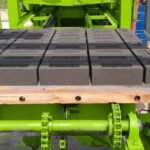
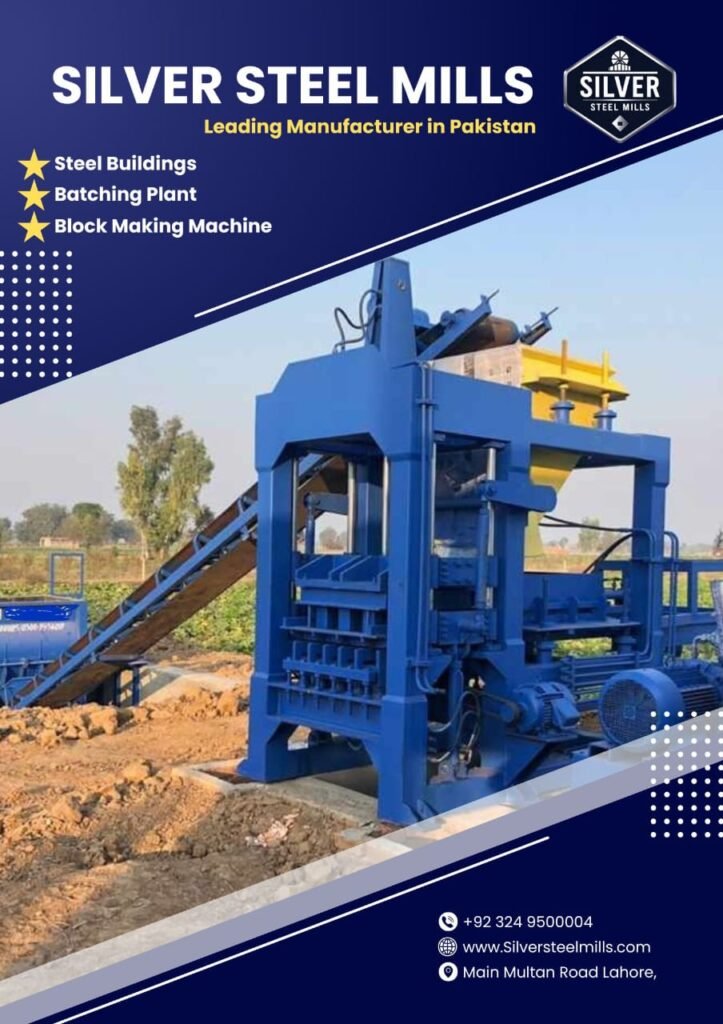
A balanced option for growing commercial suppliers. These setups introduce a centralized hydraulic power pack to handle mold clamping and stripping, paired with a motorized belt conveyor to feed material from a twin-shaft concrete mixer.
- Target Audience: Mid-scale regional builders and municipal suppliers.
- Operational Advantage: Uniform density across cycles via fixed hydraulic valving, removing operator guesswork.
Fully Automatic Block Making Production Lines
These are high-output industrial setups managed by a Programmable Logic Controller (PLC) with an integrated touch-screen HMI. Every step—from automated aggregate batching in a planetary mixer to multi-stage pallet stacking—is executed via proximity sensors and proportional hydraulic valves.
- Target Audience: Large-scale commercial suppliers, CPEC infrastructure contractors, and high-volume industrial investors.
- Operational Advantage: Extreme dimensional consistency, minimized labor costs, and rapid cycle times.
4. Current Market Analysis: Block Making Machine Price in Pakistan (2026 Matrix)
Machinery pricing depends heavily on hydraulic tonnage, structural steel mass, and the quality of electronic components (such as Siemens PLC systems or Schneider switchgear). Imported international plants face fluctuating freight costs and customs duties, making localized heavy engineering the preferred route for local investors.
The comprehensive pricing matrix below details the estimated capital layout required across various machine classes and regional configurations:
Comprehensive Machinery and Component Pricing Matrix
| Equipment Type / Model Configuration | Automation Level | Production Capacity (8-Hour Shift) | Hydraulic Compaction Force | Estimated Price Range (PKR) |
| Small Mobile Egg-Layer Type | Manual / Mechanical | 800 – 1,200 Hollow Blocks | N/A (Mechanical Vibro) | PKR 450,000 – 750,000 |
| SSM-15 / Standard Entry Station | Manual / Hydraulic | 1,000 – 1,500 Blocks | 40 – 60 Tons | PKR 1,500,000 – 2,500,000 |
| SSM-18 / Commercial Intermediate | Semi-Automatic | 2,500 – 3,500 Blocks | 80 – 100 Tons | PKR 2,800,000 – 4,500,000 |
| SSM-24 / Advanced Plant Line | Fully Automatic (PLC) | 5,000 – 8,000 Blocks | 120 – 150 Tons | PKR 5,000,000 – 7,500,000 |
| GSM-35 / Mega Industrial Line | Fully Automatic (PLC) | 12,000 – 15,000 Blocks | 200 – 250 Tons | PKR 8,500,000 – 15,000,000 |
| SSM-50 / Giga Infrastructure Plant | Fully Automatic (Integrated) | 20,000 – 30,000 Blocks | 300+ Tons | PKR 18,000,000 – 35,000,000+ |
💡 Expert Tip: The Customization Cost Factor
Be aware that the base concrete block machine price in pakistan usually covers the core molding press and basic molds. Upgrading to specialized production require add-on modules:
- Dual-Hopper Color Feed System: (For premium interlocking pavers/tuff tiles): PKR 400,000 – 700,000
- Automated Pallet Stacker Assembly: PKR 800,000 – 1,500,000
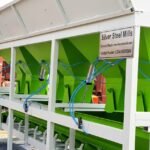
- Pneumatic Three-Bin Aggregate Batching Plant: PKR 1,200,000 – 2,500,000
5. Technical Insights: Engineering Metrics for Commercial Buyers
To accurately assess a brick making machine price list in pakistan, look beyond marketing brochures and evaluate the core engineering specifications:
        +---------------------------------------------+
        |        HYDRAULIC POWER PACK CIRCUIT         |
        +---------------------------------------------+
                               |
            [Proportional Directional Valves]
                               |
         +---------------------+---------------------+
         |                                           |
         v                                           v
[Top Tamper Head Cylinder]               [Bottom Mold Box Vibration]
(Downforce Compaction)                    (High-Frequency Consolidation)
High-Frequency Bottom-Table Vibration vs. Top Tamper Compression
Achieving maximum block density requires a combination of high-frequency vibration and hydraulic downforce. Look for dual-shaft eccentric vibrators integrated into the bottom table, operating at 3,000 to 4,500 RPM. This liquefies the semi-dry concrete mix, forcing out trapped air pockets while the top tamper head applies a minimum hydraulic pressure of 15 to 25 MPa ($1 MPa approx 145 PSI$).
Steel Metallurgy and Stress-Relieving
Frames constructed from standard structural channels will twist under heavy loads. High-quality manufacturers use thick, hollow structural sections (HSS) or solid plate frames treated with thermal stress relief. This prevents microscopic weld fractures over millions of vibration cycles.
Mold Treatment and Service Life
Ask about the carburizing heat treatment of the molds. A standard mild-steel mold wears down after 50,000 cycles, causing dimensional drift. Carburized or manganese-alloy steel molds can withstand over 150,000 to 200,000 cycles before requiring replacement.
6. Product Versatility: Unlocking Multi-Product Revenue Streams
A major advantage of modern hydraulic machines is their ability to change molds quickly. This allows a single production facility to target multiple high-margin product markets:
Tuff Tile and Interlocking Pavers
By using a tuff tile making machine equipped with a secondary face-mix color hopper, you can manufacture highly profitable aesthetic paving units. These products are widely utilized in urban footpaths, residential driveways, and commercial fuel stations.
Fly Ash Bricks
In regions near coal-fired power stations or industrial zones, utilizing a fly ash bricks machine price in pakistan olx configuration allows you to convert industrial waste into premium, eco-friendly walling units that rival standard clay bricks.
Hollow and Solid Structural Blocks
Standard 4″, 6″, and 8″ width variations form the foundation of modern high-rise and industrial boundary wall construction. They offer superior acoustic insulation and thermal performance compared to traditional masonry.
7. Real-World Use Case: Establishing a Commercial Plant in Gujranwala
Consider an industrial investor who set up a semi-automated production plant in the industrial suburbs of Gujranwala.
The Setup
The plant features an intermediate hydraulic press line integrated with a 500L pan mixer and an extended conveyor system. It targets the expanding industrial corridors along the GT Road and nearby housing developments.
+-----------------------------------------------------------------------+
|                       PLANT LAYOUT SCHEMATIC                          |
+-----------------------------------------------------------------------+
|                                                                       |
| [Raw Aggregates] -> [500L Pan Mixer] -> [Belt Conveyor] -> [Molding]  |
|                                                                       |
|                                                                   |   |
|                                                                   v   v
| [Curing Yard (28 Days)] <--------------------------- [Pallet Stacking] |
+-----------------------------------------------------------------------+
Material Strategy
The facility uses a precise ratio of Sargodha crushed bypass screen, fine Ravi sand, and local Grade 42.5 Ordinary Portland Cement (OPC).
Operational Results
By running a single 8-hour shift with a crew of 5 operators, the facility produces roughly 3,000 high-density 12″x8″x6″ hollow blocks daily. These units achieve a compressive strength exceeding 1,200 PSI, easily meeting commercial construction specifications.
The plant achieved a complete return on its initial machinery investment within 7 months of operation by supplying nearby housing schemes directly.
8. Financial Architecture and ROI Blueprint: Cost-Efficiency Analysis
To understand the commercial viability of this sector, look at this production cost breakdown for a standard 12″x8″x6″ concrete hollow block based on current material pricing:
Unit Cost Analysis Matrix (Standard Hollow Block)
| Input Variable Component | Material Metrics / Proportions | Net Cost Component (PKR) |
| Cement Content | Premium Grade 42.5 OPC Contribution | PKR 22.00 |
| Aggregates & Sand | Ravi Sand + Sargodha Crush Mix | PKR 18.00 |
| Direct Labor Allocation | Distributed Crew Wages per Unit | PKR 5.50 |
| Electrical Power & Utilities | Hydraulic Pack + Vibration Motor Consumption | PKR 2.50 |
| Water & Admixture Dosage | Plasticizers for Accelerated Demolding | PKR 2.00 |
| Total Net Production Cost | Ex-Factory Base Cost | PKR 50.00 |
Profit Margin Realization
- Average Market Wholesale Value: PKR 85.00 – 95.00 per block.
- Net Profit Margin per Unit: PKR 35.00 – 45.00.
- Daily Net Profit Field (At 3,000 Units Production Output): $approx text{PKR } 105,000 – 135,000$.
This profitability model demonstrates why precast manufacturing remains an exceptionally attractive target for industrial investors. Many modern manufacturers such as Silver Steel Mills now integrate automated control systems to improve production efficiency, allowing new plants to consistently capture these high margins.
9. Common Mistakes to Avoid When Purchasing a Machine
Investing in a production plant involves several common pitfalls that can impact your long-term returns:
1. Buying Solely on Low Upfront Price
Opting for the absolute cheapest used block making machine for sale in pakistan on secondary listing platforms often backfires. Many of these units suffer from structural fatigue or worn hydraulic pumps, leading to frequent breakdowns and lost revenue.
2. Ignoring Total Electrical Load Requirements
Industrial hydraulic systems demand significant starting currents. Purchasing a large, multi-stage machine without checking if your local grid connection or diesel generator can handle the peak kilowatt load will delay your plant commissioning.
3. Overlooking Local Spare Part Availability
Importing cheaper, unbranded foreign machinery can leave your operations stranded for weeks if a minor hydraulic seal or PLC module fails and cannot be sourced locally.
10. Preventative Maintenance Protocols for Industrial Concrete Plants
To ensure your machinery maintains maximum uptime and a long service life, implement these strict operational schedules:
Daily Post-Shift Washdowns
Concrete buildup on the tamper head and inside the mold cavity accelerates wear. Use high-pressure water jets to thoroughly clean these areas after every shift, then apply a light coat of mold-release oil.
Hydraulic Oil Filtration and Temperature Control
Consistently monitor your hydraulic oil levels. Ensure the oil temperature stays below 60°C using an integrated air or water cooling loop to prevent premature seal failure. Replace the main hydraulic oil filter elements after the first 100 hours of operation, and every 1,000 hours thereafter.
Vibration System Lubrication
The high-frequency bearings in the vibration box experience intense stress. Lubricate them daily with high-temperature lithium-complex grease to prevent catastrophic bearing failure.
11. Future Trends: The Convergence of Precast and Pre-Engineered Systems
Looking ahead, the precast block industry is increasingly converging with larger industrial building trends across Pakistan. Modern construction companies no longer view block production in isolation. Instead, they are integrating it with advanced infrastructure systems like pre-engineered steel buildings in pakistan (PEB).
+-------------------------------------------------------------------------+
|                  MODERN INDUSTRIAL SITE CONVERGENCE                     |
+-------------------------------------------------------------------------+
|                                                                         |
|  [PEB Steel Columns & Roof Frame] <----> [Insulated Sandwich Panels]    |
|                  ^                                                      |
|                  | (Structural Integration)                             |
|                  v                                                      |
|  [High-Strength Perimeter Infill Foundation via Concrete Precast Blocks]|
|                                                                         |
+-------------------------------------------------------------------------+
Modern warehouse design regularly combines heavy steel structural framing with insulated sandwich panels and high-strength concrete block infill walls. Setting up an agile production facility that can supply both precision paving tiles for loading docks and load-bearing hollow blocks for steel shed perimeters positions your business perfectly for major commercial contracts.
12. Conclusion: Strategic Action Plan for Investors
Investing in a concrete block factory is a proven way to secure long-term returns in Pakistan’s evolving construction market. However, success requires shifting your focus from minimizing upfront machinery costs to maximizing long-term operational efficiency.
Begin by conducting a detailed local market assessment of raw aggregate prices in your target region. Next, secure an industrial site with adequate electrical access, and select a machinery partner that offers reliable, local technical support and high-pressure hydraulic equipment. Focusing on quality control and precision engineering will help you build a highly profitable, sustainable precast manufacturing business.
FAQ Section
Q1: What is the estimated total cost to set up a semi-automatic concrete block factory in Pakistan?
Setting up a complete, operational semi-automatic factory involves more than just the core machinery. A reliable mid-scale setup typically requires an investment of PKR 4,500,000 to PKR 7,500,000. This budget covers the hydraulic block machine, an industrial pan mixer, raw material belt conveyors, product molds, a collection of production pallets, and initial site preparation.
Q2: Can a single machine manufacture both hollow structural blocks and interlocking tuff tiles?
Yes. Modern hydraulic block machines are engineered for versatile production. You can switch between hollow blocks, solid bricks, light kerbstones, and interlocking pavers simply by changing the steel mold assembly in the main press frame. This tool change typically takes 30 to 45 minutes.
Q3: Why should I choose a hydraulic compression machine over a budget mechanical option?
Mechanical impact machines rely entirely on gravity and eccentric weights, which limits them to a low compaction force. This often results in porous blocks with lower compressive strength. Hydraulic compression units deliver massive downward force (often exceeding 100 tons), ensuring the concrete is dense, highly durable, waterproof, and compliant with international building standards.
Q4: Is it safe to buy a second-hand block making machine from OLX Pakistan?
While buying a used machine can reduce your initial investment, it requires careful inspection. Second-hand equipment often suffers from structural issues like microscopic frame warping, worn hydraulic cylinders, or outdated PLC electronics. If you decide to go this route, ensure a qualified mechanical engineer inspects the frame and hydraulic pump before you finalize the purchase.
Q5: What electrical power setup is required to run an automatic block making plant?
Small, manual machines can operate on single-phase connections or portable generators. However, commercial semi-automatic and fully automatic production lines require a reliable three-phase industrial power connection (380V–415V) to run the high-torque hydraulic pumps, vibration motors, and automated batching systems efficiently.